
Cerebras IPO vs. Nvidia: Why the Market Leader Still Outweighs the Challenger
Cerebras Systems has captured investor attention with its recent initial public offering, riding a wave of enthusiasm for its proprietary wafer-scale artificial intelligence chip technology. The company's innovative approach to AI hardware has attracted significant backing, including support from OpenAI, positioning it as a potential disruptor in the competitive AI semiconductor market. However, despite Cerebras' technological promise and market optimism, Nvidia ($NVDA) remains the more prudent investment choice, backed by commanding market dominance, substantial revenue generation, and consistent profitability that the startup has yet to demonstrate.
The Tale of Two AI Hardware Players
The comparison between Cerebras and Nvidia illustrates a classic Wall Street dichotomy: the established powerhouse versus the innovative challenger. Nvidia commands an extraordinary 86% market share in AI data center chips, a dominance that has been reinforced through years of strategic partnerships, software ecosystem development, and continuous technological advancement. The company generated $216 billion in annual revenue, demonstrating the scale and scope of its operations across data centers, gaming, professional visualization, and automotive segments.
In contrast, Cerebras operates at a vastly different magnitude, with $500 million in annual revenue. While this represents significant business volume for a company focused specifically on AI chips, it underscores the vast gulf separating the startup from the market leader. Key differences between the two companies include:
- Market Position: Nvidia's entrenched ecosystem versus Cerebras' emerging platform
- Revenue Scale: $216 billion versus $500 million—a 432x difference
- Market Share: Nvidia's 86% dominance in AI data centers versus Cerebras' niche positioning
- Profitability Status: Nvidia's proven and consistent profits versus Cerebras' unproven path to profitability
- Customer Base: Nvidia's expansive global enterprise relationships versus Cerebras' selective partnerships
Market Context: The AI Chip Gold Rush
The artificial intelligence hardware market has become one of the most competitive and capital-intensive sectors in technology. Nvidia's dominance emerged from its first-mover advantage with CUDA architecture, which created an ecosystem moat that competitors have struggled to overcome for nearly two decades. The company's GPUs became the de facto standard for AI training and inference workloads, and this incumbency advantage has only strengthened as the AI boom accelerated.
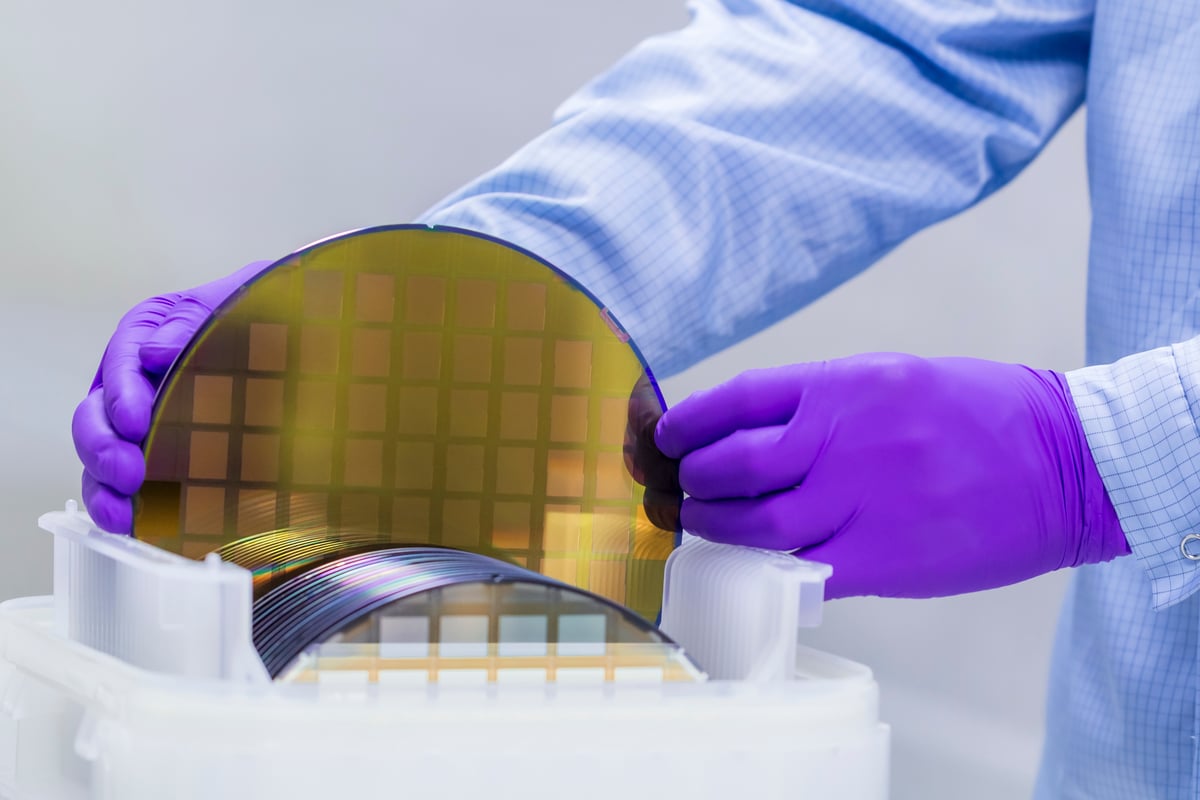
Cerebras enters this landscape with a fundamentally different architectural approach—wafer-scale processing that consolidates computing components onto a single massive chip rather than clustering multiple smaller processors. This technology offers theoretical advantages in performance per watt and reduced latency, positioning it as a potentially transformative solution for specific use cases. The company's backing from OpenAI and other prominent AI players signals genuine technological credibility and potential market opportunity.
However, market dominance in semiconductors historically accrues to companies that successfully build network effects and ecosystem lock-in, both of which Nvidia has achieved. The barrier to displacing an entrenched leader is extraordinarily high, requiring not just superior technology but also:
- Proven software ecosystem maturity
- Established relationships with hyperscalers like Amazon, Google, and Microsoft
- Supply chain resilience and manufacturing partnerships
- Customer confidence through track record and support
- Compatibility with existing enterprise infrastructure
Cerebras must clear all these hurdles while simultaneously proving that its technology delivers superior economics on a comparable basis to Nvidia's offerings.
Investment Thesis: Risk-Adjusted Returns
For investors evaluating these two opportunities, the risk-reward calculus differs fundamentally. Nvidia represents a mature, profitable company with durable competitive advantages, substantial free cash flow generation, and a track record of successfully navigating technological transitions. The stock commands a premium valuation, but this reflects tangible earnings power, market leadership, and visibility into future revenue streams.
Cerebras, conversely, represents a binary investment thesis. Success would require the company to:
- Execute on its technological promise at scale
- Overcome Nvidia's entrenched ecosystem advantages
- Achieve profitability and positive unit economics
- Capture material market share from the incumbent
- Maintain technological differentiation amid rapid industry innovation
The IPO enthusiasm around Cerebras reflects genuine excitement about its innovation and a broader market appetite for AI-exposed equities. However, history demonstrates that technological superiority alone rarely guarantees market success in semiconductors. Intel ($INTX) possessed superior technology at multiple points in its history yet lost dominance to AMD ($AMD) through execution missteps and architectural misjudgments. Qualcomm ($QCOM) dominates smartphone processors despite facing numerous capable competitors. Broadcom ($AVGO) has established leadership in networking infrastructure against technically competent rivals.
These examples underscore that sustainable competitive advantage in semiconductors accrues to companies that execute consistently, build ecosystem moats, and maintain technological parity or superiority. Cerebras faces the additional burden of displacing an entrenched leader with superior resources, deeper relationships, and proven execution capability.
The Verdict for Investors
While Cerebras merits a position in a diversified technology portfolio as a speculative bet on transformative AI chip architecture, Nvidia remains the more prudent core holding for investors seeking exposure to the AI semiconductor boom. Nvidia's 86% market share, $216 billion revenue base, and proven profitability provide a foundation of stability and cash generation that a startup, regardless of technological promise, cannot match.
The optimal portfolio approach may involve maintaining Nvidia as a core position while allocating a smaller, risk-appropriate allocation to Cerebras or similar AI hardware challengers. This balances conviction in established market leadership with exposure to potential disruption. For conservative investors or those with limited AI semiconductor allocation, Nvidia remains the clear choice—it offers significant upside participation in AI infrastructure buildout with substantially lower execution risk than pre-revenue or early-stage competitors.
As the AI industry matures and supply chains diversify, opportunities may emerge for challengers to capture meaningful share from incumbents. However, until Cerebras demonstrates profitability, customer acceptance at scale, and the ability to compete on total cost of ownership against Nvidia's entrenched ecosystem, the startup remains a story stock rather than a proven investment.