
Buffett's Trinity: Why Apple, Coca-Cola, and AmEx Remain Wall Street's Gold Standard
Warren Buffett's investment philosophy has long centered on identifying durable competitive advantages and holding them indefinitely. Three stocks stand out as the cornerstone holdings of Berkshire Hathaway — Apple, Coca-Cola, and American Express — each representing the kinds of "forever stocks" that have defined the billionaire investor's legendary track record. These positions reveal much about what separates truly exceptional businesses from merely good ones, and incoming CEO Greg Abel has signaled strong commitment to maintaining these strategic anchors.
The Architecture of Timeless Holdings
Each of Buffett's three favorite holdings exemplifies a specific competitive moat that creates lasting shareholder value:
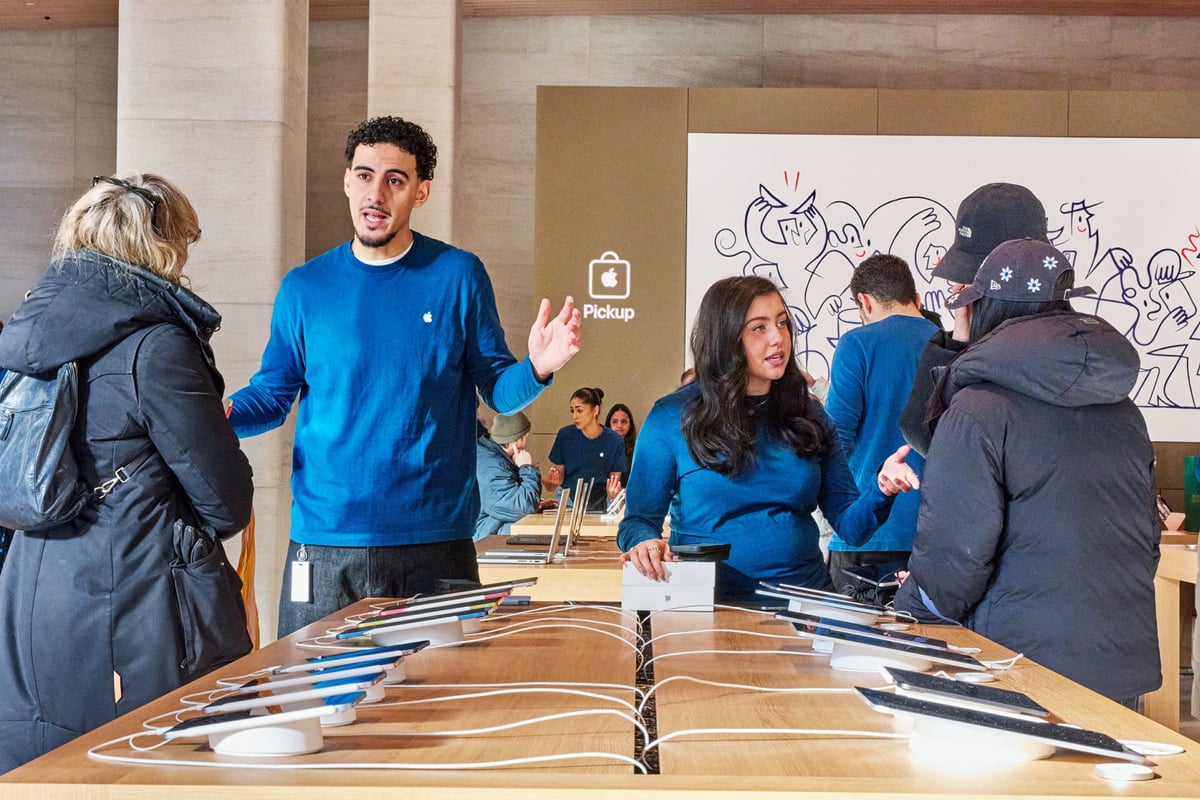
Apple ($AAPL) stands as the crown jewel of Berkshire's portfolio, benefiting from what few technology companies can claim: an unmatched ecosystem that locks customers into its platform. The company's integration of hardware, software, and services creates powerful network effects. Customers who own an iPhone, iPad, Mac, and Apple Watch find switching costs prohibitively high—their data, photos, documents, and digital purchases are all tethered to the Apple ecosystem. Strong iPhone sales continue to drive revenue and profits, while recurring revenue from services like Apple Music, iCloud, and App Store fees provide increasingly predictable cash flows. The company's ability to command premium pricing while maintaining industry-leading margins reflects the depth of its competitive advantage.
Coca-Cola ($KO) represents perhaps the most durable consumer franchise ever created. The company's 64-year dividend streak speaks to something deeper than consistency—it reflects an indestructible brand that has maintained its cultural relevance for nearly 140 years. Coca-Cola's formula for success remains deceptively simple: a globally recognized product sold in nearly every country, a distribution network without peer, and pricing power that allows the company to pass through cost inflation to consumers. The dividend track record, among the longest in corporate America, signals management confidence in the business's ability to generate reliable cash flows through economic cycles. For Buffett, Coca-Cola epitomizes the kind of business that requires minimal capital investment to maintain its market position while generating substantial returns.
American Express ($AXP) completes the trinity through a fundamentally different business model—one that Buffett has understood and appreciated for decades. Unlike traditional payment networks that operate as infrastructure, American Express operates a "closed-loop" system where the company issues cards directly to consumers, processes transactions, and extends credit. This model generates revenue from multiple streams: merchant fees, interchange income, and the interest and fees charged to cardholders. The company's proprietary data on consumer spending patterns provides valuable insights, while its annual membership fees create a direct relationship with customers and incentivize both engagement and spending. This model generates higher-margin, more predictable revenue than traditional card networks.
Market Context: Standing the Test of Time
The selection of these three stocks reflects broader market truths often overlooked in our era of constant disruption narratives. While technology stocks dominate venture capital funding and media attention, the most profitable and resilient businesses often occupy decidedly unglamorous market segments:
- Apple ($AAPL) faces persistent concerns about iPhone saturation and competition from Samsung and Chinese manufacturers, yet continues to grow services revenues and maintain pricing power
- Coca-Cola ($KO) operates in a mature industry where growth is measured in single digits, yet its business model generates cash that has funded over six decades of consecutive dividend increases
- American Express ($AXP) competes against networks like Visa and Mastercard, yet its premium positioning and closed-loop model create distinctly different economics
The broader context matters here: we're in an era when many investors chase high-growth narratives and emerging technologies. Yet Buffett's continued emphasis on these three legacy holdings—all of which have mature market positions and slow-growth characteristics—reflects a deeper truth about compounding. A business growing at 3-5% annually while generating 20%+ returns on invested capital compounds wealth far more effectively than a business growing at 30% while destroying capital through excess spending.
Industry dynamics support these positions. Consumer staples stocks like Coca-Cola trade at lower valuations than growth stocks, but their pricing power and resilience have been proven through multiple economic cycles. Technology giants like Apple have demonstrated surprising durability in monetizing their platforms. Premium payment processors like American Express have weathered shifts from cash to cards to digital payments while maintaining their core advantages.
Investor Implications: What This Means for Your Portfolio
The signal from Buffett's continuing commitment to these three holdings—especially under incoming CEO Greg Abel's stewardship—carries several implications for investors:
First, these stocks represent proven resilience. Coca-Cola survived the shift away from sugary beverages by diversifying its portfolio. Apple survived the transition from computers to phones to services. American Express survived digital disruption and the financial crisis. Their longevity in the face of technological and market disruption proves the depth of their competitive advantages.
Second, the emphasis on these holdings underscores the value of patience. None of these stocks have delivered the stratospheric returns that high-flying technology companies sometimes achieve. But they've delivered consistent, compounding returns for decades. An investor who bought Coca-Cola ($KO) in 1950 and held through 2024 would have participated in one of the greatest wealth-creation stories in financial history.
Third, there's a leadership transition angle worth noting. Greg Abel replacing Warren Buffett as CEO raises questions about potential portfolio shifts. The fact that these three core holdings appear positioned as permanent positions under the new regime signals continuity in Berkshire's investment philosophy. Abel recognizes that these businesses generate the reliable cash flows that fuel Berkshire's acquisitions and investments elsewhere.
Fourth, valuations matter. While these are exceptional businesses, they're not exempt from valuation risk. Apple at 30x earnings tells a different story than Apple at 15x earnings. Similarly, Coca-Cola's reliable growth story becomes more compelling at lower valuations. Sophisticated investors use Buffett's stock picks as guideposts for which businesses to own, but also carefully assess whether current valuations offer adequate margins of safety.
Finally, there's a portfolio construction lesson. Buffett's "favorite holdings" aren't sector bets or momentum plays—they're core positions sized large enough to meaningfully impact returns but held for decades. This approach contrasts sharply with the constant portfolio turnover that characterizes much of modern investing. For individuals building lasting wealth, the lesson is clear: identify exceptional businesses at reasonable prices, buy them, and hold them through multiple market cycles.
Looking Forward
The continued emphasis on Apple, Coca-Cola, and American Express in Berkshire's portfolio under Greg Abel's leadership affirms timeless principles: that great businesses deserve permanent positions in investor portfolios, that competitive advantages compound over decades, and that patience remains one of the few truly sustainable edges in investing. These three stocks have earned their place not through momentum or sentiment, but through decades of delivering reliable returns, maintaining their market positions against relentless competition, and generating the cash flows that define exceptional capital allocation. For investors seeking to build lifetime wealth, understanding why Buffett loves these stocks may prove more valuable than simply copying the positions themselves.