
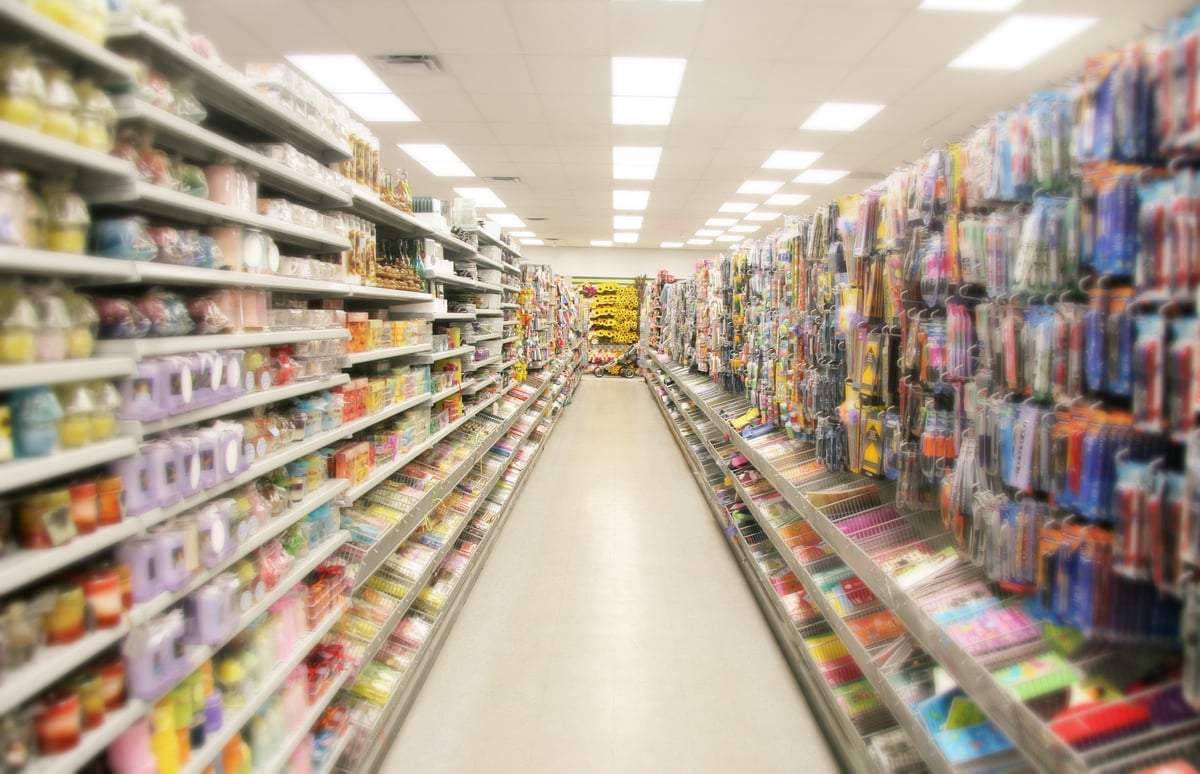
Discount Retailers Eye 2026 Gains as Consumer Sentiment Plummets
As consumer sentiment reaches historic lows amid persistent inflation and eroding purchasing power, two value-focused retailers are positioned to capitalize on a fundamental shift in shopping behavior. Dollar General ($DG) and TJX Companies ($TJX) have built business models specifically engineered to thrive during economic contractions, and analysts believe 2026 could mark a significant inflection point as price-conscious consumers increasingly gravitate toward discount alternatives.
The deterioration in consumer confidence reflects mounting financial pressures across American households. Consumers cite concerns about inflation, stagnant wage growth relative to cost-of-living increases, and mounting credit card debt as primary drivers of pessimism. This environment historically triggers a "trading down" phenomenon, where shoppers abandon premium retailers and migrate toward discount channels—precisely where Dollar General and TJX have built their competitive moats.
Strong Financial Fundamentals Meet Favorable Market Conditions
Both retailers have demonstrated resilience and financial strength even as broader consumer confidence deteriorated:
- Dollar General operates a vast footprint of small-format discount stores with lean cost structures and efficient supply chains
- TJX Companies operates multiple off-price banners including T.J. Maxx, HomeGoods, and Marshall's, offering brand-name merchandise at significant discounts
- Both companies have reported strong recent financial performance, with comparable store sales growth and margin expansion
- Their inventory management and vendor relationships allow them to acquire surplus inventory at steep discounts, enabling deeper price cuts than traditional retailers
The business model advantages are substantial. Dollar General and TJX operate with inherently lower cost structures than department stores or traditional specialty retailers, allowing them to maintain profitability even at lower price points. During the 2008-2009 financial crisis and subsequent recovery, both companies significantly outperformed the broader retail sector as consumers prioritized value.
Market Context: Sector Rotation Toward Value Retail
The retail landscape is experiencing a notable bifurcation. While premium and full-price retailers have struggled with inventory management and margin pressure, the discount sector has emerged as a relative bright spot. Several factors support this divergence:
Macroeconomic pressures persist. Despite Federal Reserve rate cuts, real wage growth remains challenged for many households. Credit card delinquencies are rising, savings rates have declined from pandemic peaks, and consumers increasingly rely on promotional offers and discount channels.
Consumer behavior is shifting durably. The trading-down phenomenon observed during previous recessions appears to be accelerating, with higher-income households increasingly shopping at discount retailers. This expansion of the addressable market beyond traditional discount shoppers represents a structural tailwind.
Competitor struggles create opportunity. Traditional department stores and premium retailers have faced inventory challenges, margin compression, and traffic declines. This environment allows Dollar General and TJX to gain market share while competing retailers rationalize store footprints and discount inventory.
Vendor relationships strengthen their position. As department stores reduce orders and face potential closures, apparel and home goods manufacturers increasingly seek outlet channels. TJX's vendor relationships and Dollar General's supplier network position both to source merchandise efficiently.
Investor Implications: Potential 2026 Outperformance
For equity investors, the case for $DG and $TJX rests on several converging factors. If consumer sentiment remains depressed—a realistic scenario given structural economic headwinds—both retailers are positioned to gain traffic and market share. Their expense structures allow them to maintain profitability even if inflation moderates and they choose to pass savings to consumers.
The valuation case also deserves consideration. During previous periods of consumer stress, discount retailers commanded premium valuations relative to the broader retail sector, reflecting their defensive qualities and growth potential during downturns. Current valuations may not fully reflect the magnitude of potential share gains if consumer sentiment deteriorates further.
Same-store sales and traffic metrics will be critical to monitor. Acceleration in comparable store sales growth, particularly traffic metrics rather than pure price increases, would signal genuine market share capture. Margin trends will indicate whether retailers are prioritizing traffic growth through aggressive pricing or protecting profitability.
The broader retail sector context matters as well. Any further deterioration in department store health or full-price specialty retail could accelerate the shift toward discount channels, creating a virtuous cycle of traffic and market share gains for Dollar General and TJX.
Looking Ahead: 2026 as Potential Inflection Year
As 2026 unfolds, investors should watch for evidence that consumer sentiment is translating into measurable behavioral shifts. Traffic trends at Dollar General and TJX stores, combined with comparable store sales data and vendor commentary, will provide crucial signals about whether discount retailers are truly capturing a larger share of consumer spending.
The convergence of record-low consumer sentiment, challenging macroeconomic conditions, and business models specifically designed for value-conscious shoppers creates a compelling scenario for both retailers. While broader economic recovery remains possible, the risk-reward appears asymmetric for discount retailers positioned to benefit from consumer stress. For value-focused investors seeking retail exposure in a challenging consumer environment, $DG and $TJX merit close attention.