
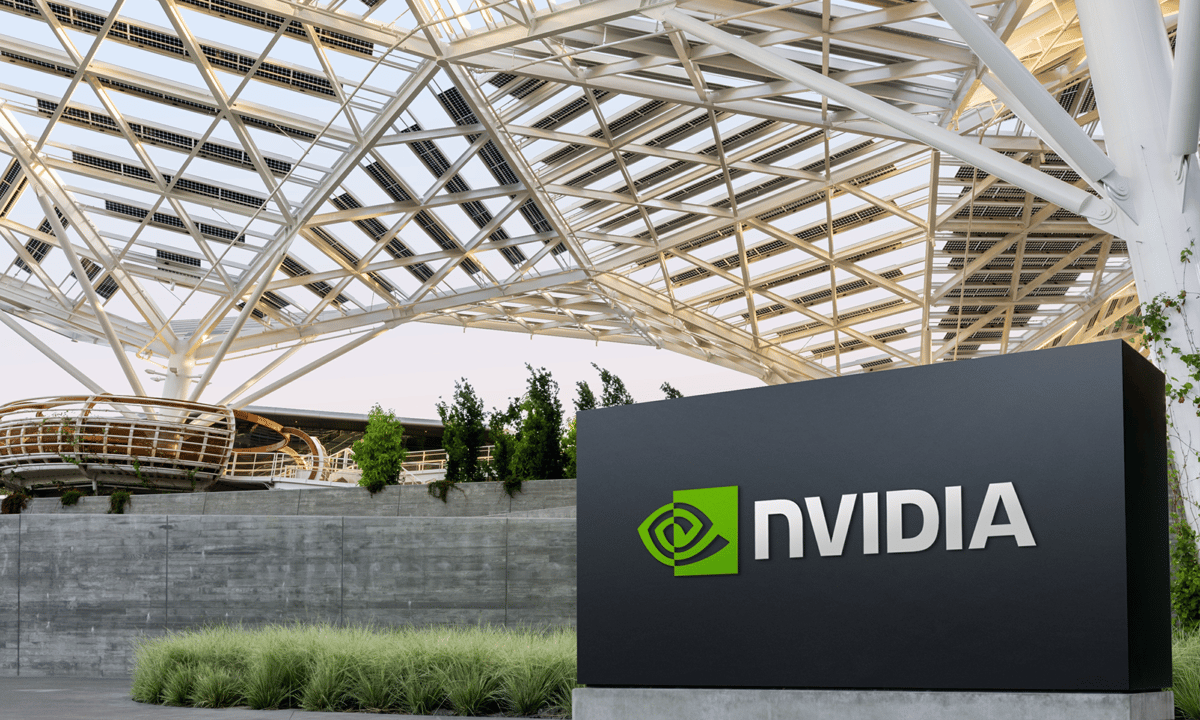
Nvidia Delivers Blockbuster Results and Record Capital Return Program
Nvidia has sent a powerful signal to investors with a monster first-quarter earnings report that not only beat Wall Street expectations but also surpassed the company's own forward guidance. The standout feature of the earnings announcement was management's authorization of an additional $80 billion in stock buybacks, a move that underscores executive confidence in the company's ability to sustain explosive growth driven by accelerating demand for artificial intelligence infrastructure. The combination of stellar financial results and substantial capital return demonstrates that Nvidia executives believe the current valuation—despite the stock's remarkable gains—remains attractive enough to justify aggressive shareholder returns.
The timing of this announcement arrives as the AI infrastructure market shows few signs of deceleration. Nvidia, which dominates the GPU market essential for training and running large language models, continues to benefit from insatiable demand across cloud providers, enterprise customers, and emerging AI applications. The $80 billion buyback authorization provides management with significant flexibility to return capital while maintaining financial prudence and investing in future growth initiatives.
Valuation and Forward Catalysts Paint Optimistic Picture
While Nvidia's stock has appreciated substantially, the company trades at a 25x forward P/E ratio—a metric that appears modest relative to the stock's historical premium valuations. This relatively measured multiple, combined with multiple emerging growth catalysts, suggests the market may not yet be fully pricing in the company's long-term earnings potential.
Key catalysts driving continued growth include:
- Inference workloads: As AI models proliferate across enterprise and consumer applications, demand for inference GPUs—used to run trained models—is expected to grow significantly
- Agentic AI: The development of autonomous AI agents capable of performing complex tasks independently represents a nascent but potentially massive market opportunity
- New CPU architectures: Nvidia's expansion beyond GPUs into custom processors broadens addressable markets and revenue streams
- Data center expansion: Cloud providers continue aggressive capital expenditures to support AI workload growth
These catalysts suggest the company's growth trajectory may extend well beyond current market consensus expectations. The inference opportunity alone could represent a substantial incremental revenue source as enterprises move beyond model training into production deployment phases.
Market Context: Dominance Amid Intensifying Competition
Nvidia's earnings beat arrives amid an increasingly competitive landscape, though the company maintains formidable competitive advantages. While competitors like AMD ($AMD) and emerging challengers have announced competing products, Nvidia benefits from entrenched ecosystem advantages, software maturity through its CUDA platform, and first-mover benefits in high-performance AI accelerators.
The broader AI infrastructure market remains in early innings of what many analysts believe will be a multi-decade growth cycle. Unlike cyclical semiconductor upswings, AI infrastructure demand appears structural and durable, driven by fundamental shifts in computing architecture and the race among technology leaders to develop proprietary AI capabilities. Nvidia's ability to consistently exceed expectations suggests the company is capturing the lion's share of infrastructure investment spending.
The company's results also reflect a shift in technology spending toward AI and away from traditional enterprise software and services. This reallocation of IT budgets toward GPU-intensive infrastructure favors hardware providers like Nvidia and cloud infrastructure operators like Amazon ($AMZN), Microsoft ($MSFT), and Alphabet ($GOOGL). The earnings report provides fresh evidence that this spending reallocation remains robust.
Investor Implications: Buybacks as Confidence Signal
The $80 billion buyback authorization carries significant implications for shareholders beyond the mechanical arithmetic of share count reduction. Management buybacks typically signal that executives believe the stock is undervalued relative to intrinsic value—a credible signal when coming from leaders with substantial personal shareholdings in the company.
For equity investors, the buyback program should provide some downside support and improve per-share metrics even in scenarios where total earnings growth moderates. Over a multi-year period, consistent buybacks at elevated valuations can pressure returns if the underlying business deteriorates, but in Nvidia's case—with multiple growth catalysts intact—buybacks appear to reinforce a constructive narrative.
The earnings beat and capital return announcement also likely influence derivative markets and options pricing, potentially affecting hedging strategies for portfolio managers holding concentrated technology positions. Investors should note that while the near-term outlook appears constructive, Nvidia's stock valuation leaves limited room for disappointment on execution or slowing demand growth.
Forward Outlook: Sustaining Momentum in Competitive Markets
Nvidia's challenge moving forward involves sustaining current growth rates as the installed base of AI infrastructure expands and competition intensifies. The emergence of inference and agentic AI as major growth vectors suggests multiple pathways for continued expansion, but execution risk remains present.
The 25x forward P/E multiple reflects market confidence in the company's ability to grow earnings substantially in coming years. This valuation leaves minimal room for negative surprises, meaning future quarterly results must continue demonstrating resilience to maintain current stock price levels. However, the breadth of catalysts and secular trends supporting AI infrastructure spending suggest Nvidia possesses multiple levers to drive incremental growth beyond current market expectations.
The $80 billion buyback authorization represents more than a mechanical capital return; it represents management's conviction that Nvidia remains positioned to lead the infrastructure layer of the artificial intelligence revolution. For investors positioned in technology and infrastructure stocks, the combination of beating guidance, announcing massive buybacks, and clearly articulating multiple growth catalysts reinforces Nvidia's status as a cornerstone holding in AI-focused portfolios. As inference workloads and agentic AI begin materializing at scale, the earnings growth that justifies current valuations should prove achievable, supporting the investment case articulated by Nvidia's confident capital allocation decisions.