
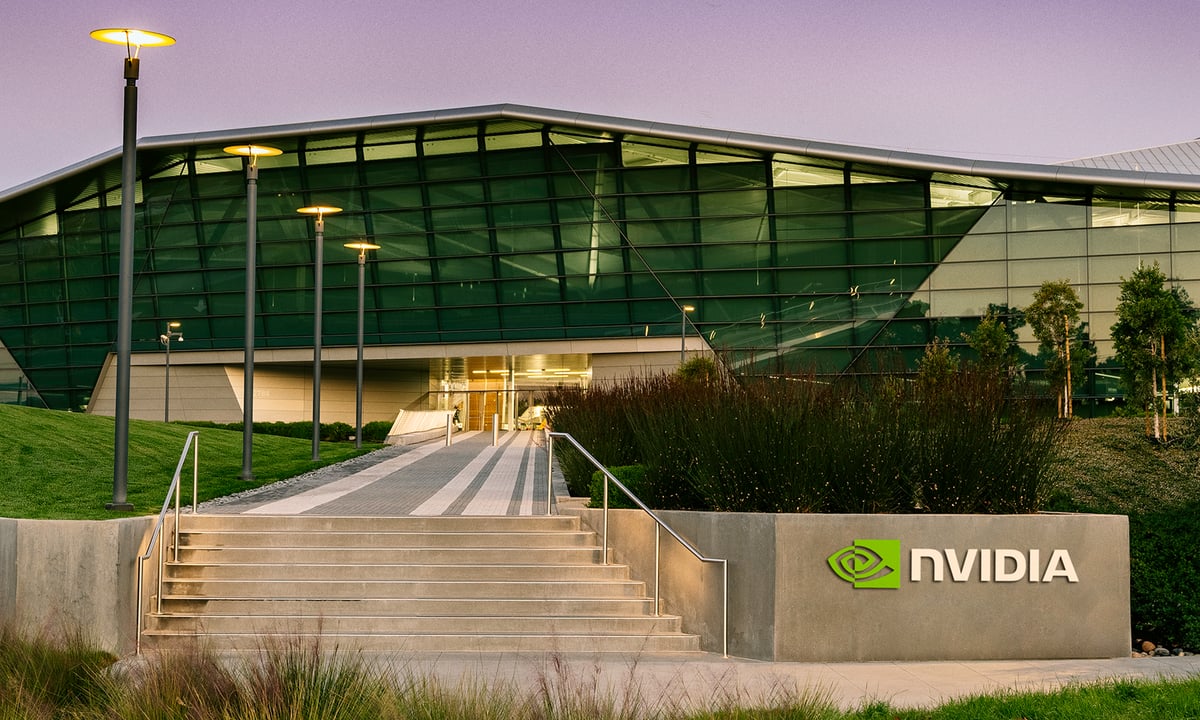
Nvidia's Bold CPU Gambit Reshapes Semiconductor Landscape
Nvidia has announced its entry into the data center CPU market with the launch of its Vera CPU, a move that fundamentally challenges the long-standing duopoly held by Intel ($INTC) and Advanced Micro Devices ($AMD). The graphics processing giant projects $20 billion in CPU revenue for the current fiscal year, signaling an aggressive assault on a market segment that has remained largely controlled by these two established players. This development marks a watershed moment in semiconductor competition and could reshape the competitive dynamics across the entire data center infrastructure industry.
The timing of Nvidia's CPU announcement is particularly strategic, capitalizing on the explosive growth of agentic AI applications where traditional CPU capabilities have become increasingly critical. Rather than serving as mere accessories to Nvidia's dominant GPU business, these processors are being positioned as essential orchestration and control components within AI systems—a shift that underscores the architectural changes required to support next-generation AI workloads.
The Strategic Architecture Behind Vera
Nvidia's Vera CPU enters a market that has historically been segmented between Intel's Xeon processors and AMD's EPYC lineup, each commanding substantial installed bases across enterprise data centers worldwide. However, the emergence of agentic AI has created a new technological imperative that neither incumbent has fully addressed with purpose-built solutions.
Key factors driving this CPU market expansion include:
- Growing demand for AI orchestration: Agentic AI systems require robust CPU-based control layers to coordinate between multiple AI models and inference engines
- Architectural differentiation: Vera CPUs are specifically engineered to work seamlessly with Nvidia's GPU ecosystem, creating integrated solutions unavailable from competitors
- Market timing: The proliferation of AI agents across enterprises is creating unprecedented demand for data center infrastructure refresh cycles
- Revenue acceleration: The $20 billion revenue projection for this fiscal year alone suggests Nvidia expects rapid adoption and significant market penetration
Unlike previous semiconductor entrants attempting to compete in the CPU space, Nvidia approaches this market from a position of extraordinary leverage. With dominant market share in AI accelerators and GPUs, the company can offer integrated CPU-GPU solutions that deliver optimization benefits unavailable through point products. This vertical integration strategy mirrors successful business models across the technology industry, where ecosystem lock-in creates powerful competitive advantages.
Market Context: Disruption in the Making
The data center CPU market has operated relatively stably for over a decade, with Intel maintaining leadership despite competitive pressure from AMD's aggressive EPYC rollouts beginning in 2017. This duopoly has commanded pricing power and relatively predictable market dynamics, as enterprise customers weighed performance, compatibility, and ecosystem considerations.
Nvidia's entry fundamentally alters this calculus. The semiconductor industry has historically demonstrated that new competitors with architectural advantages and complementary product ecosystems can rapidly gain share. Consider AMD's own ascent: the company captured significant market share from Intel by delivering superior performance-per-watt and pricing efficiency. Nvidia now possesses similar advantages, amplified by its unmatched position in the AI infrastructure market.
The broader semiconductor landscape has been characterized by:
- Continued GPU market consolidation: Nvidia's 80%+ share of discrete GPU markets and dominant position in AI accelerators
- Intel's manufacturing challenges: The company has faced production delays and yield issues as it attempts foundry expansion
- AMD's strategic positioning: While competitive in CPUs and GPUs, AMD lacks the integrated AI software ecosystem that Nvidia has cultivated
- Emerging competition: New entrants and custom silicon solutions continue fragmenting markets
For enterprise customers, this development presents both opportunity and complexity. Nvidia's CPU offering could provide superior total-cost-of-ownership for AI-intensive workloads, but customers would need to navigate potential vendor concentration risks and architectural lock-in concerns.
Investor Implications: Winners and Losers
Nvidia's CPU ambitions carry profound implications for semiconductor investors and the broader technology market. A $20 billion CPU revenue projection for a single fiscal year—even if ultimately conservative—would make this one of the most successful product launches in semiconductor history, comparable to AMD's Ryzen success or Intel's historical dominance.
For Nvidia shareholders, this announcement represents significant upside potential:
- Incremental revenue streams: CPU sales complement rather than cannibalize existing GPU revenues, expanding TAM
- Margin accretion: Data center CPUs typically command strong gross margins, particularly when bundled with GPU solutions
- Customer stickiness: Integrated CPU-GPU solutions increase switching costs and ecosystem lock-in
- Market share gains: Greenfield demand from agentic AI deployments offers substantial growth without requiring share capture from entrenched competitors
For Intel and AMD, the implications are more sobering. Both companies face a competitor with unmatched leverage in the AI market, superior profit margins, and customer relationships that may predispose enterprises toward integrated solutions. Intel faces the additional burden of execution challenges in its manufacturing transition, while AMD must defend against a competitor with deeper pockets and broader market reach.
The competitive pressure could force both incumbents toward aggressive pricing, accelerated product development, or potentially strategic repositioning. Investors in semiconductor equipment, memory, and complementary technologies should closely monitor how CPU market dynamics evolve, as pricing pressure could ripple across the industry.
Forward-Looking Implications
Nvidia's entry into the CPU market represents a pivotal moment in semiconductor competition, with implications extending far beyond data center processors. If Nvidia achieves even a fraction of its ambitious revenue projections, the company will have successfully extended its dominance from accelerators into the foundational compute layer itself.
The next critical inflection points to monitor include:
- Vera CPU adoption rates among enterprise customers and cloud providers
- Competitive responses from Intel and AMD, including product roadmaps and pricing strategies
- Supply chain implications as Nvidia manufacturing capacity scales
- Broader market consolidation in semiconductor infrastructure
For investors, this announcement confirms that the AI infrastructure buildout remains in its early innings, with dominant platform players continuing to expand their addressable markets. The question is no longer whether Nvidia can maintain its GPU superiority, but whether the company can leverage that position to reshape adjacent markets entirely.