
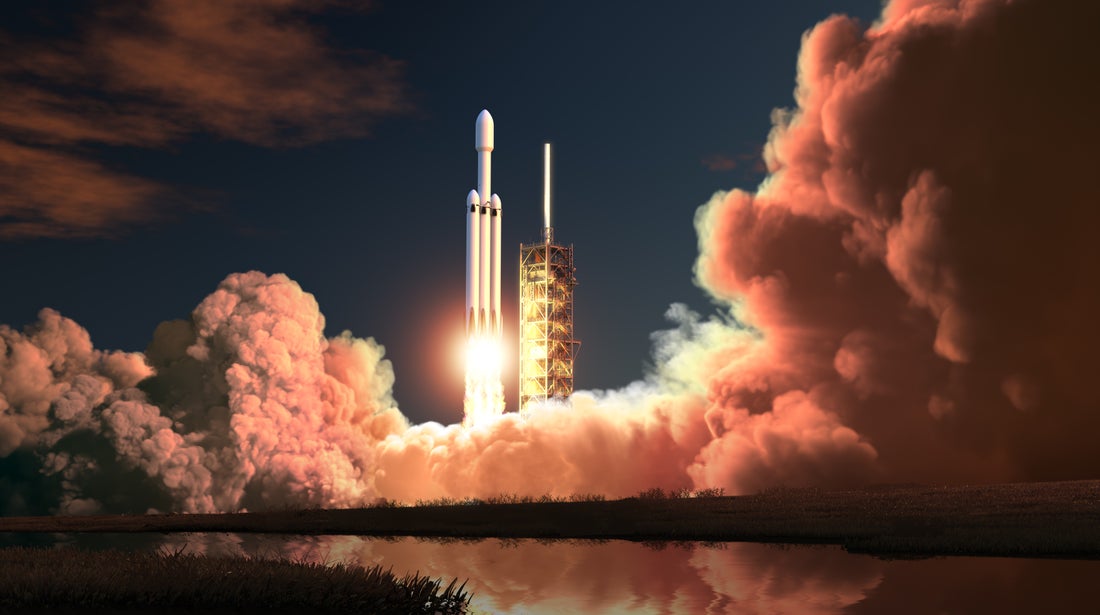
SpaceX Set to Challenge Tesla's Market Dominance Through Historic IPO
SpaceX is preparing for one of the most consequential initial public offerings in market history, targeting a valuation between $1.75 trillion and $2 trillion when it lists on Nasdaq in June. If achieved, the valuation would immediately position the aerospace and satellite communications company above Tesla ($TSLA), which has long held its position as one of the world's most highly valued corporations. This historic milestone underscores a dramatic shift in how investors are reassessing traditional automotive leaders against high-growth technology and infrastructure platforms.
The prospect of a SpaceX valuation exceeding Tesla's represents a pivotal moment for the markets, signaling investor confidence in space-based infrastructure and satellite communications over conventional electric vehicle manufacturing. While this valuation seems extraordinary given the company's current financials, the composition of SpaceX's business—particularly the explosive growth of Starlink—provides substantial justification for the premium investors appear willing to pay.
The Tale of Two Businesses: Starlink's Ascendance
The most compelling driver of SpaceX's valuation thesis lies not in its flagship rocket business, but in Starlink, its satellite internet division. Despite SpaceX posting a consolidated net loss of $4.9 billion in 2025, Starlink has become a revenue powerhouse:
- Revenue: $11.4 billion in 2025
- Year-over-Year Growth: 50% increase
- Subscriber Base: 10.3 million active users
- Adjusted EBITDA: $7.2 billion
- EBITDA Margin: Approximately 63%, demonstrating exceptional profitability at the operating level
These metrics reveal a business within a business that is not only achieving scale but also demonstrating the cash generation capabilities that typically justify premium valuations in technology markets. The $7.2 billion in adjusted EBITDA from Starlink alone suggests the division could support a multi-hundred-billion-dollar valuation independently, making it one of the fastest-scaling satellite communications platforms ever developed.
The context of Starlink's growth is particularly significant in an era when global broadband access remains fragmented and inadequate across rural areas, developing markets, and maritime regions. Starlink's low-latency satellite internet addresses a genuine infrastructure gap that terrestrial providers cannot economically serve, creating a defensible market opportunity with minimal direct competition at scale.
Market Context: A Shifting Hierarchy in Tech Valuations
The potential reordering of SpaceX above Tesla occurs amid a broader reassessment of which technology companies merit premium valuations. Tesla ($TSLA), once the undisputed leader in investor preference among growth-oriented technology firms, is facing headwinds that contrast sharply with SpaceX's trajectory:
Tesla's Challenges:
- Declining vehicle sales momentum
- Heavy capital allocation toward speculative artificial intelligence and robotaxi initiatives with uncertain timelines and profitability
- Trading at a 400x price-to-earnings ratio despite growth deceleration
- Mature electric vehicle market facing increased competition from traditional automakers
SpaceX's Advantages:
- Dual revenue streams with complementary growth trajectories (launch services and Starlink)
- Government contracts and defense relationships providing revenue stability
- Essential infrastructure positioning in an emerging market (satellite communications)
- High-margin subscription model through Starlink with substantial operating leverage
The comparison highlights an important investor pivot: from betting on individual consumer-facing products (electric vehicles) to backing fundamental infrastructure platforms. SpaceX, through Starlink, is positioning itself as essential telecommunications infrastructure, a category that traditionally commands premium valuations due to regulatory barriers to entry, recurring revenue models, and indispensability.
Industrious competition in the satellite internet space exists from Amazon's ($AMZN) Kuiper project and OneWeb, but neither has achieved Starlink's scale or demonstrated comparable revenue traction. SpaceX's vertical integration—controlling both launch capacity and satellite operations—provides significant cost and operational advantages that competitors have struggled to match.
Investor Implications: Valuation, Risk, and Market Structure
For investors, a SpaceX IPO at $1.75-2 trillion presents a complex calculus of opportunity and risk that warrants careful consideration:
The Bull Case:
- Starlink's 50% annual revenue growth could support aggressive valuation multiples if the growth trajectory persists for 3-5 years
- The satellite internet addressable market is estimated in the hundreds of billions annually
- Government contracts and national security considerations could underpin sustained demand for launch services
- The company has achieved profitability at the EBITDA level despite consolidated net losses, suggesting a path to positive net income as Starlink scales further
The Bear Case:
- A $4.9 billion annual net loss raises questions about capital intensity and return on invested capital at the consolidated level
- Valuation multiples assume Starlink growth persists at elevated rates; any deceleration would pressure the entire thesis
- Regulatory risks around spectrum allocation, foreign policy, and national security could constrain growth
- SpaceX's private ownership structure has allowed founder Elon Musk substantial discretion over capital allocation; public ownership may introduce shareholder pressure for different priorities
The IPO's timing also carries strategic implications for broader tech market dynamics. A successful listing at the targeted valuation would inject significant capital into the space economy and potentially trigger institutional flows into satellite and aerospace-adjacent sectors. Conversely, market conditions deteriorate, or investor appetite for growth stocks wanes, SpaceX may need to adjust valuation expectations, signaling broader shifts in appetite for speculative technology investments.
For existing Tesla shareholders, the development underscores the importance of diversifying beyond TSLA and recognizing that leadership in innovation and market capitalization can shift rapidly. The contrast between Tesla's extended valuation multiple (400x P/E) and SpaceX's profitable subsidiary structure suggests investors are beginning to demand more rigorous profitability metrics from mega-cap technology companies.
The Path Forward: Redefining Value in Tech Markets
SpaceX's impending IPO represents more than a single capital-raising event; it signals a recalibration of how global investors value technology companies. The shift from individual consumer products to infrastructure platforms, from speculative AI bets to established revenue streams with visible growth pathways, reflects lessons learned during the 2022-2023 technology selloff and subsequent market repricing.
If SpaceX succeeds in achieving a valuation exceeding Tesla upon going public, it will not be because the aerospace company has surpassed the automaker in profitability or scale—it hasn't. Instead, it will reflect investor conviction that Starlink's business model, growth rate, and market opportunity justify a premium relative to Tesla's current trajectory and valuation metrics. This represents a meaningful vote of confidence in space-based infrastructure and satellite communications as defining investment themes for the coming decade.
The IPO will likely reshape competitive dynamics across aerospace, telecommunications, and defense sectors, while simultaneously forcing a reckoning for Tesla regarding its growth narrative and capital allocation priorities. For the broader market, the listing of SpaceX at historic valuation levels would confirm that growth investing is alive and well in select sectors—but increasingly demands evidence of actual profitability and sustainable competitive advantages.