
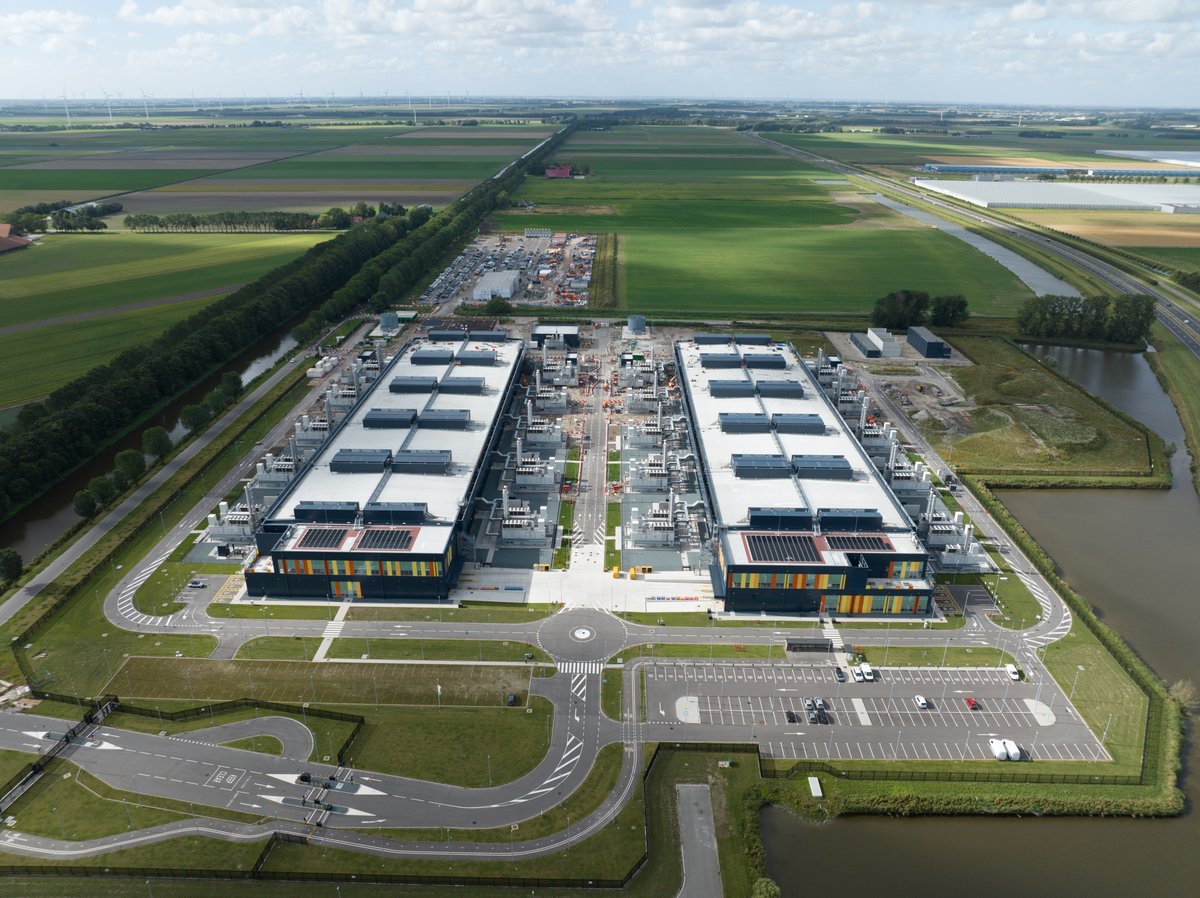
The Unexpected Winner in the AI Infrastructure Boom
Cummins ($CMI), the 111-year-old industrial powerhouse traditionally known for truck engines, is experiencing an unexpected renaissance by capitalizing on one of the most explosive growth trends in technology: the insatiable appetite for backup power generators in artificial intelligence data centers. As hyperscalers like Amazon, Microsoft, and Google race to build out massive AI infrastructure, they're turning to Cummins for the critical power systems that keep their operations humming 24/7. This strategic pivot is proving transformative for the company, driving record profitability in its power systems segment and prompting management to substantially raise long-term revenue guidance.
The company's latest results underscore just how significant this opportunity has become. Cummins' power systems segment—which includes backup generators, fuel cells, and distributed power solutions—grew 19% year-over-year, a remarkable clip for a mature industrial manufacturer. More impressively, the segment achieved record EBITDA margins of 29.5%, reflecting strong pricing power and operational leverage in a market where supply constraints remain persistent. This exceptional performance in power systems is particularly noteworthy because it's occurring against the backdrop of weakness in Cummins' legacy North American truck engine business, illustrating how the company is successfully diversifying its revenue streams away from traditional heavy-duty transportation.
A Strategic Bet Paying Dividends
The implications of Cummins' strategic positioning extend far beyond current quarter results. Management has raised its 2030 revenue targets to $45-50 billion, up from previous guidance, representing compound annual growth rates of approximately 8-12% depending on the midpoint assumption. Equally significant is the company's commitment to maintaining EBITDA margins above 20% during this period—a notable achievement given that expanding into new markets often pressures margins during the growth phase. This guidance reflects management's confidence that the AI data center tailwind will remain durable well into the latter part of this decade.
What makes Cummins' position particularly defensible is the substantial backlog extending into 2028. In the capital-intensive world of data center construction, multi-year backlogs typically indicate genuine structural demand rather than cyclical purchasing patterns. This extended visibility into future revenue provides shareholders with exceptional certainty about near-term growth trajectory and allows management to maintain pricing discipline while allocating capital efficiently across the organization.
The broader context reveals why Cummins has become such an unexpected beneficiary of the AI infrastructure buildout. Data centers require continuous, reliable power to prevent catastrophic downtime. While renewable energy integration is increasing, backup power generation remains non-negotiable for mission-critical facilities. Cummins brings decades of expertise in designing, manufacturing, and servicing generators that can operate reliably in demanding industrial environments—exactly what hyperscale data centers require. Additionally, the company's existing global distribution and service network provides a competitive moat that new entrants would struggle to replicate.
Market Implications and Competitive Positioning
The power systems opportunity represents a structural shift in how market participants view Cummins. Historically, the company's fortunes rose and fell with heavy-duty truck production cycles, making it a classic cyclical industrial play vulnerable to economic downturns. The emergence of a high-margin, growth-oriented power systems business backed by durable multi-year backlogs is fundamentally rerating the company's investment thesis. Rather than viewing Cummins as a mature, slow-growth industrial manufacturer, investors increasingly recognize it as a leveraged play on AI infrastructure investment—one of the secular trends most likely to drive corporate capital expenditures over the next several years.
This transformation also occurs within a competitive landscape where traditional power generation competitors remain largely focused on legacy markets. Caterpillar ($CAT) and other heavy equipment manufacturers have been slower to capitalize on the AI data center opportunity with equivalent scale. Meanwhile, Cummins' scale in manufacturing, proven reliability, and global support infrastructure position it well relative to smaller, more specialized competitors. The company's ability to achieve 29.5% EBITDA margins in power systems suggests pricing power that reflects both strong demand and limited competitive alternatives.
The raised 2030 guidance also carries implications for Cummins' capital allocation strategy. Higher revenue and margin expectations should translate into substantially increased free cash flow, giving the company more optionality for dividends, share repurchases, or strategic acquisitions. Management's confidence in sustained demand also supports continued investment in manufacturing capacity and technology innovation—particularly around fuel cell solutions and emissions reduction, areas where Cummins is gaining traction with environmentally-conscious enterprise customers.
Why This Matters for Investors
For equity investors, Cummins' transformation carries several critical implications. The company is transitioning from a traditional industrial business model characterized by mature market dynamics and commodity-like competition toward a higher-growth, higher-margin model aligned with structural technology trends. The power systems segment's 19% growth rate and record margins suggest the company is early-to-mid cycle in capturing this opportunity, implying years of outperformance potential remaining.
The extended backlog into 2028 is particularly significant because it removes execution risk and provides visibility that traditionally allows industrial companies trading at premium valuations to justify those multiples. Most cyclical industrials trade at discounts precisely because their earnings are unpredictable; Cummins increasingly offers the earnings visibility of a more stable business. Furthermore, the company's scale allows it to achieve margins that smaller, specialized competitors cannot match, creating a durable competitive advantage.
For fixed-income investors and creditors, the higher revenue and margin guidance translates into improved debt servicing capacity and reduced financial risk. For customers of Cummins, the company's expanding capacity and multi-year commitment to serving data center demand suggests reliable supply continuity—a critical consideration for hyperscalers managing billion-dollar infrastructure projects.
Looking Ahead
Cummins exemplifies how established industrial companies can achieve significant growth and value creation by identifying and capitalizing on emerging customer needs at precisely the right moment. The company's traditional truck engine business may face headwinds from economic cycles and regulatory changes, but the power systems opportunity provides a substantial offset with superior economics. With a $45-50 billion revenue target by 2030, margins above 20%, and backlog visibility extending years into the future, Cummins has repositioned itself as a core infrastructure play on the artificial intelligence buildout that will define corporate capital spending for the remainder of this decade.
The real value may lie in recognizing that Cummins is not simply growing its power systems business incrementally—it's fundamentally transforming its competitive position and earnings sustainability. That's the kind of shift that separates outperformers from the broader industrial pack, and why a "boring" industrial manufacturer suddenly commands close attention from sophisticated investors tracking the AI infrastructure opportunity.