
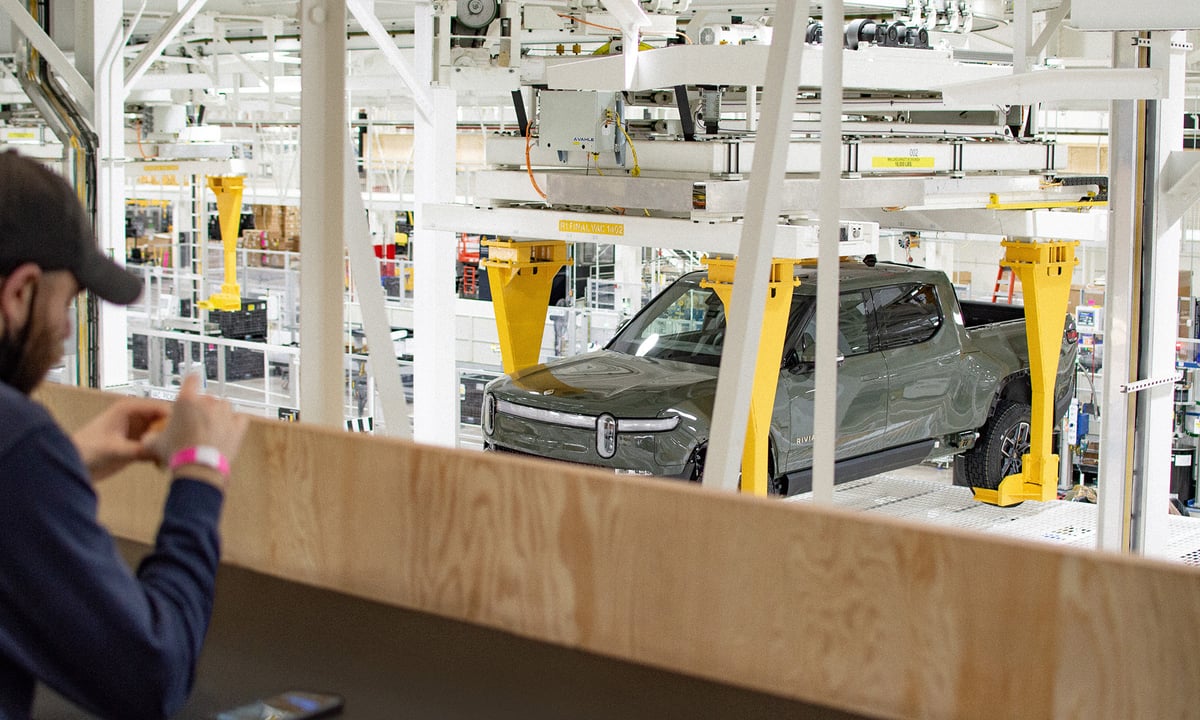
Rivian Automotive trades at a significant valuation discount relative to Tesla, with the electric vehicle manufacturer commanding a 2.9x price-to-sales multiple compared to Tesla's 15.8x. This gap, while substantial, reflects fundamental differences in operational scale, profitability, and market positioning rather than indicating an obvious bargain. Tesla's established manufacturing footprint, positive cash flow generation, and dominant market share justify its premium valuation, whereas Rivian remains pre-profitability with limited production history.
The company faces a crucial inflection point in 2026 with the planned launch of its R2 mass-market vehicle, positioned as a lower-cost alternative to its current lineup. Success with the R2 could materially accelerate revenue growth and improve unit economics, potentially narrowing the valuation gap with established EV manufacturers. Industry analysts maintain relatively conservative growth forecasts, suggesting limited consensus around near-term catalysts that would justify multiple expansion.
Investors should weigh Rivian's attractive entry valuation against execution risks inherent in scaling production while simultaneously managing capital expenditures. The company's path to profitability and market share gains remains dependent on flawless operational execution and sustained demand for premium electric vehicles, factors that will likely determine whether current valuations prove prescient or punishing.