
Wraps and Recovery: Can Sweetgreen Turn Around Its Decimated Stock?
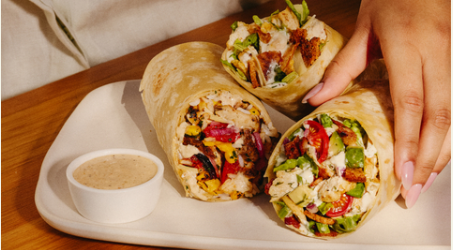
Sweetgreen is banking on a new menu innovation to reverse one of the restaurant sector's most dramatic collapses. The fast-casual salad chain reported catastrophic fourth-quarter 2025 results, with comparable sales plummeting 11.5% and total revenue declining 3.5% to $155.2 million, prompting management to test a new wrap offering as a potential turnaround catalyst. The company's stock has cratered nearly 90% from its peak, leaving investors to question whether menu innovation alone can salvage the struggling chain—or whether deeper structural challenges plague the business.
The Devastating Quarterly Reality
Sweetgreen's Q4 2025 performance was nothing short of alarming for a company that once commanded significant investor enthusiasm. The 11.5% comparable sales decline represents a severe contraction in customer traffic and spending at established locations, a metric that reveals fundamental weakness in operational execution or customer demand. Total revenue fell to $155.2 million, indicating that the company's expansion efforts have been insufficient to offset declining same-store sales.
These figures paint a bleak picture for a chain that had positioned itself as a premium fast-casual operator. Key metrics from the quarter include:
- Comparable sales decline: 11.5%
- Total revenue: $155.2 million (down 3.5% year-over-year)
- Stock decline: Approximately 90% from peak valuation
- Testing regions: New York, the Midwest, and Los Angeles
The magnitude of the comparable sales decline is particularly troubling because it suggests that customer defection or spending reduction is occurring across the existing store base, not just in newly opened locations. This indicates potential loss of market share to competitors or a fundamental shift in consumer preferences away from Sweetgreen's core offerings.
Wraps as a Hail Mary: Limited Testing Underway
Facing mounting pressure from stakeholders, Sweetgreen's management team has introduced a new wrap menu item, which represents the company's primary near-term strategic response to deteriorating financial performance. Rather than rolling out nationally, the company is pursuing a cautious approach with limited market testing in three key regions: New York, the Midwest, and Los Angeles.
This phased rollout strategy suggests management recognizes the stakes involved—premature national expansion of a new product without proven demand could accelerate cash burn and further depress the stock. The wrap offering may be designed to:
- Capture customers seeking different format options
- Compete more directly with rivals like Chipotle and Panera Bread
- Generate incremental traffic without cannibalizing existing salad sales
- Expand daypart appeal (wraps may perform better at lunch or dinner)
However, the limited scope of testing reveals management's cautious optimism. If wraps were expected to be a game-changer, broader rollout would likely be under consideration. Instead, Sweetgreen is methodically evaluating whether the product resonates with consumers before committing significant capital and operational resources.
Market Context: A Challenged Fast-Casual Landscape
Industry Headwinds and Competitive Dynamics
Sweetgreen's struggles must be understood within the broader context of the fast-casual restaurant sector, which has faced significant headwinds in 2024-2025. The category, once heralded as the future of dining, has matured considerably, with increased competition, labor cost pressures, and shifting consumer preferences creating a difficult operating environment.
Key industry trends affecting Sweetgreen:
- Labor inflation: Fast-casual chains have absorbed substantial wage increases, pressuring margins
- Consumer spending pullback: Middle-income consumers have become more price-sensitive in 2025
- Competitive intensity: Rivals like Chipotle ($CMG), Panera Bread ($PNRA), and regional chains have intensified competition
- Delivery economics: Third-party delivery has created margin challenges for smaller chains
- Discretionary spending weakness: Salads are often viewed as discretionary items, vulnerable in economic slowdowns
Chipotle has demonstrated that fast-casual chains can thrive, with strong comparable sales growth and pricing power, but Sweetgreen lacks Chipotle's brand scale, unit volume leverage, and operational efficiency. Meanwhile, traditional QSR chains have launched health-conscious options, further fragmenting Sweetgreen's addressable market.
The company's geographic concentration also presents challenges. Heavy presence in urban markets like New York and Los Angeles exposes Sweetgreen to local economic volatility and high real estate costs. If the wrap testing strategy is concentrated in these same regions, it may not provide representative data for potential national performance.
Investor Implications: Valuation Opportunity or Value Trap?
The Case for Recovery
Despite the grim headlines, some factors suggest that a recovery isn't entirely implausible. The stock's near-90% decline has likely created a compressed valuation that could reward investors if the company stabilizes operations. Management's assertion that "historically strong unit volumes" remain achievable suggests that individual locations can still generate solid performance under favorable conditions.
If the broader economy improves in 2026—particularly benefiting middle-income consumer spending—Sweetgreen could see a rebound in comparable sales as consumers return to premium fast-casual dining. Additionally, successful wrap menu adoption could unlock incremental revenue streams and improve customer frequency metrics.
The Bull Case Limitations
However, management's "poor near-term guidance for 2026" directly contradicts optimistic recovery scenarios. If executives are guiding for continued weakness, investors should take that signal seriously. Poor guidance typically reflects:
- Low visibility into demand recovery: Management doesn't see near-term catalysts
- Structural share loss: Customer defection may be permanent
- Margin pressure: Rising costs or promotional activity likely to continue
- Competitive displacement: Market share may be permanently lost to rivals
The wrap initiative, while potentially positive, carries execution risk. Menu innovation in fast-casual dining is notoriously difficult, with many failed new product launches. If wraps don't gain traction during testing, Sweetgreen will have limited strategic options beyond cost-cutting or asset sales.
Path Forward for Shareholders
For investors, Sweetgreen represents a speculative turnaround play rather than a core holding. The stock's depressed valuation may reflect appropriate risk-adjusted pricing given the company's operational challenges. Success hinges on three factors:
- Wrap menu traction: Consumer response during 2025-2026 testing will be critical
- Macro stabilization: Economic recovery must support discretionary dining spending
- Competitive positioning: Sweetgreen must differentiate against better-capitalized rivals
Conclusion: A Critical Period Ahead
Sweetgreen's Q4 2025 results and forward guidance paint a picture of a company in genuine distress. The 11.5% comparable sales decline and management's poor outlook for 2026 suggest structural challenges beyond temporary market weakness. The wrap menu initiative represents management's best near-term hope for reigniting growth, but limited testing in three regions indicates cautious expectations.
For investors, this is fundamentally a bet on whether a menu innovation and potential economic recovery can overcome sustained competitive pressure and customer defection. The stock's devastated valuation may offer upside if turnaround efforts succeed, but the risk of further deterioration remains elevated. Until wrap testing yields clear evidence of demand and the company provides more constructive guidance, Sweetgreen remains a high-risk situation best suited for those comfortable with significant downside exposure.