
The Breakthrough
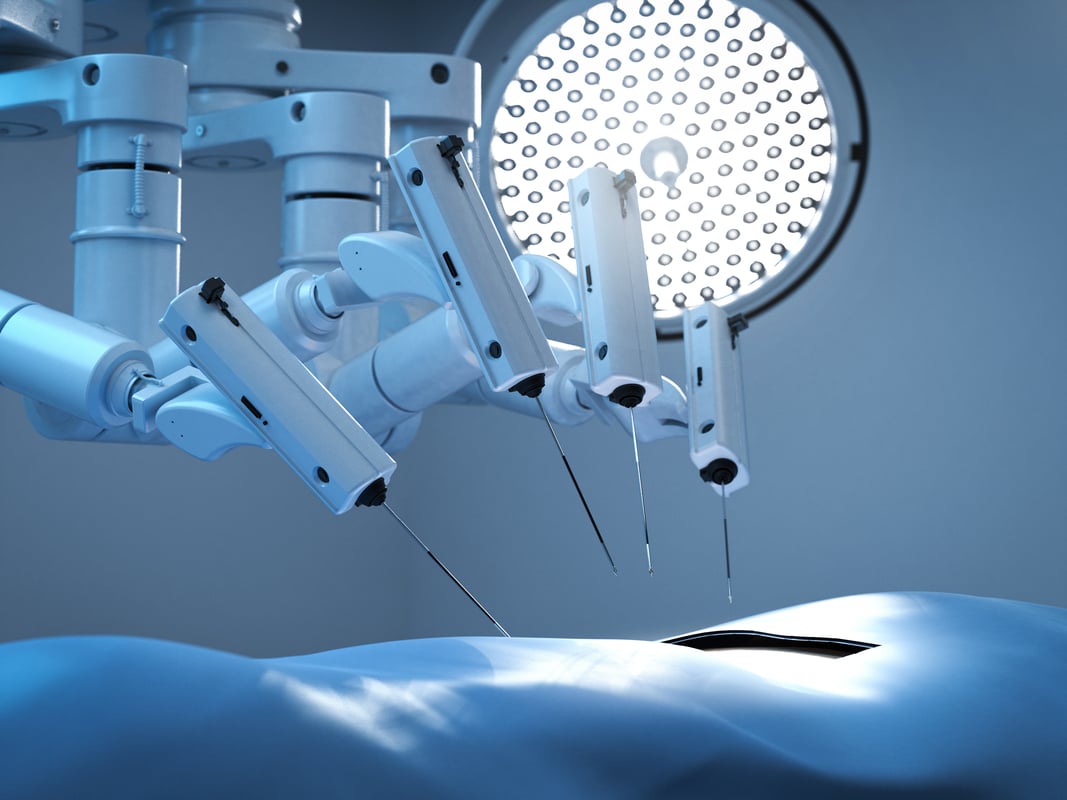
Medtronic has achieved a significant milestone with FDA approval for its Hugo surgical robot system in the United States, marking a pivotal moment in the company's growth trajectory. This regulatory clearance positions the healthcare technology giant to compete directly in the rapidly expanding robotic surgery market, a sector that has been dominated by Intuitive Surgical's da Vinci platform. The approval opens a substantial market opportunity at a time when surgical automation adoption is accelerating across hospital systems worldwide. For investors, the approval represents not just a technical achievement but a potential catalyst that could reshape Medtronic's growth narrative and valuation multiple.
The Hugo system's entrance into the U.S. market comes at a critical juncture for Medtronic ($MDT), which has been refining its surgical robotics offering to differentiate from entrenched competitors. The FDA clearance validates years of research and development investment, positioning the company to capture share in a market projected to expand significantly as hospitals increasingly adopt robotic-assisted procedures. Unlike incremental product launches, regulatory approval for a disruptive technology in surgery typically generates substantial commercial momentum and resets market expectations for a company's long-term revenue potential.
Valuation and Market Position
The valuation differential between Medtronic and its primary competitor Intuitive Surgical ($ISRG) presents a compelling investment narrative:
- Medtronic's P/E ratio: 27x
- Intuitive Surgical's P/E ratio: 64x
- Valuation premium for ISRG: More than 2.3x higher multiple
- Medtronic dividend yield: 2.9% with decades of consecutive increases
This 37-point P/E spread suggests the market has yet to fully price in Hugo's potential commercial trajectory. Intuitive Surgical commands a premium valuation largely due to da Vinci's market leadership, entrenched hospital relationships, and predictable recurring revenue from procedure licensing. However, if Hugo achieves even a fraction of da Vinci's adoption and market penetration rates, Medtronic's current valuation could appear significantly undervalued in retrospect.
Median trading multiples in the medical device sector typically range from 20-35x earnings, making Medtronic's 27x valuation reasonable for a mature company. Intuitive Surgical's 64x multiple reflects the market's assessment of da Vinci's durable competitive moat and high-growth prospects. The critical question for investors is whether Hugo's regulatory approval justifies a significant multiple expansion for Medtronic, potentially closing the valuation gap with Intuitive Surgical.
Beyond the robotics opportunity, Medtronic's balance sheet strength deserves emphasis. The company has demonstrated commitment to shareholder returns through decades of uninterrupted dividend increases, qualifying it as a dividend aristocrat. The 2.9% yield provides meaningful income while retaining exposure to Hugo's upside potential—a dual-benefit characteristic uncommon among pure-growth technology plays.
Market Context and Competitive Dynamics
The robotic surgery market remains in early-to-middle stages of penetration in the United States. Da Vinci systems have achieved substantial adoption across hospitals, particularly in prostate, gynecological, and colorectal procedures. However, high capital costs, training requirements, and licensing fees have limited adoption to predominantly large, well-capitalized hospital systems. Hugo's entrance introduces competition that could theoretically lower barriers to entry through pricing competition, expanded feature sets, or alternative economic models.
The broader healthcare technology sector is witnessing accelerating digital transformation and automation adoption. Hospitals face sustained labor shortages, rising operative costs, and patient demand for minimally invasive procedures—all factors that favor robotic-assisted surgery adoption. Unlike some disruptive technologies that compete with entrenched incumbents, Hugo enters a market with demonstrated demand and proven clinical benefits. The question is not whether hospital systems will adopt surgical robotics, but rather how many will choose Hugo versus competing platforms.
Regulatory approval from the FDA represents de facto validation of Hugo's clinical safety and efficacy. This removes a significant barrier to adoption and allows Medtronic to begin commercial deployment, training programs, and relationship-building with hospital procurement teams. The timing of approval coincides with post-pandemic normalcy in elective surgical volumes, providing favorable market conditions for launching a capital-intensive medical device.
Investment Implications and Forward Outlook
For equity investors, Medtronic presents an asymmetric risk-reward profile emerging from this regulatory milestone. The downside case assumes Hugo fails to capture meaningful market share, da Vinci maintains its competitive moat, and Medtronic's valuation remains range-bound. This scenario would still preserve the 2.9% dividend yield and underlying cash generation from Medtronic's established product portfolio.
The upside case assumes Hugo achieves adoption trajectories comparable to da Vinci during its growth phase, potentially capturing 20-30% market share over a 5-10 year horizon. If realized, this scenario could drive significant revenue and earnings-per-share growth, justifying multiple expansion toward the mid-40s range—materially higher than current levels while still below Intuitive Surgical's valuation.
The regulatory environment appears supportive. The FDA has historically encouraged competition in medical device markets and approved surgical robotics platforms from multiple manufacturers. Patent portfolios and intellectual property protection differ between companies, but fundamental regulatory pathways for competing surgical robots appear established and precedent-based.
For dividend-focused investors, Medtronic offers an unusual combination: downside protection through a well-established, dividend-paying business with decades of consecutive increases, plus exposure to a genuine growth catalyst in Hugo's commercial ramp. This hybrid characteristic appeals to both income and total-return oriented investors.
Conclusion
Mediatronic's FDA approval for the Hugo surgical robot system represents a meaningful inflection point for the company, introducing a legitimate competitive threat to Intuitive Surgical's market dominance. The valuation spread between the two companies—with Medtronic trading at 27x P/E versus Intuitive Surgical at 64x—suggests the market has not yet fully priced in Hugo's commercial potential. While execution risk remains substantial, the regulatory foundation is now established, hospital demand for surgical automation continues strengthening, and Medtronic's financial position supports sustained commercialization investment. For investors seeking exposure to medical device innovation with downside protection through dividend income, Medtronic presents a compelling risk-reward calculus that may attract institutional and retail capital before Hugo's growth trajectory becomes consensus.