
Warren Buffett's Parting Investment Strategy Reshapes Berkshire Portfolio
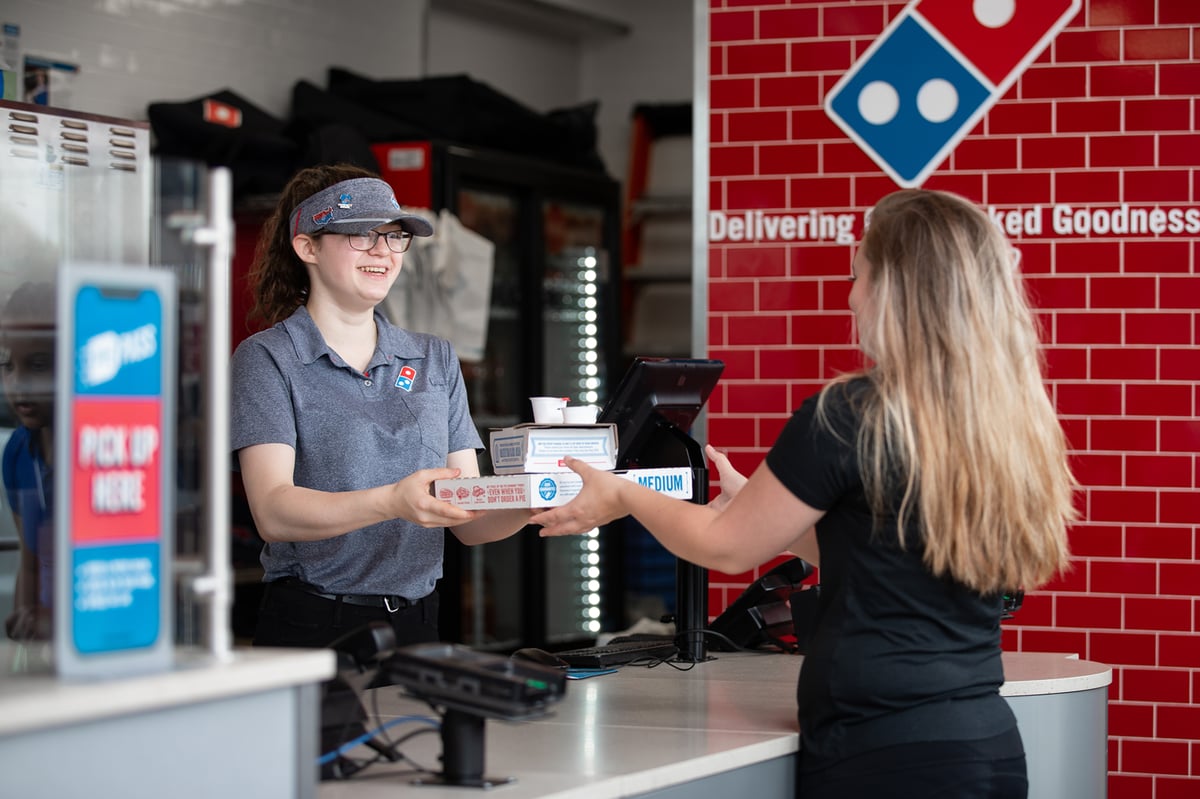
Warren Buffett's final trades as Berkshire Hathaway ($BRK.B) chief executive reveal a striking pivot in investment philosophy: the legendary investor has reduced positions in Apple ($AAPL) and Amazon ($AMZN) while deploying substantial capital into Domino's Pizza ($DPZ), acquiring 368,055 shares valued at approximately $109 million. This strategic reallocation, executed as Buffett prepares to step back from day-to-day leadership, underscores a fundamental shift away from high-growth technology stocks toward established, cash-generative businesses with fortress-like competitive advantages.
The move has captured market attention precisely because it contradicts the narrative of Buffett's recent years, during which his $400+ billion investment in Apple became the crown jewel of Berkshire's tech-heavy portfolio. Yet at this critical juncture—with Buffett nearing the end of his tenure—the world's most influential investor is signaling confidence in defensive, dividend-paying equities over growth narratives that have dominated markets throughout this decade.
The Numbers Behind the Strategic Shift
Buffett's latest purchases represent a meaningful commitment to the casual dining and pizza delivery sector. The 368,055-share stake in Domino's comes at a time when the company has established itself as one of the most resilient restaurant operators in the United States. Domino's has delivered consistent same-store sales growth, expanded its digital ordering platform to generate nearly 70% of sales through digital channels, and maintained disciplined capital allocation through share buybacks and dividend increases.
The reduction in Apple and Amazon holdings, while not detailed with exact share counts in this transaction, represents a broader recalibration. Berkshire Hathaway had maintained Apple as its largest stock holding with significant exposure, reflecting Buffett's thesis on the company's ecosystem moat and pricing power. Amazon, meanwhile, represented exposure to e-commerce dominance and cloud computing growth. Yet Buffett's decision to trim these positions suggests:
- Concerns about valuation multiples in mega-cap technology
- A preference for immediate cash generation over optionality
- Growing skepticism about whether tech stocks warrant premium valuations
- Alignment with his stated preference for "resilient, market-leading businesses with stable dividends"
The Domino's investment signals Buffett's conviction in a business model that has proven remarkably durable: a franchised operating system with minimal capital requirements, strong unit economics, and proven pricing power amid inflation. The company generates substantial free cash flow, returns capital to shareholders consistently, and operates in a market with high barriers to entry for competitors.
Market Context: A Contrarian Bet Against Tech Dominance
Buffett's move arrives during a period of intense market scrutiny surrounding technology valuations. The "Magnificent Seven" tech stocks—Apple, Microsoft, Google, Amazon, Tesla, Meta, and Nvidia—have driven much of the equity market's gains in recent years, commanding premium valuations justified by artificial intelligence potential and dominant market positions.
However, questions persist about whether these valuations remain justified:
- Tech stocks trade at elevated price-to-earnings multiples relative to historical averages
- Interest rate sensitivity presents downside risk if inflation remains sticky
- Regulatory scrutiny intensifies globally, particularly around AI, antitrust, and data privacy
- Capital intensity requirements for AI infrastructure raise questions about near-term profitability
Domino's, by contrast, operates in a consumer staples-adjacent sector with lower regulatory risk. The company benefits from secular trends toward delivery and convenience, operates with asset-light franchising, and has demonstrated pricing power by raising prices without losing customers during inflationary periods.
Fromthe competitive perspective, Domino's faces ongoing competition from Pizza Hut, local pizzerias, and other delivery platforms like DoorDash ($DASH) and Uber Eats. However, the company's scale in delivery, brand recognition, and technological infrastructure create sustainable competitive advantages. Buffett's investment suggests confidence that Domino's will navigate this landscape successfully.
Investor Implications: What This Means for Shareholders
For Berkshire Hathaway shareholders, Buffett's portfolio restructuring carries multiple implications:
Signal on Market Direction: When the world's most successful investor begins trimming mega-cap tech holdings, it commands attention. This doesn't necessarily predict a market downturn, but it reflects skepticism about valuations. Investors should consider whether their own tech weightings reflect conviction or momentum.
Succession Planning: With Greg Abel set to assume the CEO role, Buffett's final trades may reflect his investment philosophy being passed forward. The emphasis on durable, dividend-paying businesses aligns with the lower-risk profile appropriate for a $800+ billion asset manager transitioning leadership.
Capital Deployment Strategy: The $109 million allocated to Domino's represents a small fraction of Berkshire's cash position (which exceeded $150 billion as of recent filings), but the signal matters more than the size. It demonstrates willingness to deploy capital into non-tech sectors when valuations appear attractive.
Dividend and Buyback Perspective: Domino's returns capital to shareholders through both dividends and aggressive buybacks, creating a positive feedback loop. This contrasts with some tech stocks that reinvest all cash into growth initiatives. For an investor of Buffett's maturity, cash returns become increasingly valuable.
Looking Forward: A Final Statement on Value
Buffett's parting investment moves represent more than routine portfolio adjustments—they constitute a philosophical statement. At a moment when artificial intelligence, cloud computing, and digital transformation dominate financial media, one of history's greatest investors is doubling down on a business that serves pizza through delivery networks.
This apparent simplicity masks sophisticated thinking: Domino's has built a business model that generates cash, compounds shareholder value, and maintains competitive advantages without requiring cutting-edge technology or massive capital expenditures. It represents everything Buffett has historically valued: simplicity, durability, and reasonable valuation.
For equity markets broadly, the reallocation serves as a reminder that value exists across multiple sectors and that growth alone—without regard to price—rarely generates superior long-term returns. Whether Buffett's skepticism on mega-cap tech proves prescient remains uncertain, but his conviction in Domino's durability provides a useful contrast in an era dominated by growth narratives and artificial intelligence optimism.