
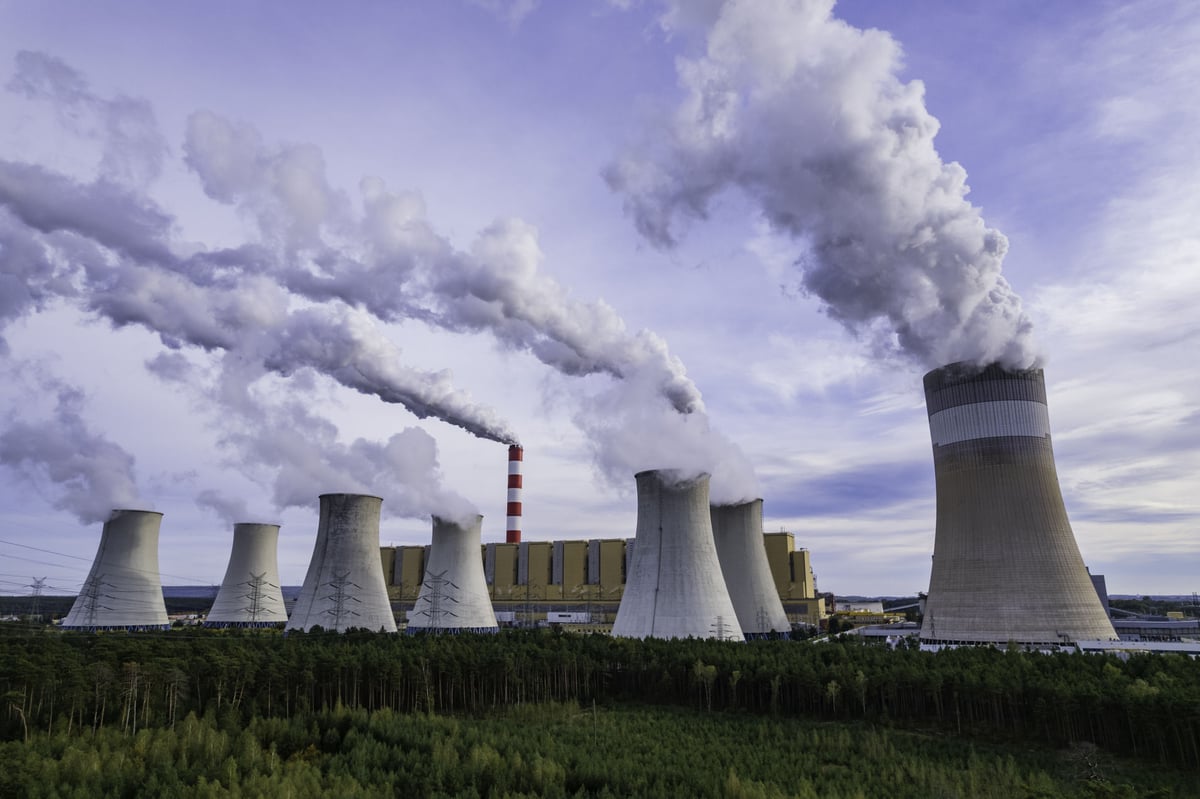
BlackRock Pivots From Big Tech: AI Energy Stocks Poised to Outperform in 2026
BlackRock, the world's largest asset manager, is shifting its investment thesis for 2026, recommending investors rotate away from traditional artificial intelligence plays in Big Tech toward a less-crowded but potentially higher-returning segment: energy companies positioned to power the AI infrastructure boom. The strategic recommendation marks a significant reallocation of capital, acknowledging that the explosive energy demands of AI data centers present a more compelling risk-reward opportunity than established technology giants already priced to perfection.
The timing of this call reflects a maturing AI investment cycle. While $NVDA, $MSFT, and other mega-cap tech stocks have dominated portfolios since the generative AI breakout, BlackRock argues that the infrastructure layer—specifically the power generation and distribution networks required to support AI's voracious appetite for electricity—remains underappreciated by the broader investment community. This recommendation surfaces a compelling arbitrage: energy stocks trading at more reasonable valuations while positioned to capture exponential growth from AI data center expansion.
The Energy Demand Crisis Behind the Thesis
The catalyst driving BlackRock's recommendation is stark and quantifiable. AI data centers are expected to increase global power consumption by a staggering 30-fold by 2035, a trajectory that dwarfs historical electricity demand growth rates. This isn't theoretical—it's a mathematical certainty given the computational intensity of large language models and the aggressive capital expenditure schedules announced by hyperscalers like $MSFT, $GOOG, $AMZN, and $META.
Current data center power consumption represents a material percentage of grid demand in key markets, and this is only accelerating. Major cloud providers have publicly committed to massive buildouts of AI compute facilities, each requiring megawatts of continuous, reliable power. The problem facing utilities and energy companies is stark: existing generation capacity and grid infrastructure are insufficient to meet this demand. This supply-demand imbalance creates a structural tailwind for energy companies positioned to fill the gap.
BlackRock identifies three companies as top picks to capitalize on this trend:
- Bloom Energy ($BE): Specializes in hydrogen fuel cells and distributed energy solutions, offering a decentralized power generation approach particularly suited to data center applications
- Constellation Energy ($CEG): A major nuclear power operator with a portfolio of carbon-free generation capacity, directly contracted to data center operators
- GE Vernova ($GEV): A power generation equipment manufacturer benefiting from both new capacity build-out and grid modernization investments
Each represents a different angle on the same structural theme: the electrification and expansion of power infrastructure required to support AI's energy requirements.
Market Context: The Infrastructure Play Catches Up
Investors in artificial intelligence have historically laser-focused on the companies building AI—$NVDA with its dominant chip architecture, $MSFT with its integration strategy through OpenAI, and cloud giants racing to secure training and inference capacity. Yet this concentration has created valuation extremes that worry even bullish observers. The Magnificent Seven tech stocks have become sufficiently crowded that marginal money now faces diminishing returns on new deployments.
Energy stocks, by contrast, have been the forgotten beneficiary of AI adoption. The utilities and power generation sector has historically traded on dividend yields and regulatory stability rather than growth optionality. The AI boom fundamentally changes this calculus—these companies now represent leveraged plays on exponential power demand growth, yet trade at valuations that often fail to reflect this structural upgrade.
The competitive landscape in energy-for-AI is still forming. Utilities are scrambling to build new generation capacity, with nuclear power experiencing a renaissance as the only scalable, carbon-free baseload generation technology. Data center operators are simultaneously exploring distributed energy solutions, hydrogen fuel cells, and even small modular reactors. This creates multiple pathways for energy suppliers to capture value, reducing concentration risk compared to the chip-and-cloud computing winners of the past three years.
Regulatory tailwinds further support this thesis. Governments globally are prioritizing grid modernization and clean energy infrastructure as critical national security assets. Capital deployment toward these sectors faces fewer permitting obstacles than before, and some jurisdictions are actively fast-tracking approvals for data center power supplies.
Investor Implications: A Rotation Play With Structural Support
BlackRock's recommendation has immediate portfolio implications. For investors already overweight mega-cap tech on the assumption that AI will drive perpetual growth, this suggests taking profits and redeploying into the infrastructure layer. $BE, $CEG, and $GEV collectively represent a materially different risk profile: lower valuations, less analyst coverage, more predictable cash flows (especially for nuclear operators like Constellation), and explicit exposure to a 30-fold power demand increase through 2035.
The valuation argument is compelling. While $NVDA trades at substantial multiples reflecting years of consensus growth assumptions, energy companies often trade at single-digit earnings multiples or yields that don't price in the AI demand revolution. For a patient, long-term investor, this mismatch creates asymmetric risk-reward.
However, investors should understand the execution risks. Energy projects face long development timelines, permitting challenges, and regulatory uncertainty. Bloom Energy's hydrogen fuel cell technology, while promising, remains less proven at data center scale than traditional power generation. GE Vernova's equipment business is cyclical and depends on customer capex cycles. Constellation Energy, the most straightforward play, benefits from existing nuclear assets but faces aging infrastructure and decommissioning costs.
The broader market implication is a potential valuation reset. If capital begins flowing from overvalued mega-cap tech into undervalued energy infrastructure, we could see a sector rotation that reshapes portfolio construction for 2026 and beyond. This would reduce concentration in the Magnificent Seven while creating a more diversified AI-growth story.
Looking Ahead: The Next Phase of AI Investment
BlackRock's call represents a maturation of AI investment thesis. The initial phase—betting on the companies building AI chips, software, and platforms—captured extraordinary returns. The second phase recognizes that the infrastructure supporting AI deployment will be equally critical and, for now, less expensively valued.
Investors considering this rotation should view it as a multi-year structural bet rather than a tactical trade. The 30-fold power demand increase projected to 2035 will unfold gradually, but consistently. Companies like $CEG and $GEV have multi-decade visibility into their addressable market. $BE represents a higher-risk, higher-reward play on distributed hydrogen energy gaining adoption.
The energy sector's transition from mature, slow-growth utility players to critical infrastructure enablers for AI represents one of the most significant thematic shifts in markets. BlackRock's institutional recommendation validates what structural investors have begun recognizing: the power behind AI may ultimately prove more valuable than the AI itself.