
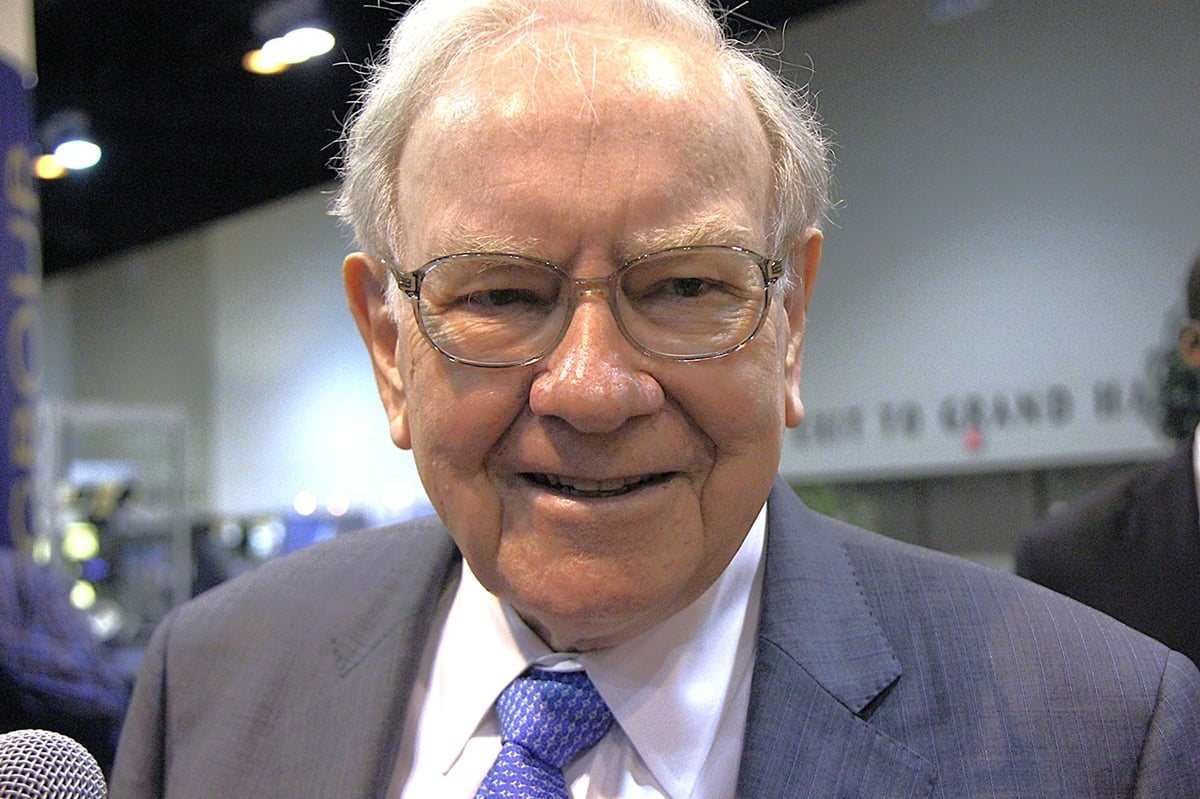
Warren Buffett's Bullish Energy Play: Why Berkshire Hathaway Is Doubling Down on Chevron
Berkshire Hathaway made a significant statement about energy market fundamentals in the fourth quarter of 2025, acquiring 8 million additional shares of Chevron Corporation ($CVX) and lifting its total position to 7.24% of the company. The move, representing one of the most prominent capital deployment decisions by Warren Buffett's investment vehicle in recent quarters, suggests the legendary investor sees substantial upside potential in oil and gas equities as crude prices remain depressed. The timing is particularly intriguing given that Chevron stock delivered anemic returns of just 1.5% in 2025 despite the company achieving record oil and gas production—a divergence that Buffett appears to view as a major opportunity rather than a warning sign.
The Valuation Disconnect: Production Records Meet Market Skepticism
The paradox facing Chevron and the broader energy sector in 2025 reveals a critical disconnect between operational performance and equity valuations. Despite executing record production volumes, Chevron's stock price languished as crude oil prices hovered around the $70-per-barrel mark, well below levels that would drive material margin expansion or significantly elevate investor sentiment. This structural headwind created precisely the type of pricing inefficiency that attracts Buffett's attention—a high-quality business trading at depressed valuations due to temporary commodity headwinds rather than fundamental deterioration.
The company's $50-per-barrel break-even point represents a critical metric in this analysis. With crude trading at $70, Chevron enjoys a $20 cushion even at current suppressed prices, allowing it to maintain robust cash generation and capital returns to shareholders. This operational efficiency—built through decades of disciplined capital allocation and technological advancement—means the company remains highly profitable even in a low-price environment. For investors, this structural advantage implies that any normalization in crude prices would translate into outsized earnings growth without requiring proportional increases in production.
Key financial metrics supporting the thesis:
- Current crude oil price environment: ~$70/barrel
- Chevron's operational break-even: $50/barrel
- 2025 stock performance: +1.5%
- Berkshire's new stake: 8 million shares (7.24% of company)
- Production levels: Record volumes in 2025
Market Context: Energy Sector Dynamics and Commodity Cycle Positioning
Understanding Buffett's timing requires examining the broader energy sector landscape and commodity cycle positioning entering 2026. The global oil market remains caught between competing forces: persistent geopolitical tensions supporting price floors, surplus production capacity limiting upside, and transition-related demand uncertainties creating structural headwinds. Yet within this complex environment, Chevron stands as one of the industry's most resilient operators—a position that has historically attracted Berkshire's capital during periods of sector skepticism.
The investment arrives amid broader reassessment of energy market fundamentals. While renewable energy deployment accelerates globally, near-term petroleum demand remains robust, and supply-side constraints from underinvestment during the energy transition could potentially support higher prices. Chevron's competitive moat—anchored in low-cost production assets, technological capabilities, and downstream integrated operations—positions the company to benefit disproportionately if crude normalizes toward $80-$90 per barrel, levels not unprecedented in the commodity cycle.
Comparisons to peer operators highlight Chevron's relative attractiveness. The company's integrated upstream-downstream model, strong balance sheet, and shareholder return program provide downside protection relative to pure-play upstream competitors during commodity downturns. This structural quality, combined with current valuation metrics depressed by crude weakness, represents exactly the type of asymmetric risk-reward profile that Buffett's portfolio philosophy prizes.
Investor Implications: Why 2026 Could Reshape Energy Returns
For equity investors, Buffett's signal carries substantial implications beyond Chevron itself. The accumulation suggests confidence in several 2026 scenarios that would unlock "huge profits" as the original thesis indicates:
Scenario 1: Crude Price Recovery — A return toward $80-$90 per barrel would dramatically expand Chevron's cash generation without requiring corresponding production increases. With the $50 break-even cushion, each incremental dollar of crude represents material margin expansion—potentially driving 30-50% earnings upside depending on exact price levels. At current depressed valuations, such a scenario could generate substantial shareholder returns.
Scenario 2: Operational Leverage Recognition — Market participants may increasingly recognize that Chevron's record production volumes provide the platform for earnings acceleration whenever prices normalize. The company has already invested the capital required to achieve these production levels; future crude price improvement converts directly into bottom-line growth without incremental CapEx requirements.
Scenario 3: Capital Return Acceleration — Berkshire's confidence in stable, lower crude prices (supporting $50 break-even operations) may enable Chevron to accelerate share buybacks and dividends. Enhanced capital returns would provide additional return drivers beyond potential price appreciation.
The broader market implication suggests Buffett views energy sector valuations as attractive on a risk-reward basis—a perspective that could influence institutional capital flows if the thesis gains credibility. A sustained crude price recovery toward $75-$80 would validate this positioning, potentially triggering significant outperformance for energy equities relative to broader market benchmarks.
Forward-Looking Outlook: Setting Up 2026's Profit Inflection
As markets enter 2026, Buffett's substantial Chevron position functions as a public statement on commodity cycle positioning and energy sector valuations. The accumulation during a period of record production but suppressed stock performance embodies classic contrarian positioning—building stakes when others flee and asset quality trading below intrinsic value. While crude prices remain volatile and unpredictable, Chevron's operational resilience and structural efficiency provide meaningful downside protection while preserving substantial upside if the commodity cycle recovers as Buffett apparently anticipates. For investors monitoring Berkshire Hathaway's capital allocation signals, this energy commitment signals confidence that 2026 could bring inflection points for both the energy sector and Chevron specifically.