
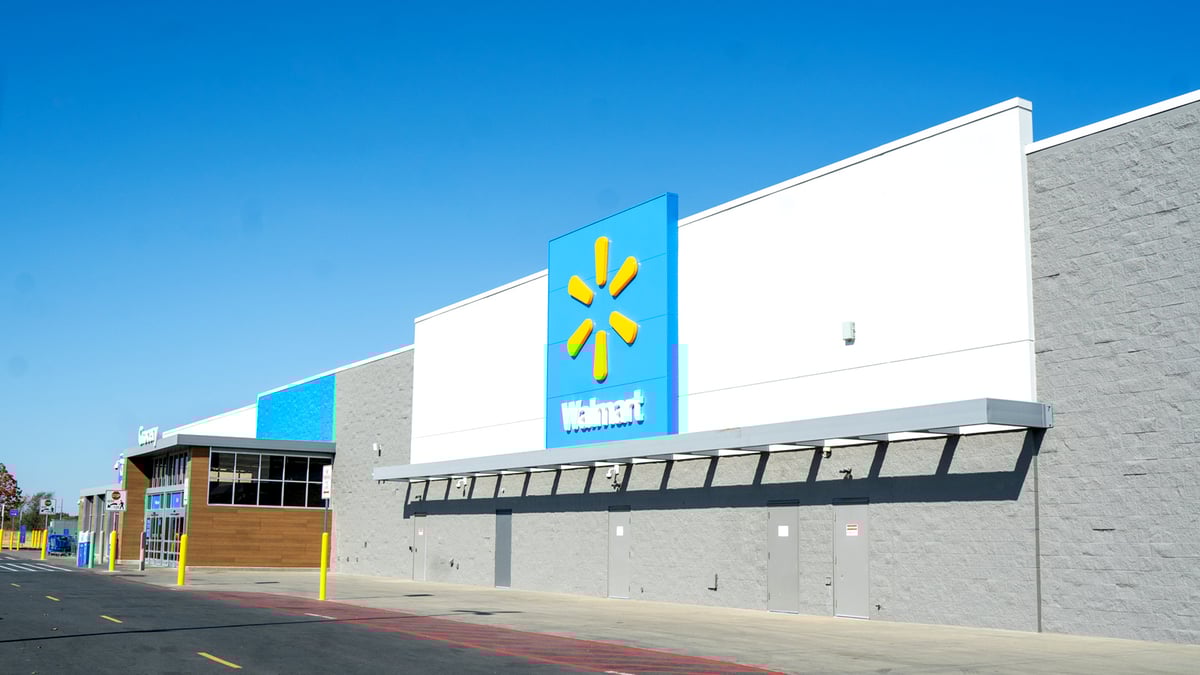
Walmart Deploys Digital Price Tags Across Fleet, Targeting Significant Margin Expansion
Walmart is making a significant operational push by rolling out digital price tags across its entire store network, expanding from the current 2,300 locations where the technology is already implemented. The initiative represents one of the retail giant's most ambitious technology deployments aimed at modernizing store operations and improving profitability in an increasingly competitive retail landscape. While the company has explicitly committed to avoiding controversial dynamic pricing strategies, industry analysts suggest the digital infrastructure could unlock substantial profit improvements through operational efficiencies and enhanced price accuracy.
The Digital Infrastructure Advantage
The expansion of digital price tags addresses multiple operational pain points that have long plagued large-scale retailers. Walmart has emphasized that this technology rollout will focus on three primary objectives:
- Operational efficiency: Eliminating manual price changes across thousands of SKUs
- Labor cost reduction: Freeing store associates from repetitive pricing tasks
- Price accuracy: Ensuring consistency between shelf prices and point-of-sale systems
Digital price tags, also known as electronic shelf labels (ESLs), represent a meaningful shift in how major retailers manage their most dynamic operational variable. Rather than requiring store associates to manually update prices—a labor-intensive process that retailers estimate costs millions annually—Walmart can now implement price changes instantaneously across its network through centralized systems. This backend efficiency translates directly to the company's bottom line, particularly crucial in grocery retail where margins typically hover in the 1-3% range.
The financial implications are noteworthy. Industry projections suggest that comprehensive digital pricing infrastructure could improve Walmart's profit margins by approximately 10 basis points—a seemingly modest figure that translates to roughly $700 million in additional annual profits based on the company's current revenue base. For context, this improvement represents the kind of operational gain that can meaningfully impact earnings per share without requiring top-line revenue growth.
Market Context: Retail's Efficiency Imperative
Walmart's digital pricing initiative arrives amid intensifying competitive pressures and evolving consumer expectations in brick-and-mortar retail. The company competes directly with Amazon ($AMZN) and Target ($TGT) in the discount retail space, all vying for market share in an environment where operational efficiency increasingly determines competitive advantage.
The retail sector has watched how technology investments can reshape profitability. Amazon's dominance in e-commerce has forced traditional retailers to demonstrate equivalent operational sophistication and cost discipline. Digital price tags represent Walmart's response—a technology that enhances the in-store shopping experience while simultaneously reducing operational friction.
Crucially, Walmart has positioned itself against dynamic pricing—the algorithm-driven approach that adjusts prices in real-time based on demand, inventory levels, and other variables. This public commitment matters significantly for brand perception. Dynamic pricing has generated consumer backlash at competitors, with Amazon facing criticism over algorithmic pricing practices. By explicitly rejecting this approach, Walmart maintains its positioning as a value retailer while still capturing the operational efficiency benefits of digital infrastructure.
The technology also addresses a persistent retail challenge: price accuracy and synchronization across channels. In an era where consumers increasingly compare prices across online and in-store options, maintaining consistent pricing while minimizing shrinkage and error is operationally critical. Digital tags eliminate a major source of pricing discrepancies that can erode margins through unauthorized discounts or customer service issues.
Investor Implications: Margin Expansion Without Growth
For Walmart shareholders, this initiative carries meaningful implications for the investment thesis. The company's stock ($WMT) has historically been valued based on consistent margin expansion and operational discipline rather than explosive revenue growth. Digital pricing infrastructure aligns perfectly with this narrative.
The $700 million profit potential from a 10 basis point margin improvement assumes full network implementation. This figure matters because:
- It's margin expansion without revenue growth: Investors typically reward operational improvements that flow directly to earnings
- It's scalable: Once infrastructure is deployed, incremental stores generate proportional benefits
- It's durable: Unlike price-based promotions, operational efficiency improvements tend to stick
- It enhances competitive positioning: Better margins provide flexibility for competitive pricing while protecting returns
Moreover, digital pricing infrastructure creates a platform for future initiatives. Once Walmart has established centralized control over shelf pricing, the company gains capabilities to test localized pricing strategies, regional promotions, and assortment optimization—all without dynamic pricing that alienates consumers.
The initiative also suggests Walmart's confidence in its technology execution. Large-scale retail technology deployments have historically suffered from implementation challenges, compatibility issues, and execution delays. A successful rollout would demonstrate organizational capability and potentially open doors to other supply chain and operational technology investments.
Investors should also consider the labor market context. Digital price tags reduce demand for repetitive pricing tasks, which can free associates for higher-value customer service activities. In a tight labor market where retail wages have risen substantially, this efficiency gain becomes increasingly valuable. Rather than directly reducing headcount—a politically sensitive move—Walmart can redeploy labor toward activities that improve customer experience and store traffic.
Looking Forward: Foundation for Competitive Advantage
Walmart's comprehensive digital pricing rollout represents more than a single operational improvement; it's foundational infrastructure for sustained competitive advantage in modern retail. The company's explicit rejection of dynamic pricing while embracing operational digitalization creates a positioning sweet spot: modern efficiency with customer-friendly values.
The rollout timeline and execution will matter significantly for investors evaluating the investment thesis. Full network implementation across Walmart's store base represents a capital-intensive project, requiring careful coordination and change management. Successful execution could accelerate adoption across the broader retail sector, positioning Walmart as a technology innovator rather than a traditional discount retailer.
For investors, the key question isn't whether digital pricing represents technical progress—it clearly does. Rather, the question is whether Walmart can execute a network-wide deployment while maintaining operational stability and continuing to drive comparable store sales. Historical precedent suggests the company has the organizational discipline to manage this transition. If execution proceeds smoothly, shareholders could see meaningful earnings accretion from operational improvements that require no additional capital intensity or market share gains.