
Buffett's Enduring Faith in Index Funds
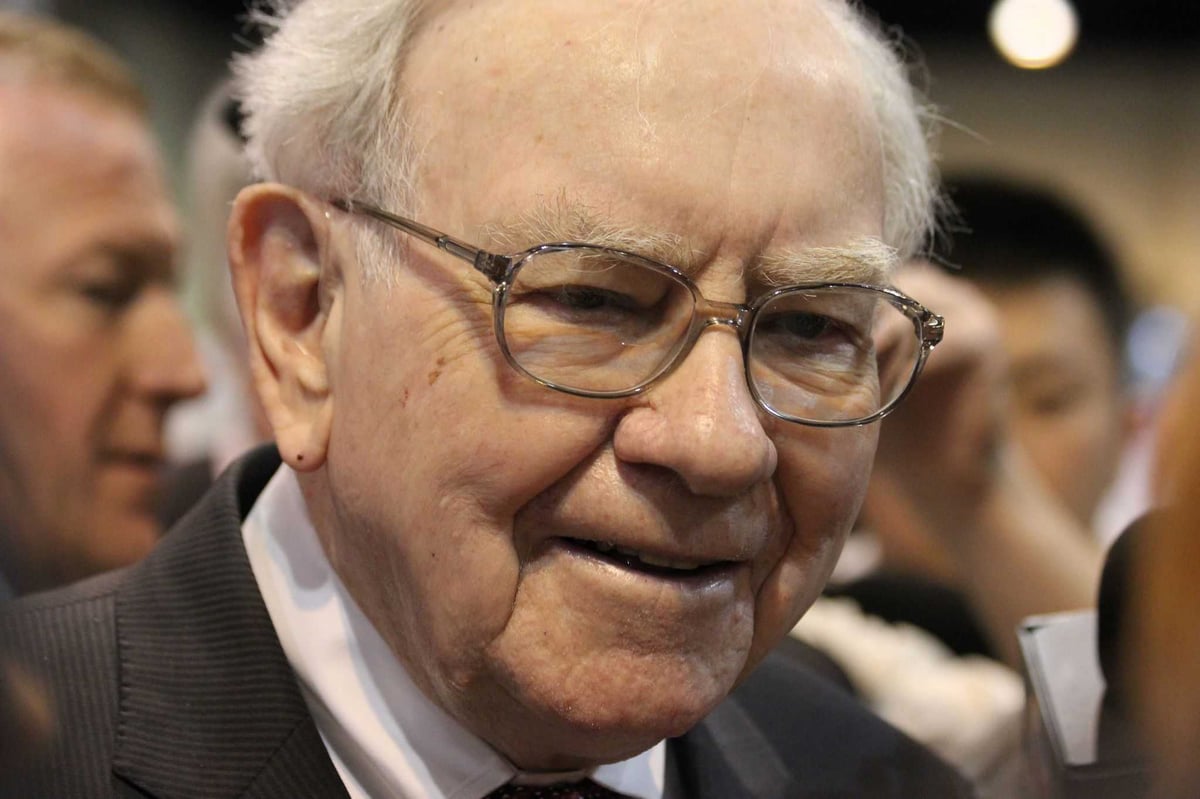
Warren Buffett, the world's most influential investor, has consistently championed a deceptively simple investment strategy that stands in stark contrast to the complexity of professional portfolio management: S&P 500 index funds. In particular, Buffett has repeatedly recommended the Vanguard S&P 500 ETF ($VOO) as the gold standard investment vehicle for non-professional investors seeking to build lasting wealth. This recommendation, far from being a casual suggestion, represents a deliberate philosophical stance that the Oracle of Omaha has reinforced through multiple shareholder letters and public statements, underscoring his belief that passive index investing outperforms the vast majority of active management strategies over extended time horizons.
The power of this recommendation lies not in its sophistication but in its elegant simplicity. Rather than encouraging investors to chase individual stocks, sector rotations, or market-timing strategies—approaches that historically underperform the broader market—Buffett advocates for steady, consistent exposure to the 500 largest U.S. companies that comprise the S&P 500 index. His confidence in this approach is so profound that it extends beyond mere professional advice: Buffett has explicitly directed his estate trustees to invest 90% of his estate's cash holdings in an S&P 500 index fund, a decision that speaks volumes about where he believes wealth should be preserved for future generations.
The Mathematics of Long-Term Wealth Accumulation
The empirical case for $VOO and similar index funds rests on compelling mathematical foundations. Historical data demonstrates that the S&P 500 has delivered average annual returns of approximately 10% when measured over extended periods spanning decades. While this figure may seem modest compared to the promises of active managers or speculative traders, the compounding effect of these returns over time reveals their true transformative power.
Consider a concrete example that brings this strategy to life: An investor who makes an initial investment of just $900 and commits to contributing $300 monthly could realistically accumulate a portfolio exceeding $1 million over a 35-year investment horizon. The mechanics of this wealth creation break down as follows:
- Initial investment: $900
- Monthly contributions: $300 (equivalent to $3,600 annually)
- Total contributions over 35 years: Approximately $126,900
- Compound annual growth rate: ~10% annually
- Final portfolio value: Over $1 million
This projection illustrates a fundamental principle of personal finance: time is a more powerful tool than timing. The investor need not predict market tops and bottoms, need not possess superior stock-picking acumen, and need not obsess over daily market movements. Instead, they simply need to maintain discipline, avoid panic selling during market downturns, and allow compounding to work its mathematical magic across decades.
Market Context: Why Index Investing Dominates
Buffett's recommendation for $VOO occurs within a broader market landscape where index funds have fundamentally reshaped investment management. Over the past two decades, empirical research has consistently demonstrated that 80-95% of actively managed mutual funds fail to outperform their benchmark indices on a risk-adjusted basis when measured over 15+ year periods. This persistent underperformance, combined with the higher fee structures of active management, has created a compelling case for passive indexing.
The Vanguard S&P 500 ETF ($VOO) exemplifies the advantages of modern index investing:
- Expense ratio: Among the lowest in the industry, typically below 0.04% annually
- Liquidity: As one of the largest ETFs globally, it trades millions of shares daily with minimal bid-ask spreads
- Diversification: Immediate exposure to 500 of America's most established companies across diverse sectors
- Tax efficiency: The ETF structure generates fewer taxable events than traditional mutual funds
- Accessibility: Available through virtually every major brokerage platform
This democratization of quality investing has profound implications. A generation ago, achieving true diversification and low-cost index exposure required significant capital and institutional access. Today, an individual investor can allocate $300 monthly to $VOO and obtain the same fundamental advantage that large institutional investors pursue.
The competitive landscape for index funds has also intensified, with providers like Vanguard, BlackRock (iShares), and State Street (SPDR) competing aggressively on fees. This competition has benefited investors substantially, driving expense ratios to historic lows. Vanguard's particular advantage stems from its mutual ownership structure, which theoretically aligns management incentives with investor interests.
Investor Implications: Why This Matters Now
Buffett's consistent advocacy for $VOO carries particular weight in an era marked by increasing market volatility, geopolitical uncertainty, and widespread skepticism about traditional institutions. For investors confronting these headwinds, the index fund strategy offers several compelling advantages:
Behavioral discipline: Research in behavioral finance demonstrates that most investors underperform the markets they invest in due to emotional decision-making—buying high during euphoric rallies and selling low during panic-driven corrections. Index funds, by their nature, encourage buy-and-hold discipline while eliminating the temptation to chase performance or time markets.
Fee drag reduction: The difference between a 1.0% annual fee and a 0.04% annual fee may seem trivial on an annual basis, but compounds into staggering differences over decades. On a $1 million portfolio, this 0.96% annual difference equates to approximately $50,000 in additional costs over 20 years—wealth that flows to fund managers rather than portfolio owners.
Sector agnosticism: $VOO provides exposure across all major economic sectors—technology, healthcare, financials, industrials, consumer goods, and energy. This diversification insulates investors from the risk of backing the wrong industry thesis, a risk that has destroyed many portfolio managers' long-term track records.
Macro-economic resilience: The S&P 500 comprises companies that collectively represent the most dynamic, innovation-driven economy globally. While individual sectors and companies may struggle, the index's broad composition positions it to benefit from long-term economic growth.
Forward-Looking Perspective
As markets navigate shifting interest rate environments, inflation concerns, and shifting geopolitical dynamics, Buffett's recommendation for $VOO remains grounded in timeless investment principles. The strategy succeeds not because it promises outsized returns or clever market timing, but because it combines reasonable return expectations with mathematical certainty regarding compound growth, minimal friction costs, and freedom from the emotional turbulence that derails most investors.
For those who have delayed investing due to market uncertainty, uncertainty about how to begin, or skepticism about their ability to pick winners, Buffett's message is both liberating and empowering: you need not be a financial genius to build substantial wealth. Consistent investment in a low-cost S&P 500 index fund like $VOO, maintained across market cycles, can transform modest monthly contributions into seven-figure portfolios. In a world of escalating complexity and endless investment options, Buffett's decades-long advocacy for index simplicity emerges as increasingly valuable wisdom.