
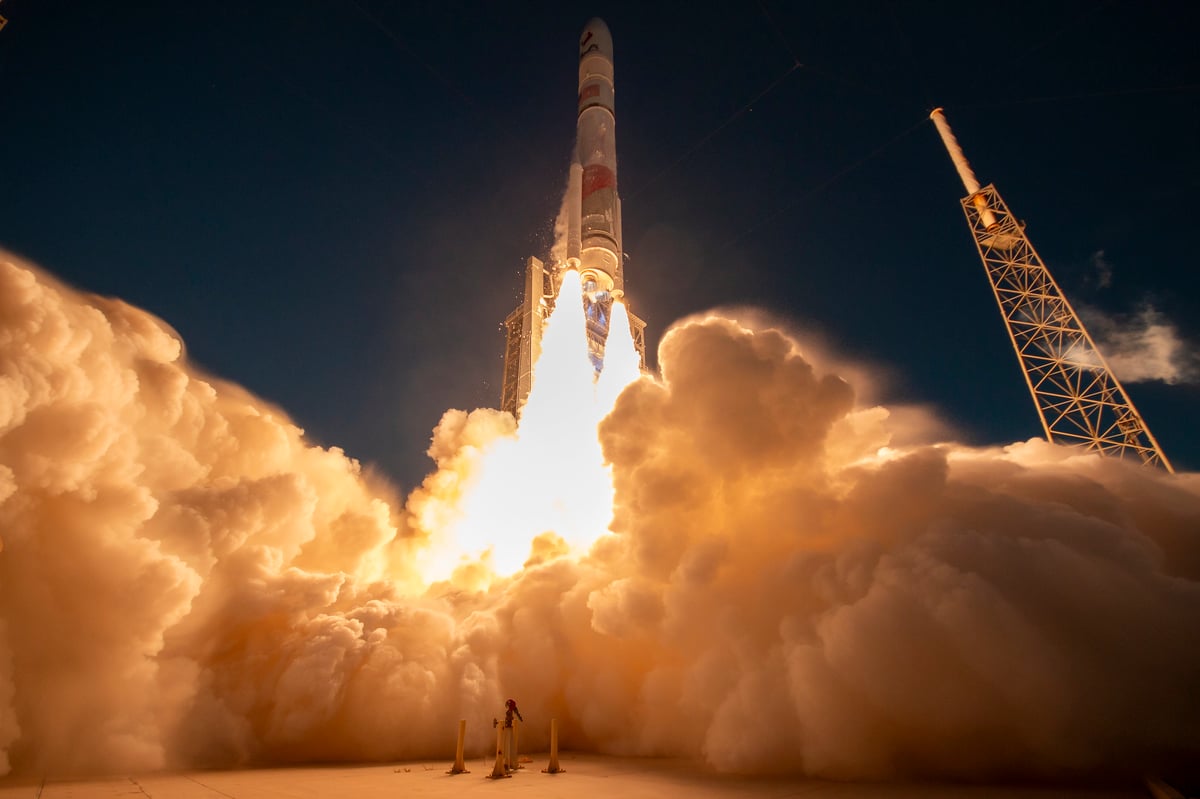
Space Force Halts ULA Vulcan Launches After Engine Failures, Minimal Impact on Boeing and Lockheed
The U.S. Space Force has implemented a comprehensive pause on all rocket launches using the United Launch Alliance (ULA) Vulcan system following two critical anomalies detected across just four flights. The decision, while demonstrating the military's commitment to launch reliability and safety, underscores ongoing challenges in the nation's commercial space infrastructure at a time when national security space missions are increasingly critical to defense operations.
The launch halt stems from solid rocket booster defects that have caused nozzle failures—a fundamental structural issue that requires extensive investigation and remediation before flights can resume. Space Force officials have indicated that the grounding is expected to persist for many months while ULA conducts a thorough technical review of the solid rocket booster components and manufacturing processes.
Technical Issues and Investigation Timeline
The anomalies affecting the Vulcan platform represent a significant setback for a launch vehicle system that was designed to be a cornerstone of America's space launch capability. The technical specifics point to manufacturing or material defects in the solid rocket boosters—critical components that provide initial thrust during the vehicle's first stage of flight.
Key details regarding the technical challenges include:
- Two confirmed anomalies occurring across four total flights
- Nozzle failures as the root cause of the propulsion system issues
- Investigation expected to span multiple months before launch resumption
- Potential implications for manufacturing processes and quality control procedures
The Space Force's decision to implement a complete launch pause rather than attempt risk mitigation on individual flights reflects the military's heightened safety standards for national security space missions. This approach, while conservative, aligns with established aerospace protocols for structural failures in critical propulsion systems.
Minimal Financial Impact on Parent Companies
Despite the operational significance of the Vulcan program, the financial ramifications for Boeing ($BA) and Lockheed Martin ($LMT)—which jointly own ULA—are expected to be modest. This measured impact stems from a fundamental reality of aerospace industry economics: ULA represents only a small fraction of the space division revenues for either parent company.
Boeing's space portfolio encompasses far larger and more profitable segments, including its commercial crew program contracts with NASA, defense and security space systems, and other specialized aerospace applications. For Lockheed Martin, space represents one of several major operating segments, with diverse revenue streams spanning military satellite systems, missile warning constellations, and strategic space infrastructure.
The containment of financial risk is further supported by the fact that ULA has established long-term relationships and contracts that, while affected by the launch pause, do not represent existential threats to either parent company's financial health or long-term strategic positioning in the space sector.
Market Context and Competitive Landscape
The Vulcan launch halt arrives at a critical juncture for the U.S. space launch ecosystem. The commercial space industry has undergone seismic shifts over the past decade, with SpaceX's Falcon 9 vehicle establishing dominant market share in both commercial and government launch services. The emergence of new competitors and the increasing emphasis on launch cadence have placed pressure on traditional aerospace contractors to deliver reliable, cost-effective solutions.
ULA, despite its heritage and government contracts, faces mounting competitive pressures in an evolving market landscape. The Vulcan system was positioned as a next-generation vehicle capable of competing more effectively against emerging commercial alternatives while serving critical national security missions. The technical difficulties and resulting launch pause complicate this narrative and may shift near-term competitive dynamics.
For the broader aerospace and defense sector, the incident reinforces longstanding quality control considerations that investors monitor closely. Manufacturing defects in critical aerospace systems can have cascading effects on reputation, contract performance metrics, and customer confidence. However, the established nature of Boeing and Lockheed Martin, combined with their diversified portfolios, provides substantial buffers against localized program setbacks.
Investor Implications and Forward-Looking Considerations
Investors in Boeing ($BA) and Lockheed Martin ($LMT) should assess this development within the appropriate context: while the Vulcan launch pause is operationally significant and warrants continued monitoring, it does not represent a material threat to either company's overall financial performance or strategic positioning.
Key considerations for equity holders include:
- Revenue impact: Minimal, given ULA's proportionally small contribution to parent company revenues
- Contract risk: Government contracts include provisions for technical remediation periods; complete contract termination remains unlikely
- Reputational considerations: Quality issues can affect investor sentiment despite limited immediate financial impact
- Timeline visibility: Extended investigation period creates uncertainty around launch resumption schedules
- Competitive positioning: Delay may advantage competitors seeking to capture market share during the grounding period
The incident also carries broader implications for U.S. space launch resilience and national security space operations. As the nation relies on a limited set of launch providers for critical military and intelligence missions, any reduction in launch capacity creates strategic vulnerabilities. This dynamic may ultimately support long-term demand for Vulcan services once technical issues are resolved, as government customers seek redundancy in their launch provider portfolio.
The investigation process and its outcome will be closely watched by the investment community. Transparent communication regarding root cause analysis, corrective actions, and remediation timelines will be essential for restoring stakeholder confidence. ULA, Boeing, and Lockheed Martin face an opportunity to demonstrate their commitment to quality and safety—attributes that, while not directly translating to stock price movements in the short term, contribute to long-term competitive positioning in an industry where reliability commands premium valuations.
As the U.S. Space Force and ULA navigate the investigation and remediation process, the eventual resumption of Vulcan launches will likely receive significant market attention. Until then, investors should monitor quarterly earnings reports and management commentary for updates on program status and revised financial guidance, while recognizing that this setback, though operationally important, remains manageable within the broader financial profiles of these aerospace giants.