
Tesla's Transition to Profitable Maturity
Tesla is poised to evolve into a mature, profitable leader in the electric vehicle market by 2028, with emerging revenue streams from autonomous operations rather than undergoing the dramatic business transformation some investors have anticipated. Rather than pivoting entirely toward artificial intelligence and robotics, the company will likely leverage its manufacturing prowess and technological advantages to establish credibility for future moonshot projects while maintaining its core automotive business as the primary profit driver.
The trajectory reflects a more measured approach than the bullish narratives that have dominated Tesla discourse in recent years. While the company will undoubtedly expand into autonomy and robotics, these ventures are expected to remain in nascent stages by the end of the decade, contributing incremental revenue rather than fundamentally reshaping the business model. This base case scenario suggests investors should calibrate expectations for sustainable, compound growth rather than explosive transformation.
Delivery Growth and Operational Metrics
Under this base case scenario, Tesla is expected to achieve mid-single to low double-digit annual delivery growth through 2028, translating to a steady expansion in vehicle volumes without the explosive growth rates that characterized the company's earlier years. This represents a normalization as the company matures and the total addressable market for premium electric vehicles expands globally.
Key operational expectations include:
- Stable to expanding gross margins that will support healthy free cash flow generation
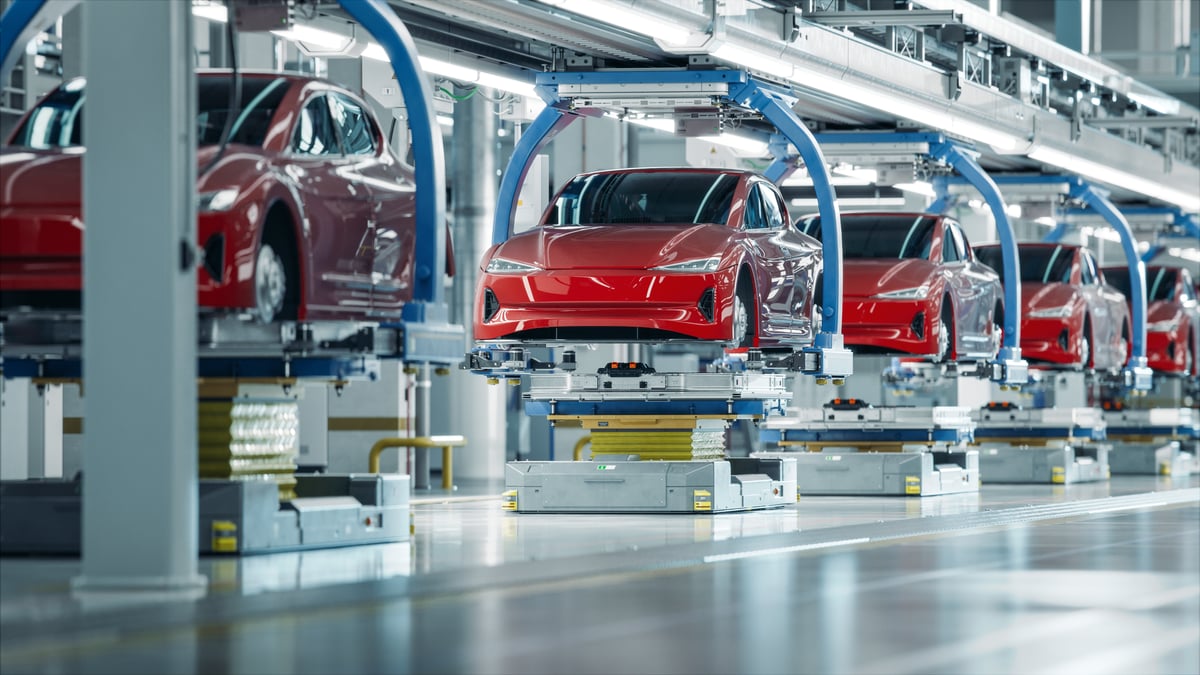
- Continued factory optimization driving manufacturing efficiency and cost reduction
- Market share retention in key regions despite intensifying competition from traditional automakers and Chinese EV manufacturers
- Platform leverage across existing product lines, including potential new vehicle segments
The company's ability to maintain margin stability while growing volumes—a feat many automotive manufacturers struggle with—will be critical to validating this thesis. Tesla's manufacturing innovations, battery supply chain advantages, and pricing power in premium segments should enable this performance, but faces headwinds from increased competition and potential commodity cost volatility.
Robotaxi and Optimus Deployment
Autonomy operations represent the most significant emerging revenue opportunity within this base case framework. Tesla is expected to expand robotaxi operations across select U.S. metropolitan areas, creating a new business segment that contributes meaningful revenue by 2028 without becoming a dominant profit center.
This gradual rollout acknowledges the substantial regulatory, technical, and operational hurdles associated with autonomous vehicle deployment. Unlike the more aggressive timelines some analysts have proposed, this base case assumes Tesla will demonstrate proof-of-concept in controlled geographies before pursuing nationwide or global expansion. Success in key markets like San Francisco, Los Angeles, Phoenix, and Austin will establish the operational viability and regulatory framework necessary for future acceleration.
Simultaneously, Tesla is projected to deploy early iterations of the Optimus humanoid robot in its own factories, initially focusing on repetitive, hazardous, or precision manufacturing tasks. This deployment serves dual purposes: generating operational cost savings in manufacturing and validating the technology for potential external commercialization. However, widespread commercial adoption of Optimus would likely extend beyond the 2028 timeframe, making it a credibility-building project rather than a significant revenue contributor during this period.
Market Context and Competitive Dynamics
Tesla's positioning as a mature EV leader by 2028 must be understood within the broader automotive and technology landscape. Traditional automakers including General Motors ($GM), Ford Motor ($F), BMW ($BMW), and Mercedes-Benz have committed hundreds of billions to EV development and are rapidly expanding their electric vehicle portfolios. Chinese manufacturers like BYD have already achieved production volumes exceeding Tesla's, though with different market positioning and profitability profiles.
Simultaneously, the regulatory environment continues to favor EV adoption through incentives, emissions regulations, and infrastructure investments across major markets. The U.S. Inflation Reduction Act, European Union regulations, and similar initiatives in other jurisdictions support the broader EV market growth that would underpin Tesla's mid-single to low double-digit delivery expansion.
The autonomous vehicle landscape remains fragmented, with competitors including Alphabet's Waymo, Amazon-backed Cruise, and various traditional automaker initiatives pursuing different technological approaches and commercialization timelines. Tesla's advantage lies in its existing fleet scale, continuous real-world data collection, and integrated hardware-software architecture, but regulatory approvals and consumer adoption remain uncertain variables.
The robotics sector encompasses competition from established industrial robotics manufacturers, specialized autonomous robotics companies, and technology giants including Boston Dynamics. Optimus would need to demonstrate significant cost advantages and reliability improvements to justify widespread deployment, a threshold that may not be crossed by 2028.
Investor Implications and Valuation Considerations
This base case scenario carries significant implications for Tesla investors and the broader equity market. If the company delivers mid-single to low double-digit delivery growth with stable margins, the business would resemble—and eventually warrant valuation multiples comparable to—mature automotive and industrial equipment companies rather than early-stage technology ventures.
The valuation implications are substantial. A slower-growth, higher-margin industrial company typically trades at 8-15x earnings multiples, substantially lower than the premium growth multiples that have historically been applied to Tesla. This suggests potential multiple compression even if absolute earnings grow modestly, which could weigh on total shareholder returns unless earnings growth significantly exceeds modest delivery growth rates.
Conversely, if Tesla successfully commercializes robotaxi services or achieves broader Optimus deployment earlier than this base case suggests, upside surprises could drive significant outperformance. The optionality embedded in these future businesses provides asymmetric risk-reward characteristics that may justify premium valuations.
For growth-oriented investors seeking exposure to autonomous vehicles or advanced robotics, Tesla would represent a vehicle with meaningful optionality, but with mature core automotive operations providing limited growth catalysts. Conservative value investors might find more attractive opportunities in established automakers with improving EV portfolios trading at depressed multiples, while growth investors might seek purer-play autonomous or robotics companies.
Establishing Credibility for Future Ambitions
Perhaps the most important aspect of this base case is how it positions Tesla for subsequent innovations and expansion. By 2028, successful execution of this roadmap—stable automotive growth, expanding robotaxi operations, early Optimus deployment—would establish the operational and technological credibility necessary to pursue more ambitious projects.
A mature, profitable core business generates the cash flows necessary to fund speculative ventures in autonomous mobility, humanoid robotics, and other advanced technologies. It also builds investor confidence in management's ability to execute on long-term visions, a critical factor given the history of missed timelines in autonomous vehicle and robotics development.
The three-year horizon to 2028 represents a critical inflection point for Tesla. It is neither a near-term timeframe where incremental improvements drive valuations, nor a distant enough horizon to justify speculative pricing for unproven technologies. Instead, it offers a window into whether Tesla can balance continued automotive growth with emerging technology deployment—essentially proving it can be both a mature industrial business and an innovation leader. For investors, this base case provides a realistic framework for evaluating whether current valuations appropriately price in both the company's established strengths and its meaningful but uncertain future opportunities.