
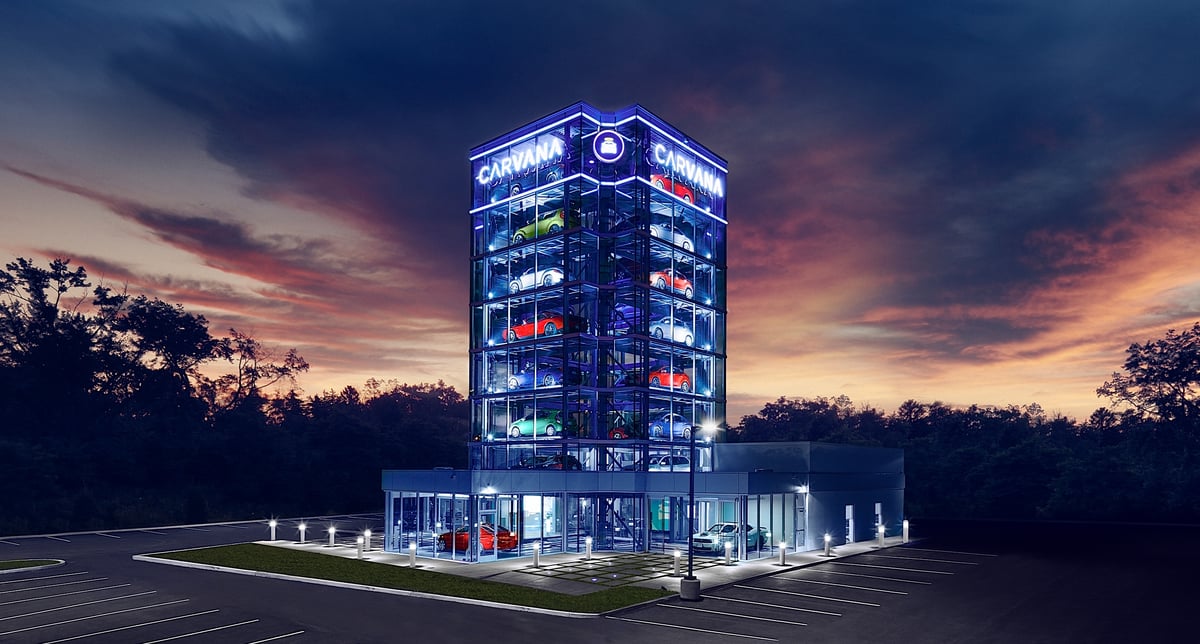
Carvana's Unexpected Dealership Pivot
Carvana, the online-first used car retailer that disrupted the automotive sales landscape, is making a counterintuitive move: acquiring six Chrysler-Dodge-Jeep-Ram (CDJR) dealerships from Stellantis across California, Arizona, Texas, and Massachusetts. The acquisition marks a fundamental strategic shift for the company, abandoning its purely digital-first model in favor of a hybrid approach that blends online used car sales with brick-and-mortar new car dealerships. The move comes as Stellantis stock has plummeted 43%, creating what Carvana apparently views as an attractive acquisition opportunity—though the deal also signals confidence in the automotive giant's ability to engineer a turnaround.
Carvana's decision to acquire physical dealership locations represents a dramatic departure from the company's original thesis. When the platform launched, it positioned itself as the antidote to traditional dealerships: a fully digital experience allowing consumers to browse, purchase, and arrange delivery of used vehicles entirely online. The shift toward owning new car franchises suggests the company has concluded that physical retail presence remains essential to automotive retail success, even in an increasingly digital age.
Strategic Rationale Behind the Dealership Expansion
The acquisition of Stellantis' dealerships must be understood within the context of both Carvana's evolving business model and the troubled automaker's current predicament. Several factors appear to drive this counterintuitive move:
The Stellantis Turnaround Bet
By acquiring dealerships tied to Stellantis brands—Chrysler, Dodge, Jeep, and Ram—Carvana is implicitly making a significant wager on Stellantis' operational recovery. The Italian-American automotive conglomerate has faced mounting headwinds, including:
- 43% stock decline reflecting investor concerns about product competitiveness and operational execution
- Quality and reliability issues requiring significant supplier interventions
- Need for substantial portfolio restructuring and product development investments
- Supply chain vulnerabilities and manufacturing inefficiencies
Carvana's acquisition essentially bets that Stellantis can successfully execute its turnaround plan, improve product quality, and restore consumer confidence in its brands. If Stellantis fails to recover, these dealerships could become liabilities rather than assets.
Hybrid Model Economics
The hybrid retail model—combining online used car sales with physical new car dealerships—addresses a fundamental challenge Carvana discovered: while consumers appreciate digital convenience for used vehicle purchases, new car sales remain heavily dependent on physical showrooms, test drives, and relationship-based sales. By operating CDJR franchises, Carvana gains:
- Brand-new inventory to complement its used vehicle portfolio, creating a more comprehensive retail offering
- Physical touchpoints for consumer engagement, particularly for demographic segments preferring in-person experiences
- Higher-margin new vehicle sales and associated financing opportunities
- Cross-selling opportunities between used and new inventory
- Consumer financing leverage through captive finance relationships with Stellantis
Market Context and Competitive Landscape
Carvana's pivot toward dealership ownership occurs against a backdrop of significant industry transformation and competitive pressure. The online used car market, while growing, has become increasingly competitive and commoditized. Carvana faces competition from:
- Vroom ($VRM), another pure-play online used car retailer
- Traditional automotive retailers adding digital capabilities
- CarMax ($KMX), which has successfully maintained physical locations while expanding digital offerings
- OEM direct-to-consumer sales models emerging from legacy automakers
The move to combine online and physical retail mirrors strategies adopted by more successful automotive retailers. CarMax, despite its original warehouse-based model, maintains extensive physical locations and has successfully integrated digital tools, creating a omnichannel experience.
Carvana's acquisition of Stellantis dealerships also reflects realistic assessment of automotive retail economics. Pure digital models work effectively for price-transparent, commoditized product categories. Vehicles—requiring test drives, customization, financing arrangements, and trade-in valuations—remain relationship-heavy purchases for many consumers. Physical dealerships provide essential infrastructure for these interactions.
The Timing Consideration
The timing of these acquisitions warrants careful analysis. Stellantis stock's 43% decline has undoubtedly improved acquisition valuations, making dealership properties more affordable. However, this discount reflects fundamental concerns about the company's viability. Carvana's willingness to acquire Stellantis dealerships at distressed valuations suggests confidence—or perhaps necessary desperation—regarding the automaker's recovery prospects.
Investor Implications and Forward-Looking Assessment
This strategic shift carries significant implications for multiple stakeholder groups:
For Carvana Shareholders
The dealership acquisition represents a material shift in business model and risk profile. Investors who backed Carvana's original disruptive thesis—a capital-light, purely digital alternative to traditional dealerships—are witnessing the company embrace the very brick-and-mortar model it once positioned as obsolete. Key considerations include:
- Capital intensity increases: Operating physical dealerships requires significant real estate, inventory financing, and operational infrastructure—markedly different from Carvana's original asset-light model
- Execution risk expands: Managing physical retail operations introduces operational complexity, labor management, and real estate commitments
- Dependence on Stellantis recovery: Carvana's success with new car sales directly correlates with Stellantis' ability to produce competitive, reliable vehicles and restore brand value
- Margin profile changes: New car sales, while higher-margin than used cars on a per-unit basis, involve different economics and competitive dynamics
For Stellantis Stakeholders
The acquisition provides temporary relief, offloading underperforming dealership assets while generating liquidity. However, it also represents acknowledgment that Stellantis currently operates with insufficient competitive positioning to maximize dealer performance independently. The company's brands will now partly depend on Carvana's retail execution and consumer-facing reputation.
Broader Market Implications
This deal signals continued consolidation in automotive retail and accelerating transformation of traditional dealership models. It demonstrates that even disruptive digital-native retailers ultimately require physical infrastructure, validating the omnichannel thesis that has dominated retail strategy for the past decade.
The acquisition also highlights the automotive industry's ongoing structural challenges. Legacy automakers like Stellantis face pressure from startup competitors, changing consumer preferences, regulatory demands for electrification, and persistent profitability challenges. When struggling automakers must offload dealership assets, it signals underlying product and operational deficiencies that acquisitions alone cannot remedy.
Conclusion: Hybrid Retail as the New Normal
Carvana's acquisition of Stellantis dealerships represents pragmatic recognition that automotive retail's future is omnichannel rather than purely digital. By combining online used car expertise with new car franchise ownership, Carvana seeks to build a more comprehensive retail platform.
However, this strategy's success remains contingent on Stellantis' turnaround execution. If the automaker fails to improve product quality, restore consumer confidence, and compete effectively against stronger competitors, Carvana's new dealership investments will face headwinds regardless of retail excellence. The question for investors is whether Carvana's hybrid model and operational expertise can overcome structural challenges in Stellantis' product portfolio and brand equity—a bet considerably more complex than the original Carvana thesis of digital disruption displacing traditional dealerships entirely.