
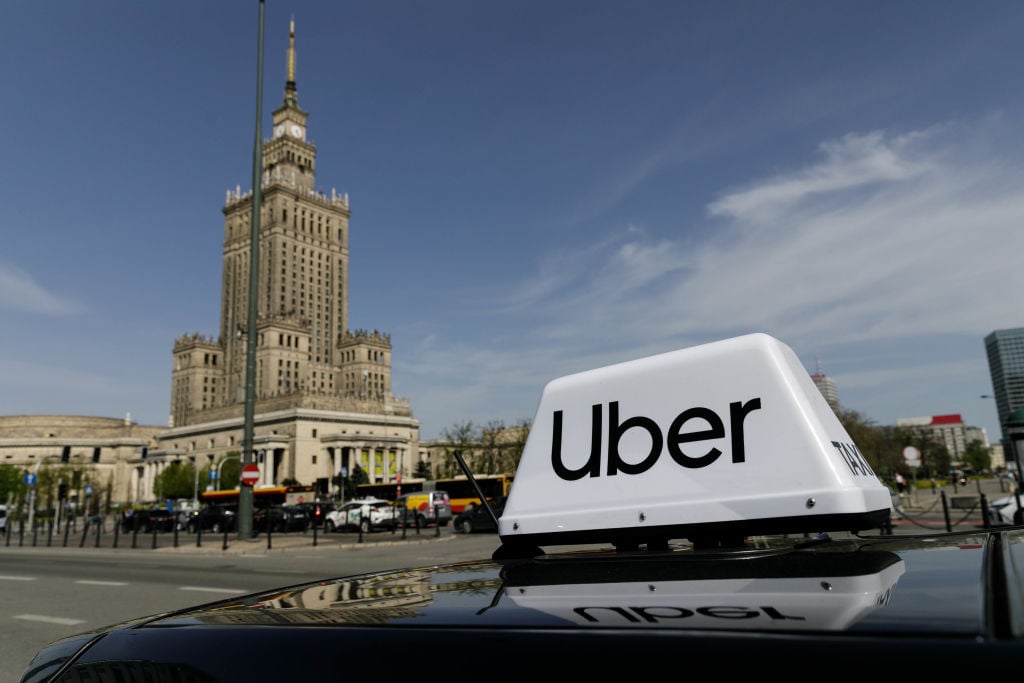
Uber CEO Reframes AV Threat as Multitrillion-Dollar Opportunity
Dara Khosrowshahi delivered a carefully calibrated message to Uber Technologies investors this week, directly addressing one of the most persistent concerns plaguing the ride-hailing giant: that autonomous vehicles could cannibalize its core business rather than expand it. Instead of viewing self-driving technology as an existential threat, the Uber CEO characterized AVs as a transformative opportunity that will generate a multitrillion-dollar market while actually strengthening the company's competitive moat. The remarks come at a critical juncture for the company, with $UBER trading approximately 28% below its October 2025 peak, leaving investors hungry for catalysts that could reignite the stock's momentum.
Khosrowshahi's thesis fundamentally resets the narrative around autonomous vehicles in the ride-hailing sector. Rather than presenting a binary choice between human drivers and self-driving cars, the Uber leader outlined a hybrid model that leverages both simultaneously to meet fluctuating demand patterns. This approach acknowledges a market reality that pure AV-only proponents have long downplayed: demand for transportation services peaks at unpredictable times and scales dynamically across geographies, making a single-technology solution economically inefficient.
The Hybrid Model and 2026 Roadmap
The cornerstone of Uber's strategy centers on facilitating autonomous vehicle rides across 15 cities by the end of 2026, accomplished through strategic partnerships rather than proprietary technology development. This partnership-first approach is notably different from competitors like Waymo (owned by Alphabet) or Tesla, which have pursued vertically integrated autonomous vehicle platforms. By leveraging existing AV developers and infrastructure providers, Uber can distribute capital requirements while maintaining operational flexibility.
Key elements of Uber's AV expansion strategy include:
- Geographic diversification: 15-city rollout targets major metropolitan areas with high ride-hailing demand
- Partnership model: External AV providers handle technology development and deployment
- Hybrid fleet management: Human drivers remain integrated into the platform to handle demand surges
- Demand-responsive scaling: AVs deployed where and when economically optimal
- Timeline: Full deployment target by end of 2026
This measured expansion differs markedly from the industry's earlier AV hype cycle, where autonomous ride-hailing was promised as imminent by the mid-2020s. The realism embedded in Uber's current timeline—acknowledging technical, regulatory, and operational hurdles—may paradoxically boost investor confidence by setting achievable milestones rather than overpromising.
Market Context and Competitive Positioning
The ride-hailing sector has faced structural headwinds in recent years, including driver supply constraints, regulatory pressures on worker classification, and persistent unprofitability in certain markets. Within this challenging backdrop, autonomous vehicles represent both opportunity and threat. Lyft ($LYFT), Uber's primary U.S. competitor, has been less aggressive in AV development, instead focusing on core profitability—a potentially risky bet if autonomous technology proves commercially viable faster than anticipated.
Khosrowshahi's framing suggests Uber is positioning itself to capture value across multiple scenarios. If AVs proliferate rapidly, Uber has partnerships and operational experience in place. If adoption remains gradual, the hybrid model allows the company to maintain its massive driver network while benefiting from AV cost advantages in specific routes or times. This strategic optionality is valuable in an uncertain technology landscape.
Regulatory considerations underscore why the hybrid approach makes practical sense. Cities and regulators have shown reluctance to ban human drivers despite AV progress, reflecting both political pressures to protect employment and genuine concerns about AV reliability in edge cases. Uber's hybrid model accommodates these regulatory realities while keeping the company positioned to capitalize on AV adoption as permissions expand.
The multitrillion-dollar opportunity Khosrowshahi referenced likely encompasses not just Uber's ride-hailing business but the broader mobility ecosystem—delivery services (Uber Eats), freight (Uber Freight), and autonomous last-mile logistics. AVs could enhance economics across all these verticals, making the technology enabler rather than disruptor.
Investor Implications and Stock Momentum
With $UBER trading substantially below its recent highs, the CEO's AV commentary addresses a key valuation concern: that the company's long-term growth prospects are threatened by autonomous technology. By articulating a strategy that positions AVs as an accretive opportunity rather than a displacement risk, Khosrowshahi is providing investors with a more constructive investment thesis.
The implications ripple across multiple investor concerns:
- Unit economics: AVs could improve ride profitability by reducing labor costs while hybrid models preserve pricing power
- Competitive moat: Early operational experience with 15-city AV deployment gives Uber data advantages and partnership relationships competitors lack
- Growth narrative: Markets currently value Uber as a mature, profitable platform. AV expansion reintroduces meaningful growth optionality
- Margin expansion: Long-term, autonomous vehicles could support operating leverage in Uber's ride-hailing segment
- Capital allocation: Partnership model requires less capital than proprietary AV development, preserving cash return flexibility
Investors have been particularly sensitive to threats to Uber's core ride-hailing business, which generates the company's largest revenue base and highest margins. Khosrowshahi's messaging directly assuages this concern by positioning AVs as complementary rather than cannibalistic. The 15-city rollout timeline also provides a series of near-term catalysts and data points that can validate or challenge the hybrid model hypothesis.
Looking Forward
Dara Khosrowshahi's reframing of autonomous vehicles as a multitrillion-dollar opportunity rather than an existential threat represents a meaningful shift in how Uber is communicating its long-term strategy to capital markets. By committing to a specific, achievable roadmap—15 cities by end-2026 operating through partnerships—the company is replacing vague AV promises with concrete milestones.
The hybrid model acknowledges market realities that pure-play AV strategies have sometimes overlooked: demand volatility, regulatory complexity, and the enduring economics of human-driver networks. For investors concerned about the stock's distance from recent highs, the CEO's comments provide a more expansive bull case. If executed successfully, the AV initiative could unlock significant shareholder value while demonstrating that Uber can evolve its business model without cannibalizing its core platform. The coming years will determine whether this optimistic thesis holds or whether autonomous vehicle adoption ultimately proves more disruptive than complementary.