
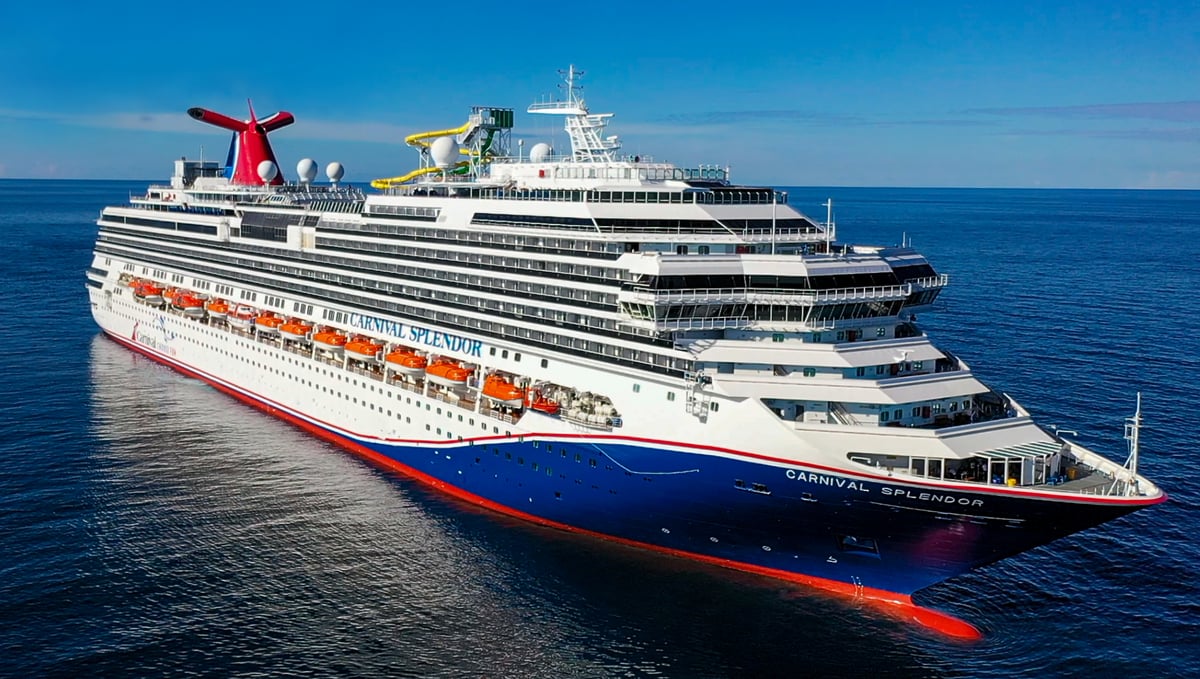
Two Overlooked Bargains: Why Carnival and Target Present Contrasting Value Plays
Carnival Corporation and Target Corporation are attracting investor attention as potential undervalued opportunities, though for distinctly different reasons. While $CCL trades at a historically compressed valuation despite operational strength, $TGT offers upside potential under fresh leadership pursuing an aggressive turnaround. Both present compelling entry points for value-conscious investors with $1,000 to deploy, albeit with markedly different risk-reward profiles.
The Case for Carnival: Valuation Disconnect Amid Operational Recovery
Carnival ($CCL) currently trades at a price-to-earnings ratio of 12—a valuation typically reserved for mature, slow-growth industries—despite demonstrating strong underlying financial performance. The cruise operator has been systematically reducing its debt burden, a critical metric for investors monitoring the company's post-pandemic recovery trajectory.
However, the cruise industry remains exposed to significant commodity price pressures. Oil prices remain elevated, creating headwinds for fuel costs and operational margins. Despite this external pressure, the company's ability to maintain profitability at current valuations suggests the market may be pricing in an unduly pessimistic scenario:
- Current P/E ratio: 12x earnings
- Key strength: Steady debt reduction trajectory
- Primary risk factor: Oil price sensitivity and fuel cost exposure
- Sector backdrop: Cruise industry recovery remains incomplete, with demand fluctuations tied to consumer discretionary spending
The disconnect between Carnival's valuation multiple and its operational momentum warrants closer examination. Trading at roughly half the multiple of many mature industrials, the stock appears to reflect lingering skepticism from the pandemic era—skepticism that may be increasingly unwarranted given the company's demonstrated ability to service debt while maintaining operations during a period of elevated input costs.
Target's Transformation Play: New Leadership, New Strategy
Target ($TGT) presents a different value proposition entirely. The retailer trades at 14x earnings, a modest multiple that reflects recent investor concerns about brick-and-mortar retail and consumer spending trends. However, the company's recent earnings beat and appointment of new leadership suggest a potential inflection point.
The new CEO has unveiled an ambitious $2 billion turnaround strategy designed to reinvigorate the company's competitive position:
- Investment focus: Store improvements and modernization
- Growth lever: Expansion of owned-brand merchandise, which typically carries higher margins
- Recent catalyst: Earnings beat that exceeded market expectations
- Strategic timing: Reposition the brand ahead of competitive pressures from e-commerce and discount retailers
Target's valuation multiple of 14x earnings appears reasonable given the company's scale, market position, and the potential upside from successful execution of the turnaround plan. Unlike Carnival's recovery narrative, which depends partly on external factors like oil prices, Target's value creation is more directly within management's control. Store improvements and owned-brand expansion represent tangible operational levers that management can pull to drive profitability and return on invested capital.
Market Context: Value in Overlooked Sectors
Both opportunities reflect a broader market dynamic: sectors and companies that fell out of favor during specific periods may offer attractive valuations when fundamentals stabilize. The cruise industry faced existential questions during 2020-2021, leaving lasting skepticism among institutional investors. Similarly, brick-and-mortar retail has faced persistent headwinds, with many investors rotating toward digital-native competitors or assuming inevitable secular decline.
The competitive landscape surrounding each company adds nuance to these investment theses:
For Carnival: Competing cruise operators trade at varying multiples, creating relative valuation opportunities. Smaller peers and niche players have recovered more decisively, suggesting that investor pessimism toward CCL may reflect company-specific concerns rather than industry-wide challenges. The broader cruise industry, while still volatile, has demonstrated resilience through recent demand cycles.
For Target: The retailer operates in an increasingly competitive environment dominated by Amazon, Walmart, and discount players like Dollar General. However, Target's omnichannel capabilities, brand loyalty, and owned-brand offerings differentiate it from pure-play e-commerce competitors. The new CEO's strategy acknowledges these realities while focusing on defensible competitive advantages.
Investor Implications: Risk-Adjusted Returns and Portfolio Positioning
These two opportunities appeal to different investor temperaments and portfolio objectives.
Carnival ($CCL) appeals to investors comfortable with commodity price exposure and sector rotation plays. The risk is that global oil prices remain elevated for an extended period, pressuring margins and validating current market pessimism. The opportunity is that a normalization of fuel costs or accelerating debt reduction could unlock significant upside from current valuations. Investors should position this as a cyclical recovery play with meaningful downside risk if the cruise industry enters a demand recession.
Target ($TGT) offers a more controllable value narrative. New leadership, specific strategic initiatives, and an earnings beat provide concrete catalysts for re-rating. The risk is that consumer spending weakens, owned-brand expansion fails to gain traction, or store improvements don't deliver expected returns. The opportunity is that successful execution could drive meaningful earnings growth from a depressed multiple.
For investors with $1,000 to deploy, a portfolio split—allocating perhaps 60% to Target for lower volatility and 40% to Carnival for higher potential upside—could provide balanced exposure to value opportunities across different sectors and risk profiles. Alternatively, risk-averse investors might focus exclusively on Target, while more aggressive investors might weight toward Carnival for potential higher returns.
Looking Forward: Catalysts and Execution Risk
Both companies face near-term catalysts that could validate or invalidate these valuations. Carnival's quarterly results will continue to demonstrate whether debt reduction accelerates and margins stabilize despite oil price headwinds. Target's execution on store improvements and owned-brand initiatives will become evident in coming quarters through same-store sales metrics and gross margin expansion.
The broader investment environment—consumer spending trends, inflation data, and macroeconomic conditions—will impact both plays. However, from a pure valuation perspective, both $CCL and $TGT appear to offer meaningful upside for patient investors willing to endure near-term volatility. The key is matching investment conviction to portfolio risk tolerance and holding period expectations.