
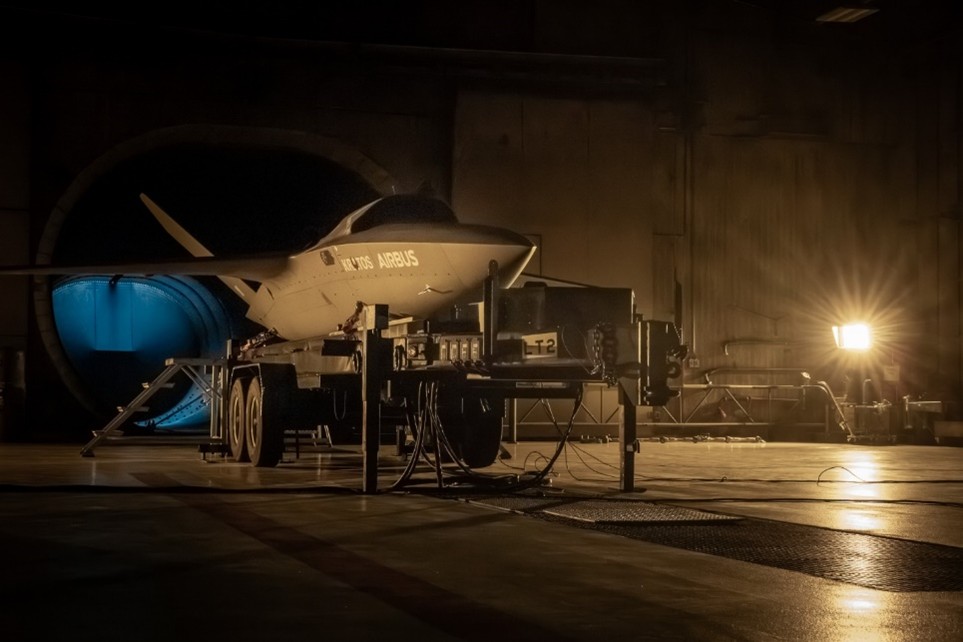
Kratos Defense Surges Then Fades on Airbus Drone Partnership
Kratos Defense & Security Solutions announced a high-profile collaboration with aerospace giant Airbus to develop an Uncrewed Collaborative Combat Aircraft (UCCA) for Germany's Luftwaffe, leveraging the company's advanced Valkyrie drone platform. The announcement initially sparked investor enthusiasm, with the stock jumping 3.3% on the news. However, the rally proved short-lived, with $KTOS ultimately closing the trading session up just 0.2% as market participants digested the limited scope of the initial commitment.
The muted investor response underscores a common dynamic in defense contracting: transforming promising partnerships into sustained revenue growth requires navigating lengthy development cycles, government approval processes, and significant capital deployment—hurdles that modest initial orders cannot fully overcome.
The Deal's Promise and Current Limitations
The partnership between Kratos Defense and Airbus represents a strategic validation of the Valkyrie drone's technical capabilities and military relevance. Germany's interest in integrating American drone technology alongside Airbus's expertise signals confidence in the platform's performance characteristics and potential operational advantages for NATO allies.
However, the current scope of the collaboration reveals investor caution:
- Initial commitment: Two drones designated for testing and evaluation purposes
- Development focus: Creating a collaborative combat aircraft variant tailored to Luftwaffe requirements
- Timeframe: Multi-year development and certification process typical of military aviation programs
- Scale: Test units rather than production contracts
This distinction matters significantly. While the partnership provides Kratos Defense with a prestigious customer validation and potential pathway to larger European defense contracts, the immediate financial impact remains modest. The two test drones generate limited near-term revenue compared to full production orders, which explains why the initial market enthusiasm couldn't sustain momentum through the trading session.
Market Context and Competitive Positioning
The timing of this announcement occurs within a broader transformation of the global defense landscape. Military forces worldwide are increasingly prioritizing autonomous and unmanned systems as adversary capabilities advance and operational costs escalate. TheValkyrie platform positions Kratos Defense within a competitive ecosystem that includes established defense contractors and emerging drone specialists.
Airbus's decision to partner on the UCCA project rather than develop internally or select an alternative platform suggests the Valkyrie's technical advantages justify collaboration. For Kratos Defense, this partnership opens doors within the European defense industrial base—a market traditionally dominated by legacy contractors with established government relationships. Germany's Luftwaffe, as part of NATO's largest European military, influences procurement decisions across allied nations, potentially creating cascading opportunities.
However, investors recognize several headwinds:
- Regulatory complexity: European defense procurement involves multilateral approval processes and industrial offset requirements
- Competition: Established contractors like Lockheed Martin ($LMT), General Dynamics ($GD), and Northrop Grumman ($NOC) possess significant resources and existing government relationships
- Development risk: Moving from technology demonstration to operational fielding requires solving unforeseen technical and logistical challenges
- Budget uncertainty: European defense spending fluctuates with geopolitical conditions and domestic political priorities
Investor Implications and Forward-Looking Assessment
For Kratos Defense shareholders, this partnership represents strategic value exceeding its immediate financial contribution. The collaboration validates the Valkyrie platform in a high-stakes military context, potentially unlocking additional European contracts as NATO allies reassess unmanned aircraft requirements. The partnership with a tier-one aerospace contractor like Airbus enhances Kratos's credibility and reach beyond traditional U.S. Department of Defense customers.
The stock's rapid reversal—from +3.3% to +0.2%—reflects investor sophistication regarding deal maturity. Market participants distinguished between announcement value and revenue realization potential. Two test aircraft, while symbolically important, don't materially move financial metrics for a defense contractor pursuing larger production contracts.
Investors should monitor several developments:
- Test program progress: Successful completion of German evaluations typically precedes larger procurement decisions
- Additional European interest: Interest from other NATO allies would validate broader market demand
- Contract expansion: Whether initial test units evolve into production orders with defined quantities and timelines
- Competitive responses: Whether rival contractors and platforms challenge Valkyrie's suitability
The Kratos-Airbus partnership ultimately exemplifies the defense sector's evolution toward autonomous systems and international collaboration. While the stock's muted reaction reflects appropriate skepticism toward early-stage programs, the strategic foundations suggest meaningful long-term potential—if the partnership successfully navigates development, testing, and the eventual path to production contracts.
For investors, this announcement merits portfolio attention primarily as a strategic milestone rather than an immediate earnings catalyst. The true measure of success will emerge over the coming years as the UCCA program advances through testing phases and the Luftwaffe determines operational requirements.