
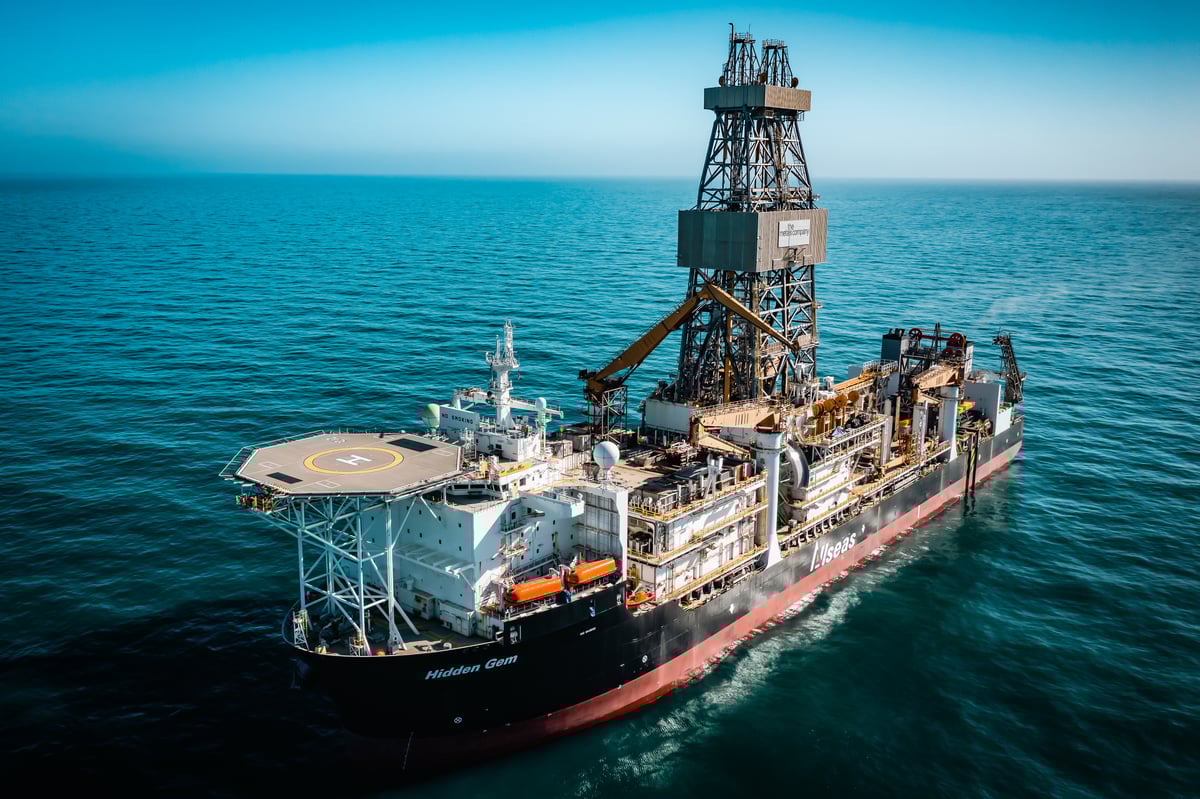
Deep-Sea Mining Breakthrough Offers Regulatory Validation
The Metals Company ($TMC) has achieved a significant regulatory milestone that could reshape its commercialization timeline and the global supply chain for critical battery metals. The company's deep-sea mining application has become the first to comply with newly established U.S. regulatory frameworks for extracting polymetallic nodules from the ocean floor—a development that removes one major barrier to what could become a transformative industry.
The regulatory approval represents a watershed moment for an industry long hindered by environmental concerns and unclear governmental frameworks. By successfully navigating the new compliance requirements ahead of competitors, TMC has positioned itself as a potential first-mover advantage in a sector that could eventually supply significant portions of the metals required for electric vehicle batteries, renewable energy infrastructure, and consumer electronics. However, this regulatory progress alone does not resolve the company's fundamental challenge: it remains pre-revenue and entirely dependent on future market adoption and commercial viability.
The Numbers Tell a Story of Risk and Potential
TMC's stock currently trades at $6.09, representing a 37% decline from its $10 initial public offering price—a performance that underscores investor skepticism despite the latest regulatory validation. This valuation gap reflects the substantial uncertainty surrounding deep-sea mining as a commercial enterprise. Several critical factors explain why institutional and retail investors have remained cautious:
- Pre-revenue status: TMC has generated no commercial revenue to date, making traditional valuation metrics obsolete
- Capital intensity: Deep-sea mining operations require substantial infrastructure investment before any nodules can be extracted and monetized
- Regulatory uncertainty: While the U.S. framework now exists, international regulatory environments remain fluid and potentially hostile
- Environmental opposition: Deep-sea mining faces significant activism and environmental pushback that could constrain operations or increase compliance costs
- Market timing risk: The company's success depends on future demand for battery metals coinciding with its operational readiness
The recent regulatory progress is undeniably positive, but it represents a necessary condition rather than a sufficient one for investment success. TMC must still overcome commercial, operational, and execution risks before shareholders see returns on their capital.
Market Context: A Sector in Search of Legitimacy
The global transition to renewable energy and electric vehicles has created unprecedented demand for critical metals—particularly nickel, cobalt, manganese, and copper—essential components in lithium-ion batteries. Traditional mining faces constraints from depleting ore grades, geopolitical concentration risks (especially regarding cobalt in the Democratic Republic of Congo), and increasingly stringent environmental regulations.
Deep-sea mining represents a potential alternative source for these materials, though it remains experimental at commercial scale. TMC operates in a sector with virtually no established competitors generating meaningful revenue, which creates both opportunity and risk. The regulatory approval the company just achieved signals that governments are beginning to take deep-sea mining seriously as a potential solution to supply chain vulnerabilities.
However, the sector faces formidable headwinds:
- Environmental opposition: Marine conservation groups argue that deep-sea mining could cause irreversible ecosystem damage
- International regulatory fragmentation: Unlike the U.S., many countries have not established clear frameworks, creating uncertainty for commercial operations
- Technology unproven at scale: While polymetallic nodules exist and their extraction is theoretically feasible, large-scale commercial operations have never been attempted
- Price cycle sensitivity: Metal prices remain volatile; if demand soften or traditional supplies increase, the economic case for deep-sea mining could deteriorate
In this context, TMC's regulatory achievement is meaningful but not determinative of sector viability.
Why This Matters for Investors
The investment thesis around $TMC hinges entirely on a multi-decade bet that deep-sea mining will eventually become a necessary and accepted source of battery metals. For investors considering a $500 position, the key considerations are:
Risk-Reward Profile: At $6.09, the stock has already absorbed substantial losses from its IPO price. This suggests current shareholders are either long-term believers in the deep-sea mining thesis or cost-basis investors. The regulatory approval could provide upside momentum, but the company remains years away from commercial operations and revenue generation.
Time Horizon: Investors in TMC must have a multi-year investment horizon. Even if all regulatory approvals proceed smoothly, the company will need to secure financing, construct offshore infrastructure, and navigate operational challenges before generating meaningful cash flow. This is not a stock for investors seeking near-term returns.
Speculative Nature: Financial professionals universally categorize TMC as a speculative holding, appropriate only for investors who can afford to lose their entire investment without material impact to their financial goals. The company's pre-revenue status, substantial capital requirements, and unproven commercial model place it at the highest end of the risk spectrum.
Sector Dynamics: A $500 investment in TMC should be evaluated within the context of broader exposure to battery metals and critical minerals. Investors seeking exposure to this secular trend might consider diversified alternatives—including traditional mining companies, battery manufacturers, and electric vehicle producers—that offer more established revenue streams and clearer paths to profitability.
The regulatory approval does improve TMC's strategic position, but it does not materially change the fundamental risk-return calculus for most investors. The company remains a venture-stage bet disguised in a publicly traded wrapper.
Looking Ahead: Execution Becomes Everything
The regulatory milestone achieved by The Metals Company represents genuine progress and validates the deep-sea mining concept at the governmental level. For the company, the next phase involves translating regulatory approval into commercial reality—securing project financing, finalizing environmental impact assessments, and beginning actual extraction operations.
For investors, TMC remains a high-conviction speculation rather than a balanced investment opportunity. The $6.09 stock price reflects a market that has priced in significant execution risk and environmental uncertainty. The recent regulatory progress could provide upside catalysts if the company continues advancing toward commercialization, but it equally could disappoint if operational challenges, financing constraints, or environmental opposition derail timelines.
Investors considering a $500 investment in TMC should do so with clear-eyed recognition that they are making a venture-stage bet on an industry that has never operated at commercial scale. This is appropriate only for aggressive investors with high risk tolerance, sufficient diversification to absorb a potential total loss, and conviction in the long-term necessity of deep-sea mining for the global energy transition.