
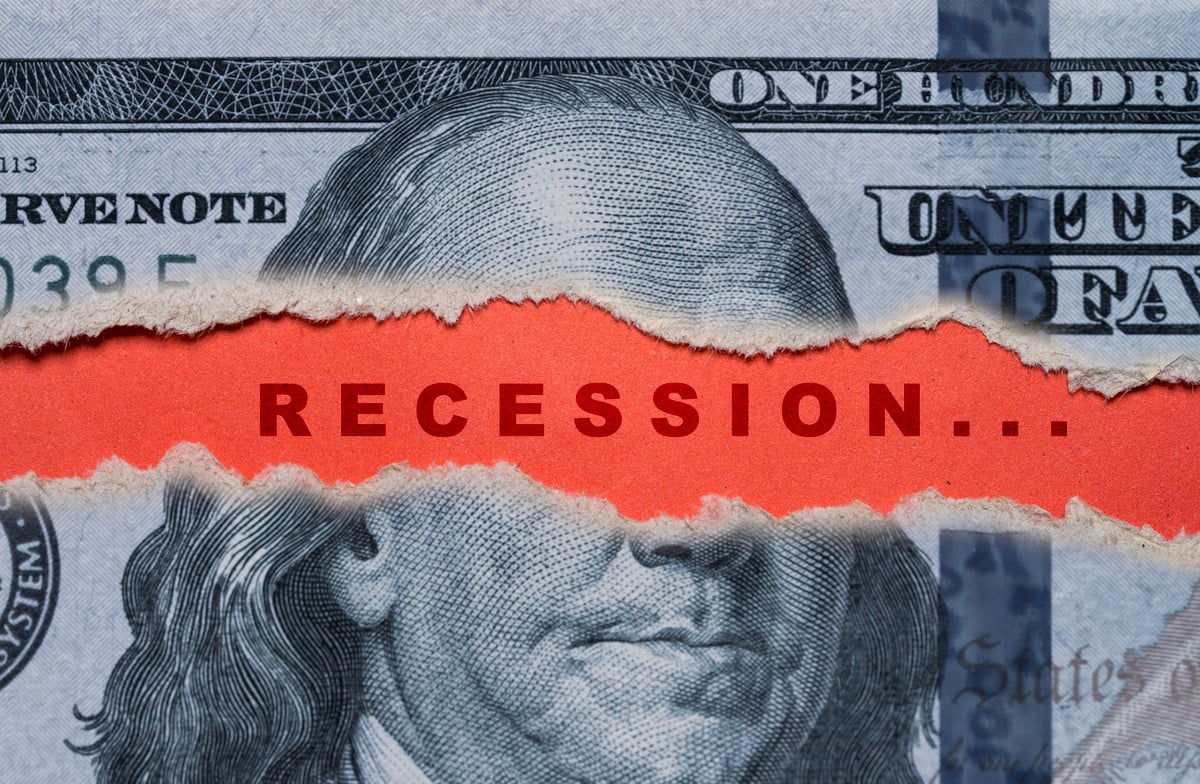
Market Valuations Meet Geopolitical Headwinds in Potentially Dangerous Alignment
The stock market is sending increasingly urgent distress signals as Moody's chief economist Mark Zandi publicly warns that sustained elevated oil prices pose a significant recession risk to the U.S. economy. The warning arrives at a precarious moment: the S&P 500 is trading at historically expensive valuations with a CAPE ratio of 39.2, while geopolitical tensions in the Middle East have driven crude oil prices above $100 per barrel—levels that historically have preceded economic downturns. A machine learning model analyzing current economic conditions indicates a sobering 49% probability of recession within the next 12 months, signaling that the risk is no longer theoretical but quantifiable and immediate.
The convergence of these factors has ignited fresh concern among market participants and policymakers alike. When elevated oil prices combine with stretched equity valuations, the market's foundation becomes vulnerable to shock. Zandi's recession warning, carried significant weight given Moody's prominence as a major credit rating agency and economic forecaster, suggests that the economic establishment is increasingly concerned about the trajectory ahead. For investors accustomed to years of accommodative monetary policy and generally benign economic conditions, the warning represents a critical inflection point that demands attention.
The Perfect Storm: Valuations, Oil, and Historical Precedent
The fundamental concern underpinning current market anxiety stems from the intersection of three troubling factors:
-
Historically elevated valuations: The CAPE ratio of 39.2 places the $SPX among the most expensive periods in market history, exceeded only by a handful of extreme outliers. This Cyclically Adjusted Price-to-Earnings ratio, popularized by Nobel laureate Robert Shiller, provides a longer-term perspective on market pricing than traditional P/E ratios, smoothing earnings across the business cycle.
-
Oil prices above $100/barrel: Geopolitical instability in the Middle East has created a supply risk premium, pushing crude to levels that historically have preceded periods of economic stress and stagflationary pressures. Energy cost inflation translates directly into higher transportation, manufacturing, and consumer goods costs across the entire economy.
-
Machine learning recession probability of 49%: Modern predictive models incorporating vast datasets and complex economic relationships now suggest near-even odds of recession, a threshold that typically prompts defensive positioning by sophisticated investors.
Historical analysis provides sobering context. During past recessions, the S&P 500 has experienced average declines of approximately 32%, representing substantial wealth destruction for equity investors. Looking forward, analysts have modeled specific scenarios: if oil prices remain elevated, the market could face declines ranging from 10% to 22% under various economic scenarios—meaningful losses even before accounting for the possibility of a full recession.
The CAPE ratio of 39.2 deserves particular scrutiny, as it reflects investor expectations that corporate earnings growth will be exceptionally strong to justify current prices. Any disappointment in earnings growth—particularly one triggered by higher energy costs squeezing profit margins—could rapidly lead to valuation compression and accelerated selling pressure.
Market Context: A Sector-Wide Vulnerability
The current environment presents particular risks to certain market segments while potentially benefiting others. Energy stocks have already benefited from elevated oil prices, but the broader economy faces headwinds. Consumer discretionary stocks, which depend on robust household spending and profit margins, face compression from both higher input costs and potential demand destruction as consumers redirect spending to energy.
The technology-heavy Nasdaq, which has driven much of the recent market rally, appears particularly vulnerable given its premium valuation multiples. Companies trading at high price-to-earnings ratios have less margin for error when facing macro headwinds. Industrial stocks, airline operators, and shipping companies—all energy-intensive industries—could experience margin pressure if oil remains elevated.
Fixed income markets are also signaling concern. The yield curve behavior and credit spread dynamics suggest growing investor anxiety about corporate debt servicing capacity in a higher-oil-price environment. The Federal Reserve's interest rate trajectory, which has been largely data-dependent in recent months, may face additional complexity if stagflationary pressures emerge—a combination of weak growth and persistent inflation that limits policy flexibility.
Investor Implications: Time for Portfolio Reassessment
For equity investors, Zandi's warning and the 49% recession probability warrant serious strategic consideration. While market timing remains notoriously difficult, the risk-reward calculation has shifted meaningfully. Several implications emerge:
Valuation risk has increased substantially. A CAPE ratio of 39.2 leaves minimal room for multiple compression. If earnings disappoint while valuations contract simultaneously, losses could exceed analyst base-case scenarios. Investors holding concentrated positions in high-multiple growth stocks face particular exposure.
Portfolio diversification becomes paramount. With equities facing recession risk and elevated valuations, traditional diversification strategies suggest increasing allocations to defensive assets. Treasury bonds, high-quality corporate debt, and dividend-paying stocks with essential-service characteristics may provide relative safety.
Earnings quality matters more. Companies with strong balance sheets, robust cash flows, and demonstrated pricing power can better navigate a recession driven by oil-price-induced cost pressures. Investors should prioritize firms with transparent earnings and visible competitive advantages.
Sector rotation may be accelerating. While energy stocks benefit from elevated oil prices in the near term, investors should recognize this as a temporary tailwind. Defensive sectors—utilities, consumer staples, healthcare—historically outperform during recession periods and may offer better risk-adjusted returns.
Professional investors managing pension funds and endowments are likely reassessing their equity allocations in light of the increased recession probability. A 49% odds reading for recession within 12 months exceeds typical thresholds for defensive positioning, suggesting that institutional money may be flowing toward safety.
The Road Ahead: Monitoring Key Economic Indicators
The path forward depends critically on several variables. Oil prices remain the most immediate risk factor; any further escalation of Middle East geopolitical tensions could push crude higher and increase recession probability beyond current estimates. Conversely, a reduction in geopolitical risk or increased production from non-OPEC sources could relieve pressure and validate more optimistic market scenarios.
Corporate earnings reports and forward guidance in coming quarters will prove essential in either validating or refuting recession warnings. If companies demonstrate resilience and stable margins despite oil-price pressures, market confidence may stabilize. Conversely, deteriorating guidance would support Zandi's recession thesis.
The S&P 500's behavior over coming weeks will serve as a crucial barometer of investor conviction. A breakdown below major support levels coupled with rising volatility would suggest institutions are indeed rotating toward defensive positioning. Sustained strength, by contrast, might indicate that investors believe risks remain manageable.
Market history suggests that warnings from credible economists warrant serious attention. Mark Zandi's recession warning, combined with objective measures of market valuation extremity and elevated geopolitical risk premiums, presents a compelling case that the market's current trajectory carries significant tail risks. While recessions are inherent to capitalism and equity markets have ultimately rewarded long-term investors throughout history, the mathematical odds of significant near-term losses have clearly increased. For those with the ability to adjust their portfolios, the current environment demands thoughtful risk assessment rather than passive assumption that favorable conditions will persist indefinitely.