
Tanker ETF Surges 243% on Geopolitical Turmoil, but Experts Warn Against Long-Term Bets
The Breakwave Tanker Shipping ETF ($BWET) has delivered eye-popping returns this year, surging 243% year-to-date amid escalating geopolitical tensions that have disrupted global shipping routes. Yet despite its spectacular performance, financial experts caution that the fund's dramatic gains mask fundamental vulnerabilities that make it a poor fit for long-term retirement portfolios. The surge highlights a broader tension in today's market: spectacular short-term gains driven by crisis premiums often come at the expense of stability and predictable long-term wealth creation.
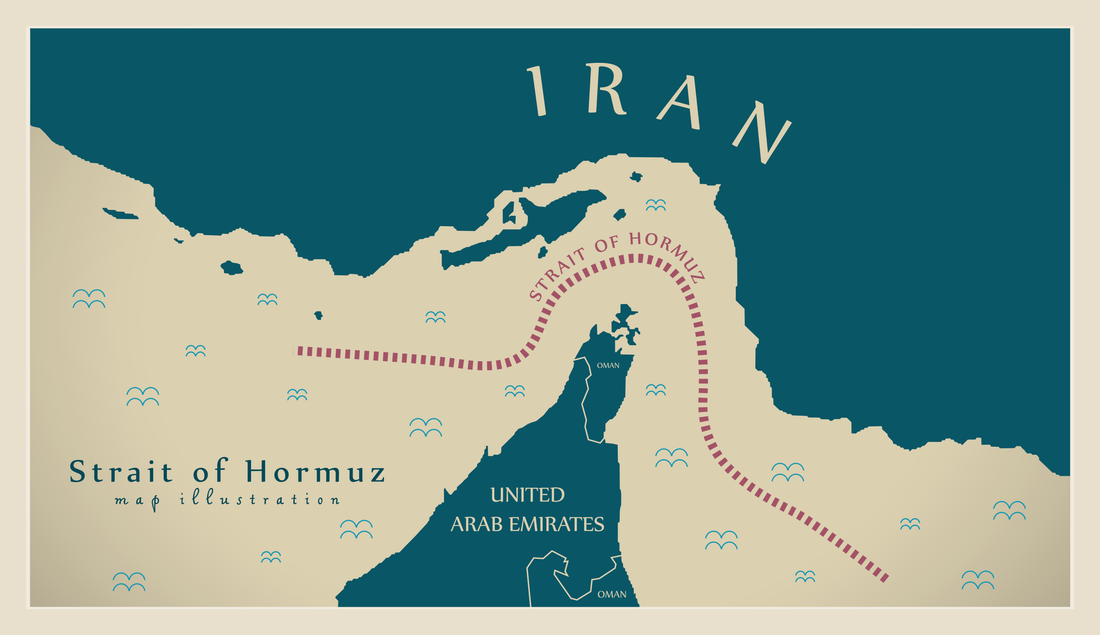
The tanker shipping sector's explosive performance reflects a perfect storm of geopolitical disruption, particularly around the Strait of Hormuz, one of the world's most critical chokepoints for global energy trade. When shipping routes become congested or dangerous, vessels must take longer, costlier paths to reach their destinations—a dynamic that dramatically increases demand for tanker capacity and drives freight rates sharply higher. This year's geopolitical tensions have created exactly these conditions, allowing tanker operators to charge premium rates and driving outsized returns for investors exposed to the sector through vehicles like $BWET.
The Appeal and Reality of Explosive Returns
On the surface, $BWET's 243% year-to-date surge appears to represent a rare opportunity for portfolio outperformance. The fund tracks the Breakwave Tanker Shipping Index, gaining exposure to companies operating in the international tanker market. For investors seeking tactical positions on short-term disruptions, such returns are undeniably compelling.
However, the mechanics driving these gains reveal significant structural weaknesses:
- Geopolitical dependency: Returns are heavily dependent on maintaining elevated tensions and route disruptions that increase shipping distances
- Freight rate volatility: The underlying economics of tanker shipping are extremely cyclical, with rates subject to dramatic swings based on supply-demand imbalances
- Mean reversion risk: When tensions ease or alternative routes open, freight rates typically normalize sharply, eroding gains quickly
- Limited fundamental growth: Unlike technology or consumer companies, tanker operators generate returns primarily from pricing power rather than business expansion
The fund's explosive performance, while real, rests on conditions that are inherently temporary by nature. Geopolitical crises eventually resolve, alternative shipping routes are developed or reopened, and market dynamics shift. When they do, the premium freight rates that drove $BWET's gains are likely to compress significantly.
Market Context: Sector Fundamentals vs. Crisis Premiums
The tanker shipping sector operates in a fundamentally different economic environment than broad-based equity indices. While companies in the S&P 500—tracked by vehicles like the Vanguard S&P 500 ETF ($VOO)—generate returns through revenue growth, margin expansion, innovation, and capital allocation, tanker operators are largely commodity price-takers whose returns depend on temporary supply-demand imbalances.
The current market environment amplifies this dynamic. Years of stable geopolitics and open shipping lanes created oversupply in tanker capacity, depressing freight rates and returns for investors. The recent surge in geopolitical risk has temporarily reversed this dynamic, creating a rare window of elevated rates. This window, however, is unlikely to remain open indefinitely.
Historically, shipping sector cycles show predictable patterns: crisis premiums emerge, attract capital, stimulate new ship construction, which eventually restores supply-demand balance and compresses rates. This cycle has repeated for decades, suggesting that $BWET's current valuations may not be sustainable.
In contrast, broad-based index funds like $VOO capture returns from thousands of companies operating across diverse sectors with structural competitive advantages, recurring revenue streams, and meaningful growth prospects. These fundamentals provide more durable sources of returns over multi-decade investment horizons.
Why This Matters for Investors
The $BWET phenomenon illustrates a critical distinction in portfolio construction: spectacular short-term returns often signal tactical opportunities rather than long-term wealth builders. For retirement investors with 20, 30, or 40-year time horizons, this distinction is paramount.
Investing in $BWET for a long-term retirement portfolio presents several material risks:
Timing risk: Investors chasing the 243% gain are essentially buying after the crisis premium has already been largely realized. Those entering now face elevated downside risk as geopolitical situations normalize.
Concentration risk: The tanker shipping sector represents a minuscule portion of global economic output. Exposure concentrated in this narrow sector introduces unnecessary volatility without corresponding diversification benefits.
Structural headwinds: Long-term energy transition toward renewables and electric vehicles may structurally reduce global oil consumption, dampening demand for tanker capacity over decades.
Volatility drag: The fund's extreme volatility can impair long-term compound returns through rebalancing costs and behavioral risks. Investors may be tempted to buy high and sell low, crystallizing losses.
For investors seeking pure tactical exposure to short-term disruptions, $BWET may serve a specific portfolio purpose. However, for the bulk of retirement savings, broad-based diversified indices offer superior long-term characteristics: stable business models, global diversification, lower volatility, and alignment with genuine economic growth.
The Case for Boring Stability
The comparison between $BWET and funds like $VOO may seem unfair—one delivered 243% while the other generated more modest single-digit returns this year. Yet this comparison misses the essential point: sustainable wealth accumulation rarely comes from chasing crisis-driven sector rotations.
The S&P 500 represents ownership stakes in thousands of the world's leading companies, collectively capturing the returns generated by genuine business innovation, productivity improvements, and economic growth. These returns compound reliably over time, with historical annualized returns around 10% despite periodic corrections and crises.
Tanker shipping returns, by contrast, are extracting temporary rents from disrupted trade flows—economically unproductive activity that transfers wealth from shippers to vessel operators. When disruption resolves, these rents disappear, often suddenly.
For retirement investors, the psychological and financial case for broad diversification is compelling. Missing the handful of days when $BWET peaks may result in missing the 243% gain, but staying disciplined through market cycles historically produces superior risk-adjusted returns than attempting to time tactical sector rotations.
The fundamental lesson from $BWET's surge is that impressive short-term performance often signals the final stages of a cycle rather than the beginning. For long-term investors, this is a moment to reaffirm commitment to diversified, fundamentally-grounded investment strategies—and to resist the siren call of geopolitically-driven shipping plays.