
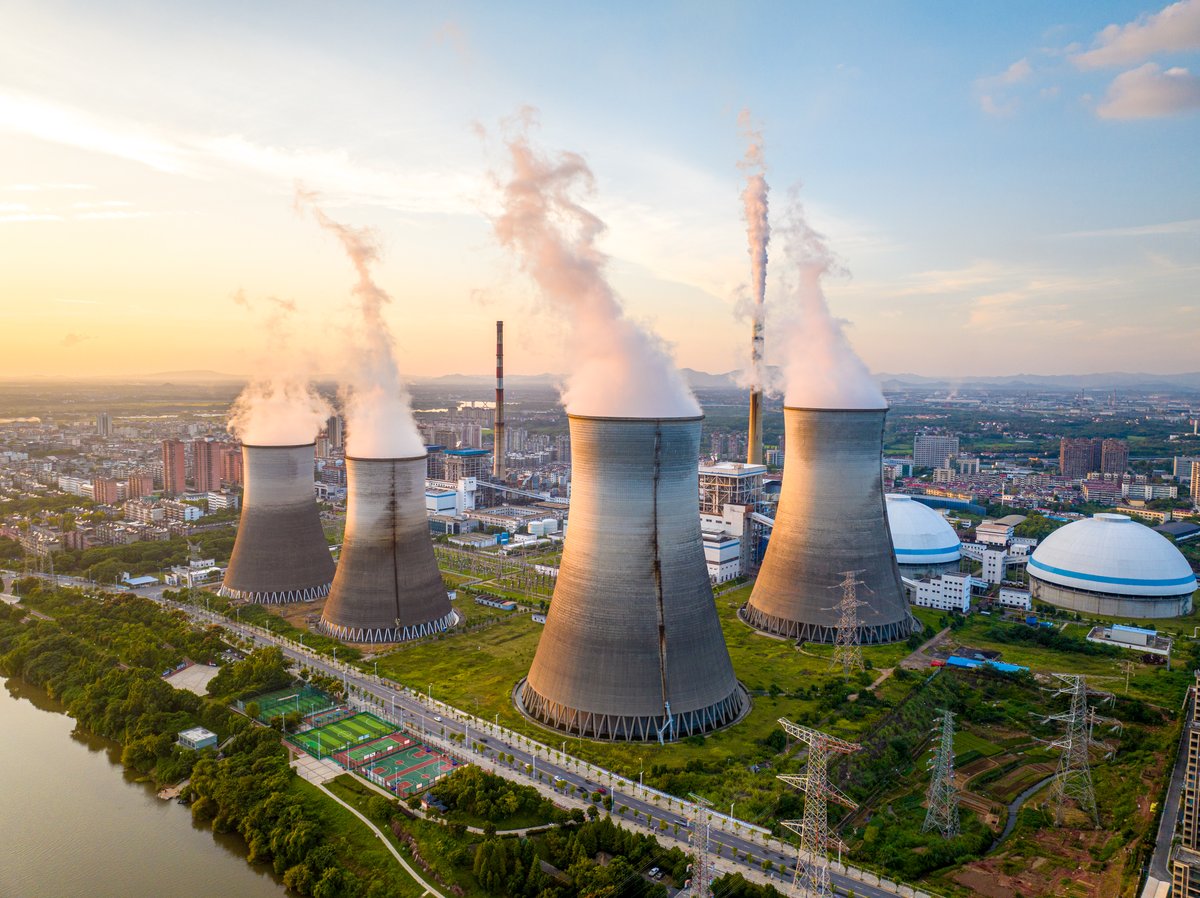
Nuclear Renaissance Lifts Uranium Miner Cameco as Asia Races for Energy Independence
Geopolitical disruptions in one of the world's most critical energy chokepoints are triggering a dramatic acceleration in nuclear power investments across Asia, creating a potentially transformative opportunity for Cameco Corporation ($CCJ), the world's second-largest uranium miner. The closure of the Strait of Hormuz—through which roughly one-third of seaborne traded oil passes—has prompted major Asian economies to aggressively pursue nuclear energy as a strategic hedge against supply vulnerabilities, positioning Cameco to capture significant upside through its diversified exposure to uranium supply, advanced reactor manufacturing, and the region's energy security imperative.
Strategic Assets Positioned for Explosive Demand
Cameco's competitive advantage stems from multiple high-value assets perfectly aligned with Asia's nuclear acceleration:
Uranium Supply Contracts with India As New Delhi accelerates its nuclear expansion program to reduce dependence on volatile energy imports, Cameco maintains established uranium supply agreements positioning the company as a critical partner in India's energy independence strategy. These long-term contracts provide revenue visibility and premium pricing leverage as global uranium inventories tighten.
49% Stake in Westinghouse Perhaps more significantly, Cameco's near-50% ownership stake in Westinghouse Electric Company grants exposure to one of the world's leading advanced reactor manufacturers. Westinghouse is actively supplying advanced AP1000 reactors to both China and India—two of the largest economies racing to expand nuclear capacity. The AP1000 design represents next-generation reactor technology with enhanced safety features, positioning Westinghouse (and by extension, Cameco) at the forefront of the global nuclear infrastructure build-out.
2025 Financial Trajectory The company's underlying business fundamentals reflect this emerging tailwind:
- Revenue growth: Projected 10% year-over-year expansion
- Earnings per share (EPS) growth: Forecast 114% surge, indicating significant operational leverage and margin expansion
- These metrics suggest Cameco's business model is entering an inflection point as nuclear demand accelerates
Market Context: A Perfect Storm for Nuclear Expansion
The nuclear energy sector stands at an inflection point driven by converging macro forces that extend far beyond the immediate Strait of Hormuz disruption.
Geopolitical Risk Premium Major Asian economies—particularly India and China, collectively representing nearly 2.8 billion people—have increasingly recognized that energy independence cannot rely on maritime trade routes vulnerable to geopolitical chokepoints or supply disruptions. Nuclear power offers baseload, domestically-controlled energy capacity immune to import volatility. The Strait of Hormuz closure serves as a crystallizing event, translating longstanding energy security concerns into concrete capital allocation decisions.
Global Nuclear Renaissance Dynamics The broader energy transition narrative has fundamentally shifted. Climate commitments, electricity demand growth (particularly from data centers and artificial intelligence infrastructure), and renewable intermittency challenges have rehabilitated nuclear energy's investment thesis. Unlike solar and wind, nuclear provides reliable 24/7 baseload power—a critical capability as grids modernize.
Competitive Landscape Cameco operates in a uranium market where supply remains structurally constrained:
- Cameco is the world's second-largest uranium producer
- The global uranium market has experienced persistent supply deficits
- Limited new mining capacity coming online means established producers like Cameco command pricing power
- Competitors face similar geopolitical pressures, but Cameco's diversification into reactor manufacturing (via Westinghouse) provides competitive differentiation
The Westinghouse stake is particularly strategic—it provides exposure to the higher-margin reactor manufacturing and development business, not merely commodity uranium sales. As Asian nations build dozens of new reactors over the next decade, Westinghouse captures technology licensing, engineering, and manufacturing revenues that dwarf uranium mining margins.
Investor Implications: Structural Growth With Binary Optionality
For equity investors, Cameco represents a leveraged play on multiple bullish themes:
Margin Expansion The 114% EPS growth forecast significantly outpaces the 10% revenue growth projection, indicating Cameco is moving up the value curve. As uranium demand intensifies and supply constraints tighten, the company can extract higher per-unit pricing while maintaining flat or declining production costs—a classic margin expansion scenario. This operating leverage could sustain EPS growth well into 2026 and beyond.
Multi-Year Runway Nuclear power plants are constructed over 5-10 year timelines, meaning the capital deployment decisions being made today in India and China translate into 10+ years of sustained demand visibility for uranium supplies and reactor components. Unlike cyclical commodities, Cameco's growth trajectory appears structurally supported by regulatory and policy decisions already in motion.
Westinghouse Upside Option The Westinghouse stake represents embedded optionality. Should Westinghouse accelerate reactor sales to China, India, or other Asian markets, Cameco's equity value in the subsidiary could appreciate substantially, driving additional shareholder returns beyond core mining operations. A potential initial public offering (IPO) or merger transaction involving Westinghouse could unlock significant shareholder value.
Commodity Cycle Hedging For portfolio managers concerned about broader commodity cycle deterioration, Cameco's transition toward higher-margin nuclear services (through Westinghouse) and strategic supply contracts (through India deals) reduces pure commodity exposure compared to traditional uranium miners, offering downside protection.
Risk Considerations Investors should note that nuclear regulatory timelines remain unpredictable, and construction delays could extend demand realization. Additionally, Cameco's Westinghouse stake represents 49% ownership without operational control, creating some execution risk on manufacturing efficiency and cost management.
Looking Forward: A Decade of Expansion
Cameco Corporation appears uniquely positioned to capitalize on Asia's nuclear energy inflection. The combination of established uranium supply agreements with India, a near-50% stake in advanced reactor manufacturer Westinghouse, and near-term financial guidance showing 114% EPS growth creates a compelling investment thesis. As geopolitical pressures continue driving energy independence priorities across Asia, Cameco stands to benefit from both commodity uranium demand and high-margin nuclear infrastructure development for the next decade. The stock's valuation will ultimately depend on whether markets properly price in the structural nature of these nuclear demand tailwinds versus treating nuclear as a cyclical energy bet.