
Ford's Manufacturing Gamble: Innovation or Hidden Risk?
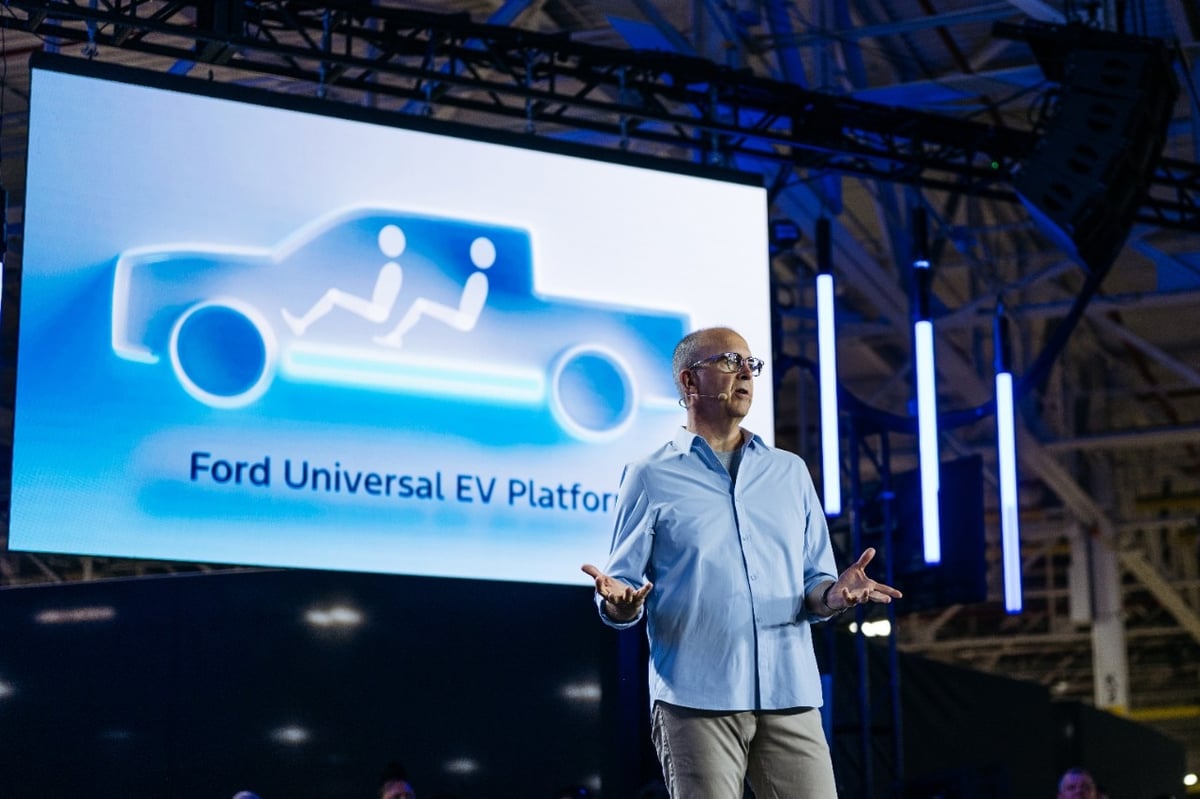
Ford Motor Company is betting billions on what executives call the "most radical change" to automobile manufacturing in decades—a shift toward unicasting technology that replaces hundreds of smaller components with large aluminum castings. The strategy is designed to slash production costs and help the Detroit automaker compete with increasingly aggressive Chinese automakers dominating global markets. However, emerging concerns about vehicle repair expenses threaten to undermine the very cost savings the company is pursuing, raising critical questions about whether this manufacturing evolution will ultimately benefit or burden consumers and shareholders alike.
The unicasting approach represents a fundamental reimagining of how vehicles are built. Rather than assembling numerous individual metal parts through traditional welding and fastening processes, Ford and other manufacturers are consolidating production into single, large aluminum castings. This consolidation dramatically reduces the number of components, simplifies assembly procedures, and decreases labor requirements on production lines. Industry analysts acknowledge that the manufacturing benefits are clear: fewer parts mean fewer steps, less waste, and reduced factory floor complexity. These advantages translate directly to lower per-unit production costs—exactly what Ford needs to survive a market increasingly pressured by Chinese competitors offering vehicles at price points that traditional Western manufacturers struggle to match.
The Cost Equation Gets Complicated
While the production-side economics appear straightforward, the total cost of vehicle ownership tells a more nuanced story. Early research and industry analysis suggest that vehicles with large aluminum castings may face substantially higher repair costs when damage occurs, potentially offsetting years of manufacturing savings. This counterintuitive outcome stems from a simple reality: when a single casting incorporates multiple components, damage to any portion of that casting often requires replacement of the entire piece rather than repair or replacement of an individual component.
The financial implications are significant:
- Repair complexity increases when multiple integrated functions exist within a single casting
- Replacement costs escalate as entire assemblies must be swapped rather than individual parts
- Insurance premiums may rise if repairability metrics worsen
- Total cost of ownership could increase despite lower purchase prices
- Consumer satisfaction may decline if repair bills surprise vehicle owners during the warranty period and beyond
However, Ford appears to be addressing this concern head-on. The company has prioritized repairability in its design process, a crucial distinction that could make the difference between triumph and failure for this manufacturing strategy. By engineering large castings with disassembly and component replacement in mind, Ford aims to prove that aluminum castings don't necessarily mean repair nightmares. If successful, this approach could demonstrate that manufacturing innovation and repairability can coexist—a breakthrough that would secure Ford's competitive advantage.
Market Context: The Chinese Threat and Competitive Pressure
Ford's dramatic manufacturing shift cannot be understood outside the context of intensifying global automotive competition. Chinese automakers have emerged as formidable competitors, leveraging lower labor costs, vertical supply chain integration, and aggressive pricing strategies to capture market share across multiple regions. Tesla, despite its American roots, operates massive factories in China and competes aggressively on price. Traditional Western automakers face a structural cost disadvantage that incremental improvements cannot address—they need transformational change.
The unicasting strategy represents exactly that kind of transformation. By adopting this technology, Ford is not merely competing on cost; the company is fundamentally changing the cost structure itself. The automotive sector has watched as Tesla and Chinese manufacturers gained ground specifically through manufacturing innovation and process optimization. Ford's move signals that legacy automakers understand the game has changed and are willing to invest in revolutionary approaches rather than evolutionary tweaks.
The broader industry is watching closely. General Motors, Volkswagen, and other major manufacturers are exploring similar technologies. The first company to successfully implement unicasting at scale while maintaining repairability and quality will enjoy a significant competitive moat. Ford's willingness to acknowledge and address the repair cost concerns head-on gives the company credibility that could translate to market advantage if execution succeeds.
Investor Implications: Execution Risk and Long-Term Competitiveness
For Ford shareholders, this manufacturing shift represents both promise and peril. Success could fundamentally improve the company's competitive position against Chinese rivals and secure margin improvement for years. The ability to produce vehicles at competitive price points while maintaining profitability is precisely what Wall Street wants to see from traditional automakers struggling to adapt to the electric vehicle transition.
Yet execution risk looms large. If Ford's repairability improvements prove inadequate, the company could face:
- Warranty cost explosions as complex casting repairs drain profitability
- Negative consumer reviews and brand reputation damage
- Class action litigation if repair costs surprise buyers
- Reduced resale values if vehicle ownership costs escalate
- Regulatory scrutiny around right-to-repair and parts availability
The company's stock performance will likely track the initial data on actual repair costs and customer satisfaction as these vehicles age. Early warning signs will emerge within the first 2-3 years as warranty claims accumulate and independent repair data become available. Investors should monitor quarterly earnings reports for warranty-related cost trends and management commentary on manufacturing yields and quality metrics.
The competitive stakes are equally high. If Ford successfully demonstrates that unicasting can deliver both lower production costs and acceptable repair expenses, the company gains a significant advantage in competing with Chinese manufacturers on price while maintaining acceptable total cost of ownership. This could reshape the competitive landscape and provide Ford with breathing room to invest in electric vehicles and other future technologies. Conversely, if repair costs spiral unexpectedly, competitors may avoid the technology, leaving Ford with a competitive disadvantage despite lower production costs.
Looking Forward: The Innovation Test
Ford's unicasting revolution illustrates a fundamental challenge facing traditional automakers: innovation that reduces one cost often creates unforeseen expenses elsewhere. The company's explicit focus on repairability suggests management understands this risk and is taking steps to mitigate it. Whether those steps prove sufficient will determine whether this "most radical change" becomes a competitive triumph or a cautionary tale about unintended consequences in manufacturing innovation.
The months ahead will prove critical. As vehicles built with unicasting technology accumulate miles and experience real-world damage events, actual repair data will either validate Ford's approach or expose flaws in the company's strategy. Investors, consumers, and competitors will all be watching closely. For Ford, success means securing the cost structure necessary to survive long-term competition with global rivals. For shareholders, it represents the difference between a company positioned for sustainable profitability or one facing structural challenges that manufacturing innovation alone cannot resolve. The company's ability to deliver both lower production costs and manageable repair expenses will likely determine Ford's competitive fate in an increasingly challenging automotive market.