
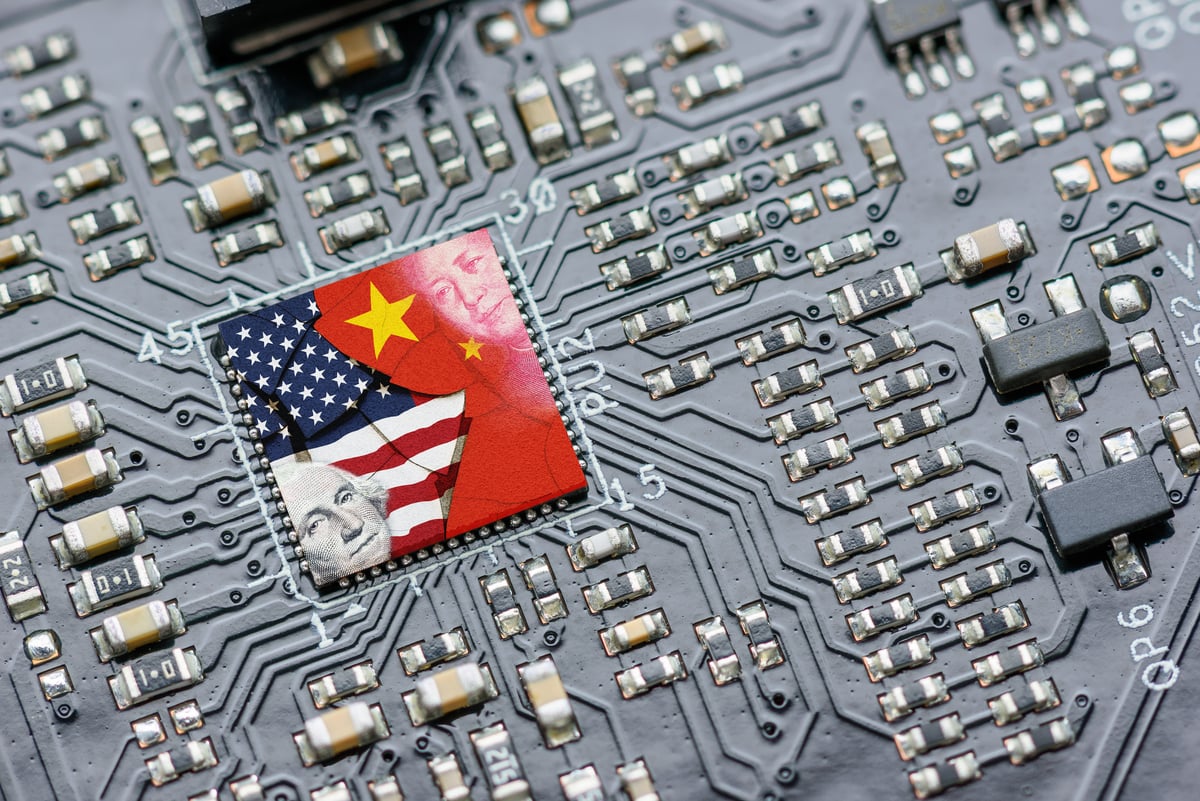
Nvidia Cleared to Resume China Chip Sales, Signals Major Revenue Recovery
Nvidia has received critical U.S. government approval to resume chip sales to China following a year-long export embargo, marking a significant turning point for the AI chipmaker's revenue trajectory and geopolitical positioning. The company plans to begin shipping H200 chips within weeks and has set its sights on securing regulatory clearance for more advanced Blackwell processors by next year, potentially unlocking billions in previously blocked revenue from its second-largest regional market.
The move represents a watershed moment for Nvidia ($NVDA), which has faced substantial headwinds from U.S. export restrictions imposed to limit China's access to advanced semiconductor technology. With China historically accounting for approximately 13% of Nvidia's revenue—translating to roughly $28 billion annually based on the company's fiscal 2025 revenue baseline—the reopening of this critical market carries enormous financial implications for the technology giant and the broader semiconductor industry.
The Path Forward: Phased Reentry Into the Chinese Market
The approval structure outlined by regulators suggests a carefully calibrated reentry strategy. Nvidia will first establish operational presence through H200 chip shipments, a product line that represents sophisticated AI computing capability but falls below the technological threshold of the company's most cutting-edge offerings. This phased approach allows the company to rebuild relationships with Chinese customers while demonstrating compliance with export control frameworks that remain a central focus of U.S. technology policy.
The timeline for Blackwell chip approval—targeted for next year—positions the company to potentially double down on its market penetration once regulatory confidence solidifies. Blackwell, the company's next-generation architecture, represents a generational leap in AI processing power and is expected to command premium pricing in global markets. Gaining authorization to export this technology to China would fundamentally reshape the competitive dynamics of the global AI infrastructure market.
Key metrics underscoring the magnitude of this opportunity include:
- $28 billion: Approximate annual revenue from China at previous market-share levels
- 13%: China's share of Nvidia's fiscal 2025 revenues
- 12+ months: Duration of the export restriction period
- Weeks: Expected timeframe for initial H200 shipments to resume
Market Context: Geopolitics, Competition, and Industry Dynamics
The geopolitical backdrop of this approval cannot be overstated. The U.S. government imposed chip export restrictions to China as part of a broader strategy to limit Beijing's access to advanced semiconductors critical for military applications and artificial intelligence development. The decision to grant Nvidia approval signals a potential shift in how the Biden administration balances national security concerns against the economic interests of America's technology champions—a calculation that may intensify under different political leadership.
For Nvidia, the stakes extend beyond simple revenue recovery. The company has faced mounting competitive pressure from regional alternatives, particularly Huawei's domestically developed chips and other Chinese semiconductor manufacturers working to reduce dependence on American technology. A prolonged absence from the Chinese market creates space for competitors to establish relationships and technical standards that could prove difficult to dislodge even after sanctions lift. The timely resumption of exports therefore serves as a defensive maneuver against market share erosion.
The broader semiconductor ecosystem has been grappling with the fragmentation created by export controls. Companies like Intel ($INTC) and AMD ($AMD) have similarly faced restrictions on selling advanced processors to China, creating a bifurcated global supply chain. Nvidia's reentry signals potential easing of these constraints, though regulatory uncertainty remains high. The company's competitors will likely monitor the success of Nvidia's Chinese relaunch closely, as it may herald broader normalization of tech trade flows.
Industry analysts have noted that China remains central to the global AI infrastructure buildout, with major cloud providers and government-backed research initiatives requiring continuous access to cutting-edge hardware. The absence of Nvidia chips in this market has created inefficiencies and higher costs, incentivizing Chinese entities to accelerate domestically developed alternatives—a trend that benefits Nvidia only if it can quickly rebuild market presence.
Investor Implications: Revenue Upside and Execution Risk
For Nvidia shareholders, the approval carries substantial financial upside if successfully executed. The potential to recover approximately 13% of annual revenues—roughly $28 billion at current run rates—represents one of the most significant expansion opportunities available to the company. Given that Nvidia's overall fiscal 2025 revenues approached $215 billion, regaining the Chinese market could contribute 2-3 percentage points to annual growth rates, a material acceleration in a company already experiencing extraordinary momentum.
However, execution risk remains considerable. China's domestic chip capabilities have advanced significantly during the embargo period, and Chinese enterprises may have already shifted investment priorities to locally developed alternatives. Customer relationships atrophied over a year may require substantial effort to rebuild. Additionally, regulatory approval for Blackwell chips is not guaranteed, and geopolitical tensions could reverse course, reimposing restrictions with little warning.
The stock market implications extend beyond Nvidia itself. A successful Chinese reentry would likely support elevated semiconductor valuations more broadly, as it would validate assumptions about continued global demand for advanced AI chips. Conversely, any indication that regulatory approval could be delayed or restricted would likely trigger sector-wide weakness given how much current valuations assume unobstructed global supply chains.
For investors assessing Nvidia's medium-term trajectory, this development should factor prominently into financial models. The company's guidance and management commentary on Chinese market conditions will become essential signals for monitoring execution and demand normalization. Institutional investors should also monitor competitive dynamics, as how quickly Nvidia rebuilds market share relative to Chinese alternatives will substantially influence long-term profitability.
Looking Ahead: Strategic Positioning in a Contested Tech Landscape
Nvidia's approval to resume Chinese exports reflects broader recognition that complete technological decoupling between the U.S. and China remains impractical at current levels of economic integration. The company's ability to capitalize on this opening may ultimately determine whether it maintains its dominant position in global AI chip markets or gradually surrenders share to increasingly capable domestic competitors.
The coming months will be instructive. H200 shipments within weeks will provide early indicators of customer demand and execution capability. Equally important will be management's commentary on win rates, pricing dynamics, and competitive threats in China's rapidly evolving semiconductor landscape. For long-term investors in Nvidia, this development represents both opportunity and a critical juncture where geopolitical and competitive forces will shape the company's financial trajectory for years to come.