
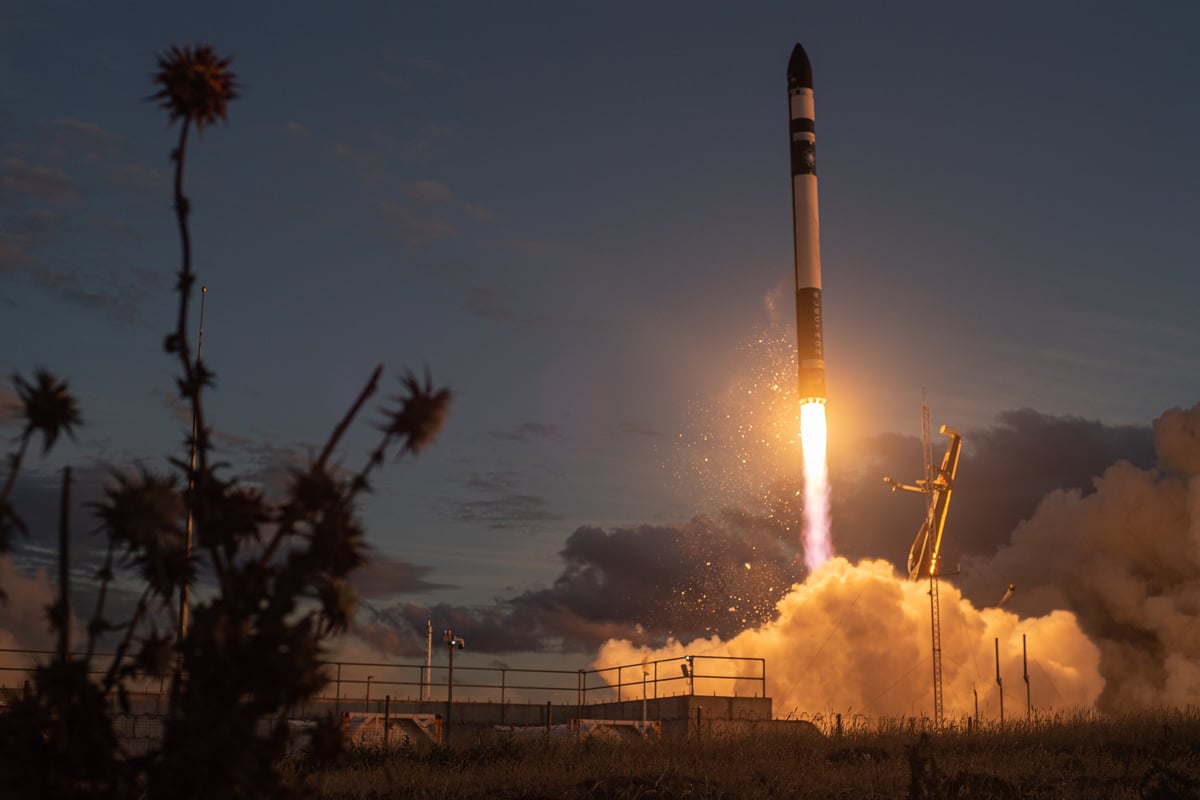
A Historic Win for Rocket Lab's Launch Division
Rocket Lab has secured its largest contract to date: a $190 million Department of Defense agreement to conduct 20 suborbital hypersonic rocket launches under the government's HASTE (Hypersonic Air-breathing Weapon Concept) program over the next four years. This landmark win represents a significant validation of the company's launch capabilities and marks a substantial revenue opportunity for the aerospace and defense contractor, signaling growing U.S. government confidence in commercial space infrastructure at a critical moment for national security priorities.
The deal carries particular weight for $RKLB shareholders because it demonstrates the company's ability to command premium pricing in the competitive launch market. Each mission will be valued at $9.5 million—a price point that exceeds Rocket Lab's historical launch rates and suggests the market is willing to pay significantly more for specialized, mission-critical capabilities. With the company currently operating at approximately 40% gross margins on its launch division, this higher per-mission pricing could provide meaningful margin expansion opportunities as the contract executes over the four-year period.
Contract Details and Financial Implications
The HASTE program represents a specialized use case within the broader hypersonic testing market. Rather than traditional orbital launches, these suborbital missions serve the Department of Defense's need for consistent, reliable platforms to test and validate hypersonic technologies—an increasingly critical area of competition among global superpowers. The contract's structure—20 launches over four years—provides predictable, recurring revenue that should enhance the company's financial visibility and cash flow stability.
Key metrics from the contract:
- Total value: $190 million
- Mission count: 20 suborbital launches
- Contract duration: 4 years
- Per-mission price: $9.5 million
- Current gross margins on launches: ~40%
The pricing structure is particularly noteworthy for investors. At $9.5 million per mission, Rocket Lab is achieving roughly $38 million in total launch revenue per year under this contract alone—a substantial revenue stream for a mid-cap aerospace company. If the company can maintain or exceed its current 40% gross margins on these missions, the HASTE contract could contribute approximately $15-16 million annually in gross profit, meaningful contribution to operating leverage as Rocket Lab continues scaling.
Market Context: Defense Spending and Hypersonic Competition
Rocket Lab's victory arrives amid elevated U.S. government focus on hypersonic weapons development and testing infrastructure. The Pentagon has significantly increased spending on hypersonic programs in recent years, recognizing these capabilities as essential to maintaining technological superiority. The HASTE program specifically addresses a critical gap: reliable, frequent access to launch platforms for hypersonic test flights.
For Rocket Lab, this contract validates a strategic pivot toward defense and government customers—a more stable, longer-duration customer segment compared to the commercial satellite launch market. While competitors like SpaceX dominate the large-lift orbital launch market with its Falcon 9, Rocket Lab's Electron rocket is purpose-built for smaller, specialized missions. The suborbital hypersonic niche represents an area where Rocket Lab's smaller, nimble launch platform and demonstrated reliability offer distinct advantages.
The broader aerospace and defense sector has been experiencing consolidation and increased government spending tied to defense modernization priorities. Traditional defense contractors have been working to expand their space capabilities, while commercial space companies have been pivoting toward government contracts. Rocket Lab's success in securing this major Pentagon deal positions the company favorably within this shifting landscape and demonstrates its ability to compete for high-value government work.
What This Means for Investors
For $RKLB shareholders, this contract represents several positive developments:
Revenue Visibility: The four-year, $190 million commitment provides substantial near-term revenue certainty—a critical metric for investors evaluating the company's growth trajectory and cash generation potential.
Margin Expansion: The $9.5 million per-mission pricing exceeds historical rates, suggesting Rocket Lab can command premium pricing for specialized applications. If the company can sustain or improve its 40% gross margins, operating leverage should improve significantly as the company scales.
Market Validation: A major Pentagon contract validates Rocket Lab's technical capabilities and reliability, enhancing the company's competitive positioning for future government and commercial opportunities. This credibility is valuable in attracting additional defense customers.
Strategic Positioning: The contract demonstrates that Rocket Lab's growth strategy—expanding beyond commercial constellations toward defense applications—is bearing fruit. This diversification reduces dependence on any single customer or market segment.
However, investors should note that while this is Rocket Lab's largest contract to date, it represents just one program. The company's long-term success depends on its ability to secure additional government and commercial contracts, manage execution risk, and navigate the competitive landscape as other aerospace companies expand their launch capabilities.
Looking Ahead
Rocket Lab's $190 million HASTE contract marks a pivotal moment for the company, demonstrating that commercial space infrastructure providers can successfully scale into defense and government markets. As the contract executes over the next four years, investors should monitor several metrics: on-time launch performance, potential contract extensions, new government contract wins, and the company's ability to maintain or improve margins on specialized missions.
The deal also signals broader market trends: the U.S. government's growing reliance on commercial partners for critical space capabilities, the increasing importance of hypersonic technology in national defense strategy, and the viability of focused, specialized launch providers like Rocket Lab in capturing high-value niches. For aerospace and defense investors, this contract reinforces that the commercial space sector—despite its volatility—is becoming increasingly integral to national security infrastructure and represents meaningful long-term opportunity for well-positioned companies.