
General Dynamics Secures $15.4B Navy Deal for Nuclear Submarine Fleet
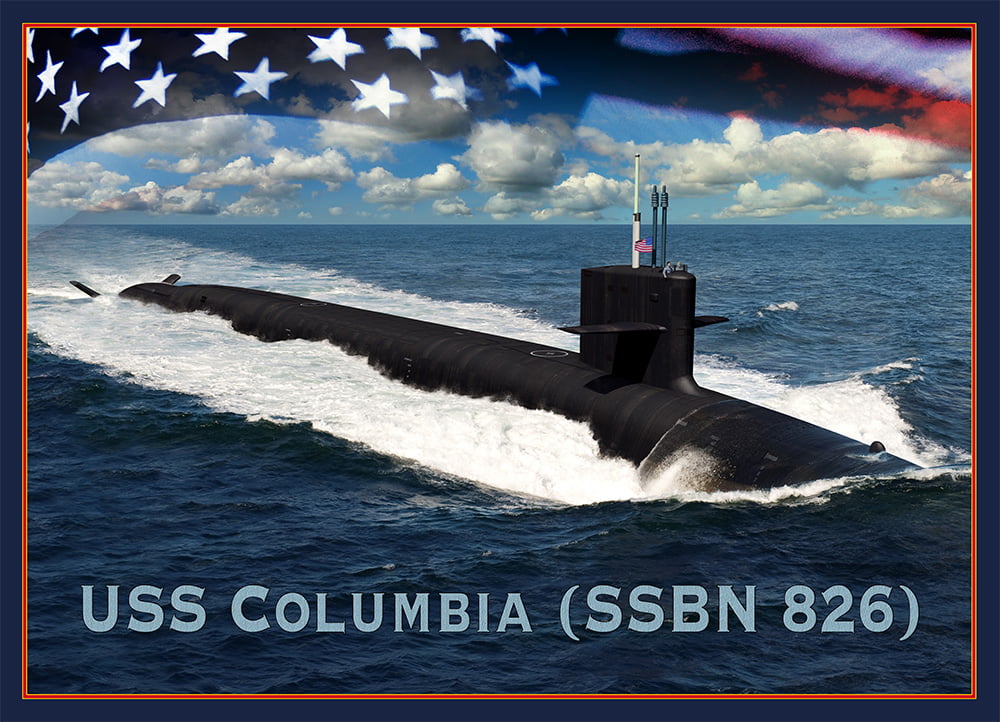
General Dynamics has landed a massive $15.4 billion contract from the U.S. Navy to support the construction of 12 Columbia-class nuclear ballistic missile submarines, underscoring the defense contractor's dominant position in America's strategic weapons programs. The award represents a significant financial win for the Arlington, Virginia-based defense giant and reinforces the critical role that advanced submarine capabilities play in U.S. national security strategy.
Breaking Down the Contract and Program Scope
The Columbia-class submarine program represents one of the most ambitious military shipbuilding initiatives in decades, with the total estimated program cost reaching $126.5 billion. General Dynamics will capture the lion's share of this opportunity, receiving 78% of the total program value, while Huntington Ingalls Industries ($HII) will secure the remaining 22%.
This contract award reflects a continuation of the submarine construction partnership that has characterized U.S. naval procurement for years:
- General Dynamics' share: 78% of the $126.5 billion program
- Huntington Ingalls' share: 22% of the $126.5 billion program
- Number of submarines: 12 Columbia-class vessels planned
- Program scope: Supporting construction and development of next-generation strategic deterrent platform
The Columbia-class submarines represent a critical modernization of America's submarine fleet, designed to replace the aging Ohio-class vessels that have formed the backbone of the U.S. Navy's ballistic missile submarine force since the 1980s. These submarines are central to America's nuclear deterrent strategy, capable of carrying advanced weapons systems that ensure strategic stability for decades to come.
Market Context: Defense Spending and Industry Dynamics
The award comes amid robust defense spending across the U.S. government, driven by geopolitical tensions and the stated need to modernize aging military platforms. The defense sector has benefited from bipartisan support for increased military budgets, with both Congress and the Biden administration prioritizing investment in strategic capabilities like submarine construction.
General Dynamics ($GD) has positioned itself as a primary beneficiary of this spending environment. Beyond submarines, the company maintains significant operations across combat systems, nuclear propulsion, and underwater technology—all critical to the Columbia-class program. The company's extensive experience in nuclear submarine construction, accumulated over decades of Ohio-class production, provides a substantial competitive moat against potential rivals.
Huntington Ingalls ($HII), while receiving a smaller share of the Columbia program, remains a vital player in the naval shipbuilding industrial base. The company specializes in amphibious and support ships, and its smaller allocation to this program reflects the specialized nature of submarine construction work performed primarily by General Dynamics' Newport News facility in Virginia.
The competitive landscape in defense contracting has consolidated significantly over the past two decades, with General Dynamics, Huntington Ingalls, Lockheed Martin ($LMT), and Northrop Grumman ($NOC) dominating major platform development and production. This concentration reflects both the high barriers to entry in defense manufacturing and the Pentagon's preference for established, proven contractors with demonstrated expertise and security clearances.
Investor Implications: Strategic Value and Growth Prospects
For investors, this contract award carries substantial implications for both companies involved, though the relative benefits differ materially.
General Dynamics gains a multi-decade revenue stream from the Columbia program, providing revenue visibility well into the 2030s and beyond. Large fixed-price contracts like this can be particularly valuable to defense contractors because they enable long-term planning and workforce stabilization. However, investors should note that fixed-price contracts also carry execution risk—cost overruns cannot simply be passed to the customer. The company's extensive experience with previous submarine programs positions it well to manage these risks, but the sheer scale and duration of the Columbia program means execution will be closely monitored by investors and Pentagon auditors alike.
Interestingly, some analysts suggest that Huntington Ingalls, despite receiving a smaller absolute contract value and commanding a higher valuation multiple, may represent better value for certain investors. The rationale centers on Huntington Ingalls' stronger earnings growth forecasts and superior free cash flow metrics relative to its current valuation. This analysis suggests that while General Dynamics wins more absolute dollars, Huntington Ingalls may deliver stronger returns per dollar invested, particularly if the company executes well on its existing programs and captures market share gains elsewhere in the naval shipbuilding sector.
The contract award also has implications for the broader defense sector. Large submarine program awards validate the continued importance of strategic weapons modernization within Pentagon priorities, potentially signaling sustained funding for related programs in undersea warfare, naval combat systems, and related technologies. Companies with exposure to submarine supply chains and components—including manufacturers of advanced materials, electronics, and propulsion systems—could see indirect benefits from this program's acceleration and expansion.
Moreover, the scale of this award reinforces the "too big to fail" status of major defense contractors in the U.S. industrial base. Congress and the Pentagon view companies like General Dynamics and Huntington Ingalls as essential to national security, making them unlikely to face contract cancellations or major funding reductions absent extraordinary circumstances.
Looking Ahead: Execution and Long-Term Value
The Columbia-class program represents one of the defining contracts for both General Dynamics and Huntington Ingalls for the next 15+ years. Success in executing this program will determine not just immediate profitability, but also the companies' credibility for future major awards. Defense analysts and investors will monitor program milestones, cost performance, and technical achievements closely.
For the broader investment community, this contract award underscores the enduring demand for advanced military capabilities and the continued vitality of the defense industrial base. Whether investors favor General Dynamics' size and scale or Huntington Ingalls' growth prospects will likely depend on individual portfolio objectives and risk tolerance, but both companies stand to benefit substantially from the multi-billion-dollar nuclear submarine modernization effort now firmly locked in through this major Navy contract award.