
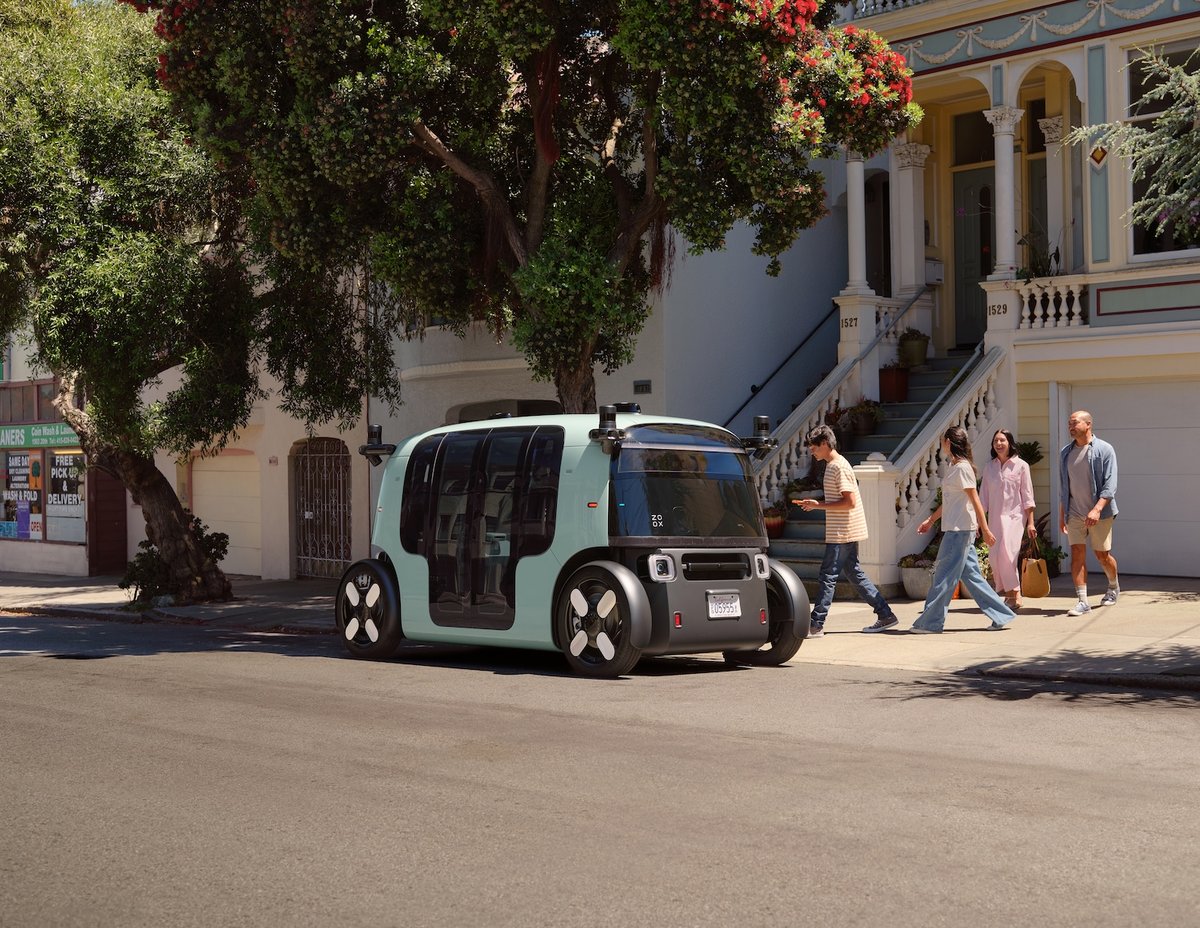
The Expansion Without Revenue
Amazon's autonomous vehicle subsidiary Zoox is aggressively expanding its robotaxi footprint, announcing service launches in Austin and Miami with operations expected to begin later this year. The expansion marks a significant scaling effort for the company, which has already accumulated nearly 2 million autonomous miles and served over 350,000 riders to date. However, there's a critical catch that underscores the nascent state of the autonomous vehicle industry: every single one of those rides has been completely free, and Zoox has yet to secure the federal regulatory approval required to charge passengers for rides.
This paradox—simultaneous expansion and continued free operations—highlights the complex landscape facing autonomous vehicle companies as they navigate the path from technological proof-of-concept to sustainable business. While Zoox demonstrates operational capability and market traction in terms of user adoption, the company remains fundamentally pre-commercial, dependent on Amazon's deep pockets to subsidize what is effectively a prolonged beta testing phase.
Key Details: The Numbers Behind the Growth
The scale of Zoox's operations tells an interesting story about both its progress and its limitations:
- Nearly 2 million autonomous miles logged across operations
- Over 350,000 riders have experienced the service
- Zero revenue generated to date
- Expansion to Austin and Miami expected later in 2024
- No federal approval yet obtained for paid commercial operations
These metrics demonstrate that Zoox has successfully deployed autonomous vehicles that function reliably in real-world urban environments and that consumers show willingness to use the service when offered free of charge. The company has achieved what many startups in the space have struggled with: consistently operating autonomous vehicles at scale without reported major incidents.
The expansion to Austin and Miami represents a geographic diversification strategy, moving beyond what is presumably its initial launch market. However, this expansion carries significant financial implications. Operating autonomous robotaxi services in new cities requires substantial infrastructure investment, including fleet expansion, local operational teams, insurance coverage, and ongoing compliance with state and local regulations. Each new market represents both an opportunity to accumulate more autonomous miles and user data, and a cost center that generates no offsetting revenue.
Market Context: David Versus Multiple Goliaths
The autonomous vehicle market has become increasingly stratified between well-funded incumbents and a handful of viable competitors. Zoox competes in an environment dominated by Waymo, Alphabet's autonomous vehicle unit, which has achieved far more advanced commercialization metrics.
Waymo represents the competitive benchmark by which Zoox must measure itself:
- $350 million in annual recurring revenue (ARR)
- On track to serve over 1 million rides per week by year-end 2024
- Operating commercial paid services across multiple markets
- Over a decade of development and real-world testing
This comparison is instructive and sobering for Zoox. While Waymo's revenue figure ($350 million ARR) may seem modest for a company backed by Alphabet's resources, it represents the industry's most advanced commercialization to date. Waymo's trajectory toward 1 million weekly rides suggests the company is transitioning from pilot phase to meaningful scale. Zoox, by contrast, operates entirely in the free-service category, accumulating what it hopes will eventually translate into competitive advantages: autonomous vehicle miles, operational data, and user familiarity with the technology.
Other competitors in the autonomous vehicle space include Tesla (ticker: $TSLA), which is developing its own autonomous taxi vision under the "Robotaxi" banner, though the company has provided limited specifics on timeline and commercialization plans. Traditional automotive players including General Motors's Cruise division have also invested in autonomous vehicle development, though Cruise has faced significant setbacks and regulatory challenges.
The regulatory environment remains a critical constraint. Federal approval to charge for autonomous rides requires demonstrating to regulators including the National Highway Traffic Safety Administration (NHTSA) and state authorities that autonomous vehicles can operate safely with paying passengers. Waymo has cleared these hurdles in certain jurisdictions; Zoox has not yet successfully navigated this process, suggesting the company faces either more restrictive initial operating parameters or has not yet completed necessary regulatory filings.
Investor Implications: Building Technology, Not Yet Building Business
For Amazon shareholders, Zoox represents a speculative long-term bet on autonomous vehicle market development. The acquisition of Zoox in 2020 for a reported $1.2 billion positioned Amazon to participate in what could eventually become a massive market. However, the absence of revenue, combined with continuing free operations despite expanding scale, raises questions about the path to profitability.
Several implications deserve investor attention:
Commercialization Timing Remains Uncertain: Zoox's expansion into new cities without federal approval to charge suggests the company will continue operating at losses for an extended period. This is not unusual for pre-commercial technology ventures, but it does mean that investors should not expect meaningful Zoox contributions to Amazon's overall financial results in the near term.
Competitive Position: The gap between Zoox's free operations and Waymo's $350 million ARR is stark. Even if Zoox secures federal approval tomorrow, the company would face substantial competitive disadvantages relative to Waymo's established operations and revenue base. Zoox would be entering the paid market as a follower rather than a leader, which could impact pricing power and market share capture.
Amazon's Vertical Integration Play: Unlike pure autonomous vehicle companies, Zoox operates as part of Amazon, which has deep resources and multiple reasons to develop autonomous transportation capabilities—not just for robotaxis, but potentially for package delivery and other logistics applications. This vertical integration could eventually prove valuable, but it also means Amazon is absorbing Zoox's losses as part of broader strategic investment.
Regulatory Risk: The federal approval process for commercial autonomous vehicle operations remains unsettled. Regulators could impose restrictive operational parameters, require extensive insurance or bonding, or develop new approval frameworks that affect how and when companies like Zoox can generate revenue. Changes to the regulatory environment could either accelerate or significantly delay commercialization.
Looking Ahead: The Long Development Road
Zoox's expansion to Austin and Miami represents meaningful operational progress but underscores how far the company remains from operating as a sustainable business. The autonomous vehicle industry is learning that building technology that works is only one part of the challenge; building a business that generates revenue and profits requires navigating regulatory approval, managing complex operations at scale, competing against entrenched players, and ultimately convincing consumers to pay for rides from a company without established trust or brand presence in the autonomous vehicle space.
The company's 2 million autonomous miles and 350,000 users represent valuable data and operational experience. However, until Zoox secures federal approval to charge for rides and begins converting users into paying customers, it remains what it is today: an impressive technological achievement without a corresponding business model. For Amazon shareholders, Zoox represents a long-term strategic investment that could eventually deliver significant value—or could ultimately prove to be an expensive attempt to compete in a market that Waymo and potentially Tesla may ultimately dominate.