
SpaceX Prepares Historic IPO With Rare Retail Access
SpaceX is gearing up for one of the most anticipated initial public offerings in recent memory, planning to debut on public markets in June 2026 with a potential valuation of $1.75 trillion. In a move that could democratize access to one of the world's most valuable private companies, the Elon Musk-led aerospace manufacturer plans to allocate up to 30% of IPO shares directly to retail investors—a substantially larger allocation than typical for mega-cap IPOs. The company is targeting a fundraising range of $40-80 billion, which would make it one of the largest IPOs ever conducted if it reaches the upper end of that range.
This unprecedented retail allocation represents a significant departure from traditional IPO practices, where institutional investors typically receive the lion's share of shares during the underwriting process. For individual investors who have watched SpaceX's meteoric rise in private markets—driven by its Starship program, Starlink satellite internet expansion, and government contracts—the prospect of buying shares at IPO represents a rare opportunity to participate from inception in a publicly traded company.
The Valuation Puzzle: Opportunity or Overheated Market?
However, financial analysts are sounding a cautionary note about the IPO's astronomical pricing. The projected valuation implies a price-to-sales ratio of nearly 100x, an extraordinarily steep multiple that exceeds even the most richly valued technology stocks at their peaks. For context, this valuation metric suggests investors would be paying $100 in market capitalization for every $1 of annual revenue the company generates—a ratio that leaves minimal room for error or disappointment.
Key metrics and considerations include:
- Valuation multiple: 100x price-to-sales ratio, among the highest ever for an IPO
- IPO share allocation: 30% to retail investors, compared to 10-15% typical for mega-cap offerings
- Fundraising target: $40-80 billion range
- Timeline: June 2026 launch targeted
- Company valuation: $1.75 trillion at IPO pricing
Analysts contend that while SpaceX's business fundamentals are strong—with recurring revenue from Starlink subscriptions, government contracts with NASA and the Space Force, and commercial satellite launch services—the IPO pricing fails to reflect realistic near-term growth constraints. The company's valuation at IPO would place it among the top five most valuable companies globally, alongside $AAPL, $MSFT, and $NVDA, despite significantly lower current revenues.
Market Context: A Hot IPO Market Meets Space Economy Enthusiasm
SpaceX's planned IPO arrives at an inflection point for both the IPO market and the commercial space industry. Following several years of muted IPO activity and cooling tech valuations, 2025-2026 has seen renewed institutional appetite for high-growth stories, particularly in sectors deemed strategically important or offering long-term secular tailwinds.
The commercial space economy has emerged as a compelling investment narrative, with growing demand for satellite internet services, space-based sensing and imagery, in-orbit manufacturing, and deep-space exploration. SpaceX has dominated this sector through:
- Starlink: Providing high-speed internet to underserved regions globally, with rapidly growing subscriber numbers
- Government contracts: Substantial revenues from NASA, Department of Defense, and Space Force partnerships
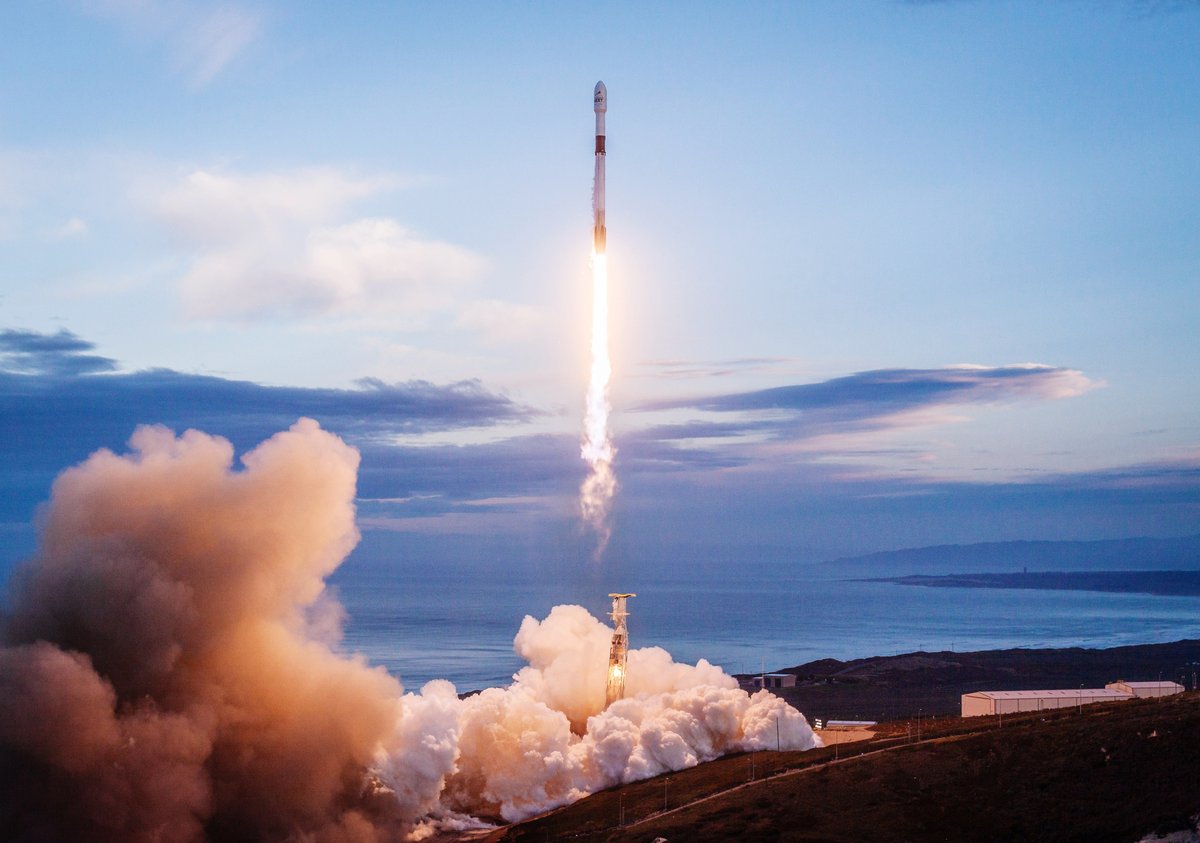
- Commercial launch services: Reusable Falcon 9 rockets reducing launch costs dramatically
- Starship development: Next-generation fully reusable super-heavy lift vehicle entering operational phase
Competitors in related spaces include Planet Labs (now public, trading as $PL), Axiom Space, and emerging players in satellite communications. SpaceX's vertically integrated model and technological advantages have created a significant competitive moat, but investor enthusiasm may not align with the company's actual near-term financial capabilities.
The retail investor allocation strategy also reflects market conditions. In a heated IPO environment with high demand from individual investors—evidenced by the enthusiastic response to recent tech IPOs and SPACs—underwriters may be confident in their ability to move shares. Yet this same dynamic historically has proven a warning signal: peak retail enthusiasm often coincides with valuations at or near cyclical tops.
Investor Implications: Valuation Risk Versus Long-Term Potential
For retail investors considering participation in the SpaceX IPO, the 100x price-to-sales multiple presents a meaningful valuation risk. Historical precedent suggests that IPOs priced at such elevated multiples frequently experience significant pullbacks in the months following debut as:
- Initial IPO enthusiasm wanes
- Lock-up periods expire, releasing insider and employee shares
- Quarterly earnings reports force realistic assessment of growth trajectories
- Market conditions shift, reducing appetite for speculative positions
Analysts recommend a staged investment approach rather than all-in participation at IPO pricing. Investors bullish on SpaceX's long-term prospects might allocate a small percentage of their allocation to the IPO while reserving capital to purchase additional shares at lower prices post-debut. Historical data from previous mega-cap tech IPOs suggests 20-40% pullbacks within 6-12 months are not uncommon, presenting more attractive entry points.
For institutional investors, the IPO represents an opportunity to establish a position in a best-in-class operator within an emerging, high-growth industry vertical. However, the massive valuation suggests that much optimism is already priced into SpaceX's future. The company would need to achieve extraordinary revenue growth and margin expansion to justify current valuations on a discounted cash flow basis.
The broader market implications include potential sector rotation effects. A successful SpaceX IPO could trigger renewed investor interest in space economy stocks, potentially benefiting related companies in satellite communications, space services, and emerging commercial space ventures. Conversely, if the IPO struggles to sustain its valuation post-debut, it could dampen enthusiasm for the entire sector.
Looking Ahead: Patience May Reward Investors
SpaceX's planned June 2026 IPO represents a watershed moment for retail investor access to cutting-edge aerospace and satellite technology. The company's allocation of up to 30% of shares to individual investors is genuinely progressive and reflects confidence in demand.
However, the $1.75 trillion valuation and 100x price-to-sales multiple suggest a premium pricing in a market environment characterized by renewed enthusiasm for growth stories. Investors who remember the dot-com bubble or the 2020-2021 tech rally understand that even genuinely transformative companies can trade at unsustainable multiples during periods of peak enthusiasm.
The most prudent approach for retail investors may be to treat the IPO as an opportunity to establish a position, rather than capitalize it fully on day one. Those with conviction in SpaceX's ability to revolutionize space-based commerce and communications should consider the IPO an entry point—not the only entry point. The space economy's long-term potential remains compelling, but valuation discipline remains the cornerstone of successful investing.