
AI Hype Fades, Creating 2026's Most Compelling Buying Opportunity
After an extraordinary rally that defined 2024 and 2025, artificial intelligence stocks are experiencing a significant pullback in 2026—but beneath the surface, a divergence is emerging between hype-driven valuations and genuine technological progress. The Global X AI & Technology ETF has declined 9% year-to-date, signaling investor concerns about stretched valuations and geopolitical headwinds. Yet this correction is precisely the kind of market dislocation that seasoned investors recognize as a genuine opportunity, as the underlying fundamentals of AI adoption continue to accelerate across enterprises globally.
The narrative shift represents a critical inflection point in the AI market cycle. While euphoria about artificial general intelligence and speculative plays has cooled considerably, the practical deployment of AI systems is driving measurable productivity gains and cost savings that are beginning to materialize in corporate earnings. This disconnect between sentiment and substance creates a compelling asymmetry for investors willing to distinguish between the technology's genuine transformative potential and the excesses that characterized the recent bull market.
Valuation Correction Meets Fundamental Growth
The 9% decline in the Global X AI & Technology ETF reflects a broader repricing across the sector, driven primarily by two converging factors:
- Valuation concerns: AI equities had become dramatically extended on a price-to-sales and price-to-earnings basis, with many companies trading at multiples that priced in years of exponential growth
- Geopolitical headwinds: Trade tensions, regulatory scrutiny of technology exports, and international disputes have introduced uncertainty into global chip supply chains and software deployment strategies
However, the pullback masks a critical reality: AI adoption is fundamentally reshaping enterprise operations. Unlike previous technology cycles where hype outpaced utility, artificial intelligence is delivering quantifiable benefits—reduced customer service costs through chatbots, accelerated drug discovery timelines, enhanced manufacturing efficiency, and optimized business processes. These applications are moving from pilot programs to production deployments at scale.
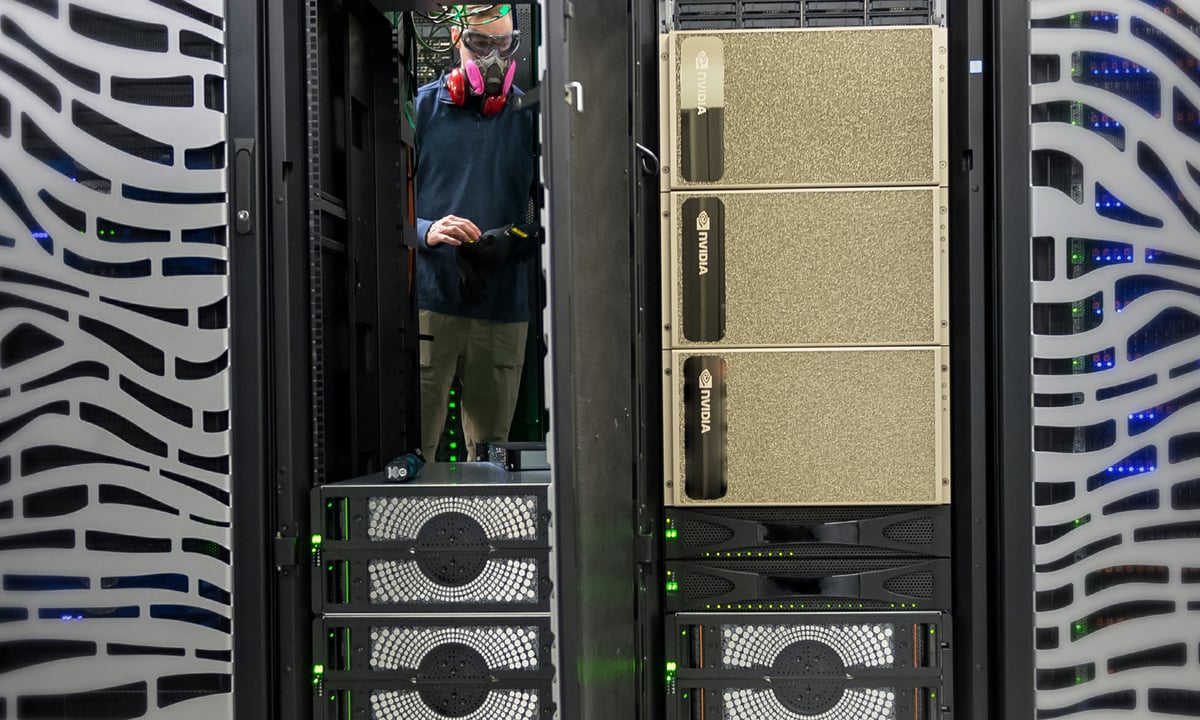
Companies like Nvidia ($NVDA) and Applied Digital ($ADBE) exemplify the distinction between speculative positioning and sustainable growth trajectories. Nvidia, which supplies the computational infrastructure essential for AI model training and inference, benefits from the structural demand for GPU capacity regardless of sentiment cycles. The company's data center revenue streams have grown beyond pure hype cycle dependency, anchored by customer demand for actual deployments rather than speculative buildouts. Similarly, Applied Digital has attracted attention for its specialized infrastructure solutions addressing the power and cooling challenges associated with AI deployment at scale.
Analyst commentary increasingly reflects this bifurcation. Institutional research indicates significant upside potential over the next several years for companies with defensible competitive advantages, proven customer traction, and durable revenue streams. The consensus suggests that valuations, while still elevated by historical standards, have become reasonable when measured against long-term revenue growth trajectories.
Market Context: Separating Signal from Noise
The AI sector faces competing forces in the current macroeconomic environment:
Structural Tailwinds:
- Enterprise AI spending remains on an accelerating trajectory, with IT budgets increasingly allocated toward AI infrastructure and software
- Labor cost pressures are driving automation adoption across sectors, creating sustained demand for efficiency-enhancing technologies
- Regulatory frameworks are gradually clarifying, reducing uncertainty for institutional buyers
- International competition is intensifying investment commitments, particularly from China and the European Union
Near-Term Headwinds:
- Interest rate sensitivity: Higher long-term interest rates disproportionately impact growth-focused technology stocks
- Geopolitical fragmentation threatens semiconductor supply chains and software distribution models
- Profit-taking after extraordinary gains has created technical selling pressure
- Questions about near-term profitability for some AI-dependent business models
The competitive landscape has also evolved substantially. While Nvidia maintains dominant market share in AI accelerators, competition from Advanced Micro Devices (AMD) and emerging alternative architectures are beginning to fragment the market. Software-focused AI companies face intensifying competition from both specialized startups and incumbent technology giants integrating AI capabilities into existing platforms.
Regulatory developments present a double-edged sword. Governments worldwide are implementing AI governance frameworks that could create compliance costs but may simultaneously protect market leaders by raising barriers to entry for smaller competitors. The European Union's AI Act and various national initiatives are beginning to define the playing field for the coming decade.
Investor Implications: Distinguishing Opportunity from Risk
For equity investors, the current environment presents a tactical inflection point that requires disciplined analysis:
Valuation Reset Benefits: The pullback has eliminated some of the most egregious excesses. Companies trading at 15-25x forward sales (rather than 50-100x) now offer materially different risk-reward profiles. This repricing allows for entry points that didn't exist during the peak enthusiasm of 2024-2025.
Quality Becomes Paramount: As hype cycles inevitably deflate, investor capital increasingly flows toward companies demonstrating:
- Actual customer adoption and expanding use cases
- Path to profitability within reasonable timeframes
- Defensible competitive advantages through intellectual property or network effects
- Management teams with proven execution capabilities
Infrastructure Advantage: Companies providing essential infrastructure—semiconductor manufacturers, data center operators, and specialized service providers—tend to benefit from sustained demand cycles regardless of which specific AI applications ultimately succeed. This structural advantage explains analyst conviction around Nvidia and similar infrastructure plays.
Sector Rotation Implications: The AI pullback is occurring alongside broader market dynamics that favor certain sectors over others. Investors must consider whether their AI holdings are complementary to or competitive with broader portfolio positioning. The current environment rewards selectivity over broad-based sector exposure.
Institutional investors have notably shifted their approach, moving from indiscriminate AI buying to more rigorous fundamental analysis. This sophistication is healthy for long-term market development and creates opportunities for investors employing similar discipline.
Forward Outlook: Opportunity Within Volatility
The evolution of the AI market from speculative mania to fundamental-driven valuation represents a maturation process essential for sustainable long-term growth. While 2026 has brought valuation pressures and volatility, these conditions have created attractive entry points for investors with conviction in the underlying technology's transformative potential.
The divergence between sentiment and substance is precisely where sophisticated investors identify opportunities. Companies with proven AI adoption, expanding revenue streams, and reasonable valuations now offer asymmetric risk-reward profiles that weren't available during peak hype. The pullback in the Global X AI & Technology ETF and broader sector weakness has cleared away much of the speculative excess that characterized previous years.
Market participants should expect continued volatility as the AI sector finds sustainable equilibrium between hype-free valuations and the genuine opportunities created by transformative technology adoption. For those able to distinguish between temporary sentiment shifts and durable business fundamentals, 2026's pullback may indeed prove to be the year's most compelling market opportunity.
The question for investors is no longer whether AI will transform enterprise operations—evidence of that transformation is already apparent in productivity metrics and cost savings. The question is which companies will emerge as durable winners, and at what valuations they represent fair value. Current market conditions are finally beginning to provide reasonable answers to that critical question.