
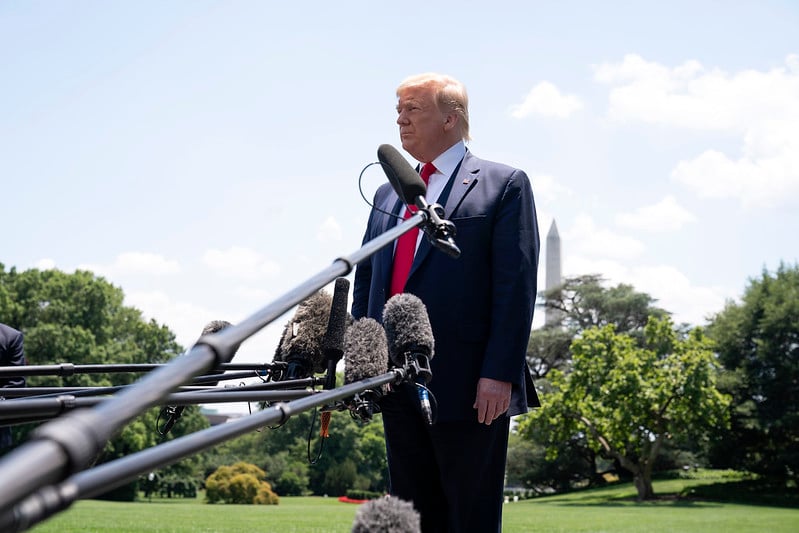
Presidential Address Sets Stage for Market-Moving Geopolitical Clarity
President Donald Trump is set to deliver a formal televised address to the nation tonight at 9 p.m. ET, promising what officials have characterized as an "important" update on the ongoing Iran conflict. The announcement has already rattled financial markets, with investors bracing for potential revelations that could reshape energy prices, military alliances, and diplomatic negotiations across the Middle East. Crude oil futures have surged above the $99 per barrel threshold as traders position themselves ahead of the speech, reflecting the market's acute sensitivity to any developments that could affect one of the world's most critical energy chokepoints.
The televised remarks represent a significant moment for markets and geopolitical stakeholders alike, as the administration prepares to outline its strategic direction on a conflict that has profound implications for global trade, energy security, and international relations. With crude oil already climbing on pre-announcement jitters, the financial community is laser-focused on identifying which of three critical issues the president will address and how his comments might reshape investor positioning across multiple asset classes.
The Three Critical Issues Investors Are Monitoring
Energy Security and the Strait of Hormuz
The most immediate concern for energy markets centers on the Strait of Hormuz, one of the world's most vital shipping lanes, where roughly one-third of all globally traded petroleum passes through daily. Any escalation in Iran-related hostilities or disruption to shipping routes through the strait could trigger sustained upward pressure on crude prices. The fact that crude futures are already trading above $99 per barrel reflects market participants' anxiety about potential supply shocks. Even modest disruptions to this crucial corridor could send energy prices significantly higher, with cascading effects throughout the global economy.
Investors tracking energy stocks—including major integrated oil companies like $XOM (ExxonMobil) and $CVX (Chevron)—are watching closely to determine whether tonight's remarks suggest increased or decreased risk of strait disruption. Additionally, alternative energy and renewable stocks could benefit from any messaging that emphasizes long-term energy independence or accelerated transitions away from Middle East oil dependency.
Iranian Leadership Structure and Negotiation Dynamics
The second major focus point involves the current state of Iranian leadership and the prospects for diplomatic negotiations. Markets need clarity on whether the Trump administration views the Iranian government structure as stable or in flux, and whether there exists any realistic pathway toward direct negotiations that could de-escalate tensions. Changes in Iran's leadership hierarchy or indications of internal instability could create unpredictable market conditions, while signals of potential diplomatic engagement might reassure markets seeking a stable resolution.
This dimension carries particular significance for:
- Sanctions-related investment strategies targeting Iran-connected assets
- Defense contractors whose revenue streams depend on sustained geopolitical tension
- International corporations with exposure to Iranian markets or subject to sanctions compliance
- Currency markets, where the Iranian rial and other emerging market currencies remain vulnerable to geopolitical shocks
NATO Withdrawal Implications and Alliance Structure
The third critical variable concerns potential NATO withdrawal implications and the broader U.S. commitment to traditional military alliances. Any indication of reduced American commitment to NATO or allied Middle Eastern partners could trigger a significant market repricing, particularly in:
- Defense sector stocks, which benefit from sustained alliance spending
- European equities, which could face headwinds from reduced security umbrella
- Dollar strength, historically boosted by America's military and alliance credibility
- Gold and safe-haven assets, which tend to rally when geopolitical uncertainty rises
Markets have historically shown sensitivity to signals about American commitment levels to alliance structures, as such commitments underpin stability valuations across multiple asset classes.
Market Context: Energy Markets and Geopolitical Risk Premium
The current crude oil pricing around $99 per barrel already incorporates substantial geopolitical risk premium. The energy sector has been particularly volatile throughout the Iran tensions, with traders constantly recalibrating expectations based on headline developments. The fact that markets are waiting on a presidential address suggests that current positioning may not fully reflect the administration's actual strategic intentions, leaving room for significant market moves in either direction.
Historically, major announcements regarding Iran policy have triggered outsized reactions in energy markets, given the direct linkage between Iranian production capacity and global oil supply calculations. The Strait of Hormuz remains the nexus point for this concern—any threat to its security directly translates into risk premiums across crude futures, refined products, and upstream exploration stocks.
The broader geopolitical environment also matters here. Global energy markets have already absorbed significant shocks from recent conflicts and supply chain disruptions. Tonight's address will help determine whether the Iran situation represents an escalating or de-escalating risk factor in 2025's already complex geopolitical landscape.
Investor Implications: Multi-Sector Exposure and Portfolio Positioning
Investors holding concentrated positions in any of the three affected areas—energy, defense, or international equities—should pay particular attention to tonight's remarks. The address could trigger significant portfolio rebalancing across multiple asset classes:
Energy Sector: Oil and gas majors like $XOM, $CVX, and international energy companies could experience sharp moves based on strait security messaging. Alternative energy plays might benefit from messaging emphasizing energy independence.
Defense Contractors: Firms like $LMT (Lockheed Martin), $RTX (Raytheon Technologies), and $BA (Boeing) derive meaningful revenue from sustained Middle East security concerns and allied defense spending. NATO withdrawal signals could pressure these valuations.
International Equities: European and allied nations' stock markets remain sensitive to signals about American security commitments. Reduced NATO involvement could create headwinds for regional markets.
Precious Metals: Gold and silver typically appreciate during periods of elevated geopolitical risk, benefiting from flight-to-safety positioning.
Currency Markets: The dollar's trajectory depends partly on perceptions of American geopolitical credibility, while the rial and other emerging market currencies face direct exposure to Iran policy shifts.
For portfolio managers, the key challenge tonight will be understanding whether the Trump administration intends to de-escalate tensions (potentially pressuring crude oil and supporting equities) or escalate involvement (supporting defense contractors and crude oil, but potentially pressuring broader equity valuations due to uncertainty).
Looking Forward: Market Expectations and Information Gaps
The timing and framing of tonight's address suggest the administration believes it has important strategic developments to communicate. Whether these developments prove stabilizing or destabilizing for markets remains the central question for investors. The $99 crude oil level represents a meaningful technical point—breaks above or below this level in response to the speech could signal broader market directional conviction.
Investors should be prepared for significant intraday volatility following the president's remarks, particularly in energy futures and international equities. The address also sets the stage for subsequent policy announcements and diplomatic developments that will likely unfold over coming weeks and months. For those with significant exposure to any Iran-related risk factors—whether through direct energy holdings, defense sector positions, or international equity allocations—tonight's speech represents a critical information event that could materially reshape portfolio positioning and risk assessments going forward.