
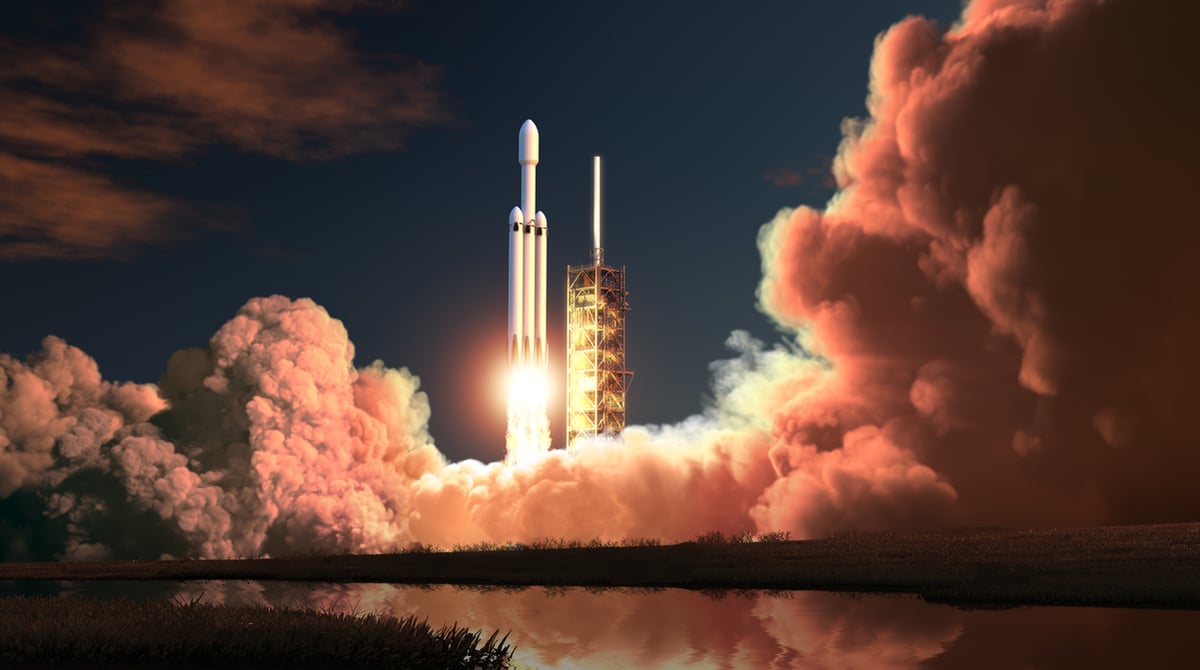
SpaceX Prepares Landmark Public Offering Targeting Retail Investors
SpaceX is gearing up for what could become the largest initial public offering in history, with preliminary funding targets ranging from $40 billion to $80 billion. The aerospace and space exploration company is taking an unconventional approach to its long-anticipated market debut by earmarking 30% of shares for retail investors—a deliberate strategy to court individual traders rather than relying exclusively on institutional capital. This allocation strategy reflects a broader shift in how companies approach public markets, where retail participation has become a powerful force capable of sustaining valuations and driving stock performance.
The aggressive retail focus hints at SpaceX's confidence that it can tap into the same investor enthusiasm that has propelled Tesla ($TSLA) to extraordinary valuations. With Tesla's stock trading at a significant premium relative to traditional automotive manufacturers, and supported largely by a devoted base of retail investors, SpaceX appears intent on leveraging similar dynamics. The company's vision of space exploration, Mars colonization, and satellite internet connectivity through Starlink has cultivated a passionate following comparable to the fervor surrounding Tesla's electric vehicle revolution.
The Mathematics of Speculation-Driven Growth
Market observers have suggested that SpaceX could command a valuation of $2 trillion or higher at IPO, a figure that would dwarf traditional valuations based on current revenue and profitability metrics. This projection relies heavily on speculative enthusiasm—the same mechanism that has sustained Tesla's stock price at levels many traditional analysts consider disconnected from near-term fundamentals. Several factors support this potential trajectory:
- Retail investor appetite: Tesla's retail base has demonstrated willingness to accumulate shares regardless of traditional valuation metrics
- Visionary positioning: SpaceX's ambitious goals in space exploration and commercial spaceflight create compelling narrative appeal
- Limited float dynamics: Restricting supply while building demand among retail investors typically supports price appreciation
- Comparable premium valuations: Other high-growth, innovation-focused companies have achieved elevated multiples through retail-driven momentum
The 30% retail allocation is not merely a marketing gesture—it represents a structural mechanism designed to ensure sustained retail participation and enthusiasm. By guaranteeing retail investors access to IPO shares, SpaceX reduces the likelihood of institutional hoarding and creates a foundation of retail holders who are likely to be long-term supporters rather than short-term traders.
Market Context: The Retail Revolution in Capital Markets
The proposed SpaceX IPO arrives during a transformational period in equity markets, where retail investors have fundamentally altered market dynamics. The rise of commission-free trading platforms, fractional share ownership, and social media coordination has empowered individual investors to accumulate significant positions in major companies. Tesla ($TSLA) remains the prime example of this phenomenon—its stock has appreciated dramatically despite periods when traditional valuation models suggested downside risk.
The aerospace and space exploration sector itself has undergone significant evolution. Companies like Blue Origin, Virgin Galactic, and various other space-related enterprises have attracted substantial capital and investor interest. However, SpaceX, under founder Elon Musk's leadership, has maintained private status while achieving operational milestones that have enhanced its strategic positioning. The company operates Starlink, a satellite internet constellation with significant commercial and strategic value, alongside its core launch services and space exploration ambitions.
From a competitive standpoint, SpaceX's dominance in commercial spaceflight and reusable rocket technology creates structural advantages. Its Falcon 9 rocket has become the workhorse for commercial and government launches, while Starship represents an ambitious next-generation platform. These operational achievements, combined with the company's technological leadership, provide substantive support for premium valuations—though the magnitude of potential valuations suggests significant speculative premium.
Investor Implications and Valuation Considerations
For investors evaluating a potential SpaceX IPO, the opportunity presents both considerable appeal and meaningful risks. The $40-80 billion initial fundraising target represents merely the entry point; secondary market valuations could vary dramatically based on retail demand and broader market conditions. Several factors warrant consideration:
Supporting Valuations:
- Unique competitive position in commercial spaceflight and satellite internet
- Multiple revenue streams (launch services, Starlink, government contracts)
- Significant growth potential in emerging space economy
- Strong brand recognition and founder mythology
Risk Factors:
- Heavy reliance on speculation rather than current profitability
- Regulatory dependencies regarding government contracts and spectrum allocation
- Technological execution risks on ambitious projects like Starship
- Potential correlation with Tesla ($TSLA) investor sentiment rather than SpaceX-specific fundamentals
The 30% retail allocation creates an interesting dynamic for institutional investors. Large funds may find themselves competing with retail demand, potentially pushing valuations higher than they would prefer. Conversely, the retail base could provide support floors during market corrections if investors view SpaceX holdings as long-term, conviction-based positions rather than tactical trades.
The comparison to Tesla ($TSLA) is instructive but potentially misleading. While Tesla's valuation premium has proven durable, it has also experienced significant volatility, particularly during market corrections. SpaceX investors should recognize that retail-driven valuations can compress rapidly when sentiment shifts. Additionally, SpaceX's business model includes longer-term contracts and government dependencies that differ meaningfully from Tesla's consumer-focused automotive business.
Looking Forward: Space Economy Catalysts and Market Evolution
SpaceX's potential IPO represents a watershed moment for space economy investing. If the company successfully launches at a $2 trillion valuation or approaches that magnitude, it would validate the broader investment thesis around space exploration and commercialization. Such an outcome would likely accelerate IPO plans for competing companies and attract additional capital to the sector.
The success of the retail allocation strategy will also carry broader implications for how companies approach public markets. If SpaceX achieves its ambitious valuation targets with meaningful retail participation, other high-growth, visionary companies may adopt similar retail-focused structures for their own offerings.
Ultimately, the SpaceX IPO will test whether the mechanisms supporting Tesla's premium valuation extend to other sectors and business models. Investors would be wise to distinguish between the company's genuine competitive advantages and technological achievements—which are substantial—and the speculative premium that retail enthusiasm may add. As the company moves toward its public market debut, the aerospace sector, retail investment dynamics, and broader questions about valuation sustainability in high-growth industries will all be in focus.