
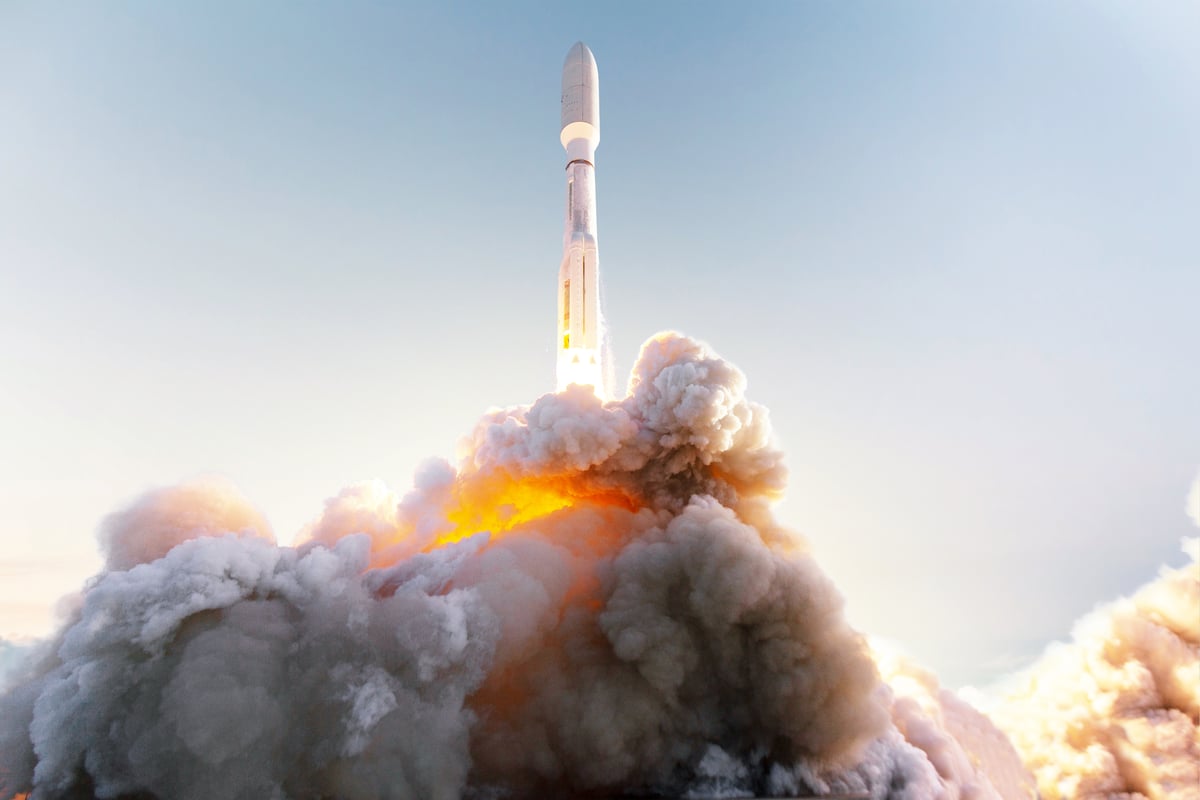
SpaceX's $1.75T IPO Ambitions Face Valuation, Leadership, and Regulatory Headwinds
SpaceX is reportedly preparing for an initial public offering at a staggering $1.75 trillion valuation, according to recent market speculation. However, beneath the headline-grabbing valuation lies a constellation of substantial risks that could make this one of the most contentious tech IPOs in recent memory. From aggressive future-focused valuations to concerns about Elon Musk's divided attention across his sprawling business empire, investors considering exposure to the space economy should carefully weigh whether SpaceX represents genuine value or a bet on speculative promises.
Valuation Concerns and the Promise Premium
The reported $1.75 trillion valuation for SpaceX raises immediate questions about whether current market appetite for space-related assets has become untethered from fundamentals. At this valuation, investors would be pricing in extraordinary future revenue streams and profitability margins that the company has yet to demonstrate at scale.
Key valuation considerations include:
- Revenue uncertainty: While SpaceX has established revenue streams through government contracts and commercial launches, the bulk of the $1.75 trillion valuation appears premised on speculative future businesses
- Starlink monetization: A significant portion of the valuation likely depends on Starlink, the satellite internet constellation, achieving profitability at massive scale—a venture still in early commercial stages
- Mars ambitions: SpaceX's long-term vision includes human colonization of Mars, a goal that remains decades away and whose commercial viability remains theoretical
- Comparable multiples: Traditional aerospace and defense contractors trade at significantly lower revenue multiples, suggesting either SpaceX deserves a substantial innovation premium or the market is pricing in unrealistic expectations
For context, the entire traditional aerospace and defense sector—encompassing mature companies like Boeing ($BA), Lockheed Martin ($LMT), and Northrop Grumman ($NOC)—commands a combined market capitalization well below $1.75 trillion. This valuation disparity underscores how heavily SpaceX's IPO would rely on investor conviction about transformational future revenues rather than current profitability.
Leadership Distraction and Execution Risk
The second major concern centers on Elon Musk's role as SpaceX's chief engineer and decision-maker, even as his attention is increasingly consumed by other ventures. Musk simultaneously leads Tesla ($TSLA), controls X (formerly Twitter), oversees the Neuralink brain-interface venture, and chairs The Boring Company. This portfolio of roles has historically created execution challenges across his companies.
Specific risks include:
- Divided focus: SpaceX's most ambitious projects—including Starlink deployment, Raptor engine development, and the Starship program—require sustained, intensive engineering leadership that could be compromised by Musk's other commitments
- Regulatory representation: Musk's controversial public statements and behavior on social media platforms have occasionally created friction with government agencies, including the Federal Aviation Administration (FAA), which oversees commercial space launch licensing
- Succession planning: SpaceX lacks clear executive succession plans independent of Musk, creating concentration risk that would persist through any IPO
- Decision velocity: During periods when Musk is deeply engaged with other crises (such as Tesla's production challenges or X's operational issues), SpaceX projects have experienced delays
Investors in a public SpaceX would be making a concentrated bet on a single individual's ability to simultaneously manage multiple capital-intensive businesses—a scenario that has tested the patience of public market investors in other companies.
Regulatory Uncertainty and Operational Challenges
The space industry operates within a complex regulatory framework that remains in active evolution. SpaceX faces multiple layers of approval and oversight that introduce material uncertainty into its business model and timeline projections.
Key regulatory and operational risks include:
- FAA licensing: The FAA has occasionally delayed or conditioned SpaceX launch licenses based on environmental and public safety considerations. As SpaceX accelerates launch cadence, regulatory bottlenecks could constrain growth
- Orbital debris management: Starlink's planned constellation of tens of thousands of satellites has drawn criticism from astronomers and space agencies regarding orbital debris risk and space traffic management
- International competition: Amazon's ($AMZN) Project Kuiper, OneWeb, and Chinese satellite internet initiatives represent intensifying competition that could commoditize satellite internet pricing
- Government dependency: SpaceX generates substantial revenue from U.S. government contracts through the Department of Defense and NASA. Any shift in government space priorities or budget constraints could impact near-term revenue
- Launch cadence pressure: SpaceX's valuation appears predicated on achieving unprecedented launch cadences with fully reusable rockets—a goal that has repeatedly slipped in prior years
Market Context: The Broader Space Economy
While SpaceX captures investor imagination, the broader space economy is diversifying. The sector includes more predictable, profitable businesses with lower concentration risk.
Alternative space economy exposure includes:
- Established contractors: Companies like Northrop Grumman, L3Harris Technologies ($LHX), and Axiom Space offer more proven business models and stable government contracts
- Specialized services: Earth observation companies, space logistics operators, and in-space manufacturing ventures offer niche opportunities with lower valuation multiples
- Space ETFs: Diversified exposure through funds tracking the broader space economy reduces single-company risk
The space industry is experiencing genuine growth, but valuations have become elevated across the sector. SpaceX specifically trades at a premium multiple even within this premium-priced sector.
Investor Implications and Forward Outlook
For institutional and retail investors considering SpaceX exposure through an IPO, several critical questions warrant attention:
Valuation sustainability: At $1.75 trillion, how quickly would SpaceX need to scale revenues to justify the price? Analysts estimate the company would need to reach $50+ billion in annual revenue—approximately 10x current estimated revenues—to support this valuation on traditional metrics.
Lock-up period dynamics: Following an IPO, Musk would likely be subject to a lock-up period restricting share sales. However, his existing stake represents extraordinary concentration—creating potential for massive selling pressure once restrictions lapse.
Relative opportunity cost: Investors must evaluate whether the risk-adjusted returns from SpaceX at this valuation exceed alternatives in aerospace, defense, technology, or diversified space economy exposure.
Regulatory tail risk: A single major regulatory setback—such as an extended launch licensing delay or significant Starlink debris incident—could trigger substantial re-rating.
The space industry's long-term potential is genuine. Satellite communications, space-based manufacturing, and eventually space tourism represent multi-trillion-dollar opportunities over decades. However, SpaceX's proposed IPO valuation appears to price in an aggressive share of these opportunities, concentrated in a single company, led by a CEO managing multiple world-changing ventures simultaneously.
Investors seeking exposure to space economy growth may find better risk-adjusted opportunities in more diversified, operationally mature alternatives. For those convinced of SpaceX's transformational potential, the IPO will likely attract substantial capital—but caution regarding valuation and execution risk appears warranted given current circumstances.