
Lead
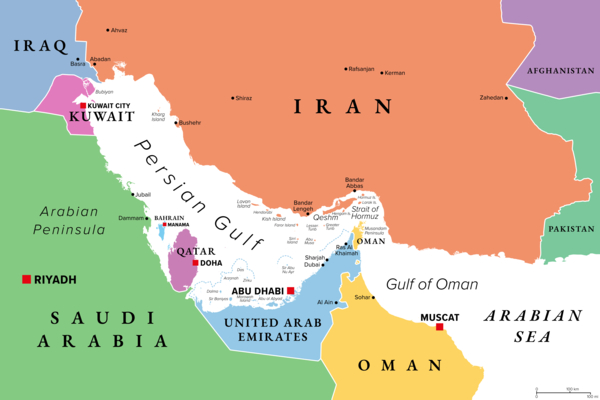
Venture Global, a U.S. liquefied natural gas exporter, has captured Wall Street's attention as geopolitical tensions reshape global energy markets. The company's stock has doubled in 2026, buoyed by supply disruptions stemming from the Iran conflict that have crimped natural gas availability, particularly from major exporter Qatar. However, a notable upgrade from Morgan Stanley—raising its rating from underweight to overweight with a $22 price target—masks a fundamental tension investors must confront: Is this energy shock a genuine long-term opportunity, or merely a cyclical windfall that obscures structural risks?
The Bull Case: A Tailwind of Timing
Venture Global's rising prominence reflects genuine market dynamics worth scrutinizing. The Iran conflict has disrupted global natural gas supplies, creating acute shortages that have elevated LNG prices to levels not seen in years. For an exporter with production capacity, this represents a rare moment of pricing power.
Morgan Stanley's upgrade is significant not merely as a rating change but as institutional validation of the company's positioning:
- Price target of $22: Suggests meaningful upside from current trading levels
- Upgrade reasoning: Recognition that tight LNG supplies create sustained demand for U.S. exports
- Supply dynamics: Qatar's constrained output has left global markets dependent on alternative suppliers like Venture Global
Beyond sentiment, the company has made strategic moves to capitalize on this moment. Recent initiatives—though not detailed in the original analysis—suggest management recognizes the window of opportunity and is positioning to maximize returns during this supply-constrained period. The doubled stock price reflects investors' belief that these fundamentals will persist.
For energy-hungry nations and industrial users facing soaring heating and power costs, securing reliable LNG contracts with U.S. suppliers has become a matter of economic urgency rather than preference. This desperation supports pricing discipline and contract tenacity.
The Risk Equation: Leverage and Cyclicality
Yet the bull case collapses if examined through the lens of balance sheet strength. Venture Global's debt-to-equity ratio stands at 3.4, a figure that demands context and scrutiny. This level of leverage is fundamentally different from the capital structures of diversified energy giants like ExxonMobil ($XOM), where earnings breadth and cash generation capacity cushion debt obligations across commodity cycles.
Why does this matter? Venture Global operates as a pure-play LNG exporter in a business whose profitability is intrinsically tied to commodity prices. When energy markets normalize—and history suggests they inevitably do—the company faces a challenging equation:
- High fixed costs: LNG production infrastructure demands continuous capital expenditure and operational spending
- Limited pricing power in downturns: Unlike integrated majors, Venture Global cannot offset weak LNG margins with upstream production gains or downstream refining profits
- Debt servicing pressure: At 3.4x leverage, normalized LNG prices could threaten the company's ability to service obligations comfortably
Compare this to ExxonMobil's diversified portfolio. When natural gas markets soften, the oil major can rely on crude production, refining margins, and chemical operations to sustain profitability. Venture Global has no such backstop.
The Iran conflict that currently benefits Venture Global also represents a wild card. Any diplomatic resolution—however distant that prospect seems—could restore Qatari supply and deflate LNG prices more rapidly than investors anticipate. The company's current valuation assumes an extended period of tight markets. History suggests energy markets rarely cooperate with such convenient timelines.
Market Context: The Sector at an Inflection Point
Understanding Venture Global requires framing the broader energy transition and geopolitical landscape reshaping the sector.
The LNG market is experiencing competing pressures:
- Short-term strength: Geopolitical shocks have created genuine scarcity premiums
- Long-term headwinds: Global decarbonization efforts and renewable energy adoption are reshaping energy demand patterns
- Regulatory uncertainty: Policy shifts toward emissions reduction could constrain LNG demand in key markets like Europe
Venture Global's peers in the LNG space face similar dynamics, but the company's concentrated exposure—unlike diversified competitors—amplifies both the upside and downside risk.
Moreover, the U.S. LNG export market itself remains subject to regulatory approval processes and political considerations. Changes in administration or policy could affect licensing and contract approval mechanisms, introducing additional uncertainty beyond commodity prices.
Morgan Stanley's upgrade suggests confidence in the near-term supply environment, but institutional investors should note the distinction between a 12-month bullish call and a multi-year conviction thesis.
Investor Implications: Risk-Reward at an Inflection
For equity investors considering Venture Global, the investment decision hinges on three key questions:
1. Time horizon: Is your portfolio positioned for a 1-3 year energy shock, or are you seeking a long-term energy exposure? The former favors Venture Global's pure-play structure; the latter argues for diversified peers.
2. Risk tolerance: Can your portfolio accommodate a leveraged bet on commodity prices? The 3.4x debt-to-equity ratio means downside scenarios involve both falling commodity prices AND refinancing pressure.
3. Entry timing: At a doubled stock price, how much of the Iran conflict premium is already priced into $VGLF? Morgan Stanley's $22 target implies further upside, but assumes sustained LNG tightness.
For conservative investors, diversified energy companies like ExxonMobil ($XOM) or Chevron ($CVX) offer exposure to energy supply disruptions with vastly superior balance sheets and operational diversification.
For tactical traders and those with higher risk tolerance and shorter time horizons, the Venture Global thesis offers compelling near-term upside—particularly if the Iran conflict persists and global LNG inventory levels remain constrained.
The company's recent strategic moves suggest management understands the window is temporary. Whether that translates into shareholder returns depends on execution and market timing—both notoriously difficult variables in commodity markets.
Looking Ahead: The Clock Is Ticking
Venture Global presents a classic market mispricing wrapped in genuine fundamental support. The Iran conflict has unquestionably tightened LNG supplies, and the company's pure-play positioning offers leverage to this dynamic. Morgan Stanley's upgrade adds institutional credibility to the bull case.
However, investors should distinguish between a company benefiting from favorable near-term conditions and one representing compelling long-term value. At a doubled stock price, much of the enthusiasm may already be reflected in the valuation. The $22 Morgan Stanley target suggests further near-term upside, but comes with implicit assumptions about sustained supply disruption.
The critical risk remains balance sheet durability. A 3.4x debt-to-equity ratio is manageable in a commodity boom but becomes treacherous in a downturn. As energy markets eventually normalize—whether through geopolitical resolution or simple supply-demand rebalancing—Venture Global's operating leverage will shift from advantage to liability.
For investors, the question is not whether Wall Street is right about near-term LNG dynamics. The question is whether you're comfortable with the risk profile of a leveraged, single-commodity bet to collect those gains. In energy markets, that distinction often determines whether opportunity becomes windfall or cautionary tale.