
Rivian Pivots Toward Software, Partnerships as Core Growth Engine
Rivian Automotive has secured a transformative partnership with Uber, committing up to $1.25 billion through 2031 for autonomous vehicle development. This landmark deal represents far more than a simple fleet purchase agreement—it signals a fundamental business model transformation for the electric vehicle manufacturer. Rather than competing primarily on hardware like the upcoming R2, $RIVN is positioning itself as a software-defined vehicle platform company, leveraging proprietary technology, vertical integration, and strategic partnerships to capture higher-margin revenue streams that could reshape investor sentiment around the Irvington, California-based automaker.
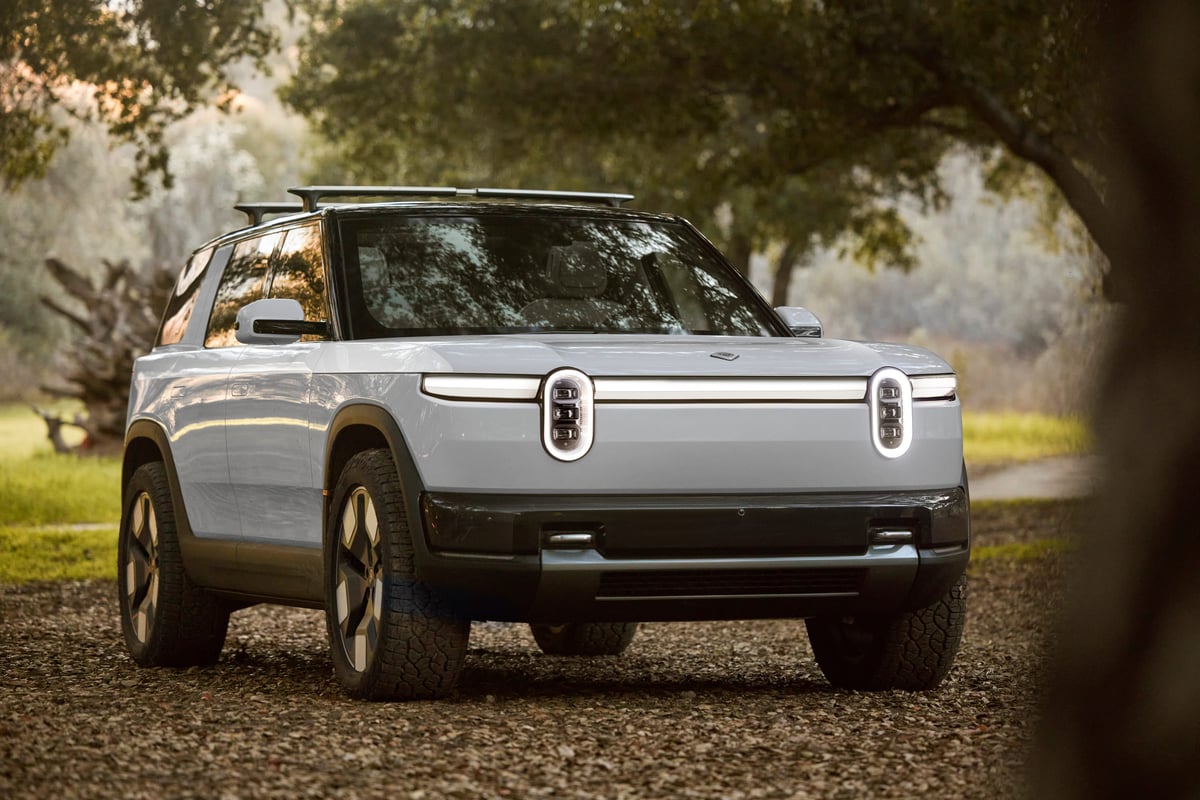
The Uber partnership encompasses the deployment of 10,000 robotaxi R2s across major U.S. cities and international markets by 2031, establishing a concrete roadmap for autonomous vehicle commercialization. However, industry analysts and investors should recognize that the robotaxi deployment serves as both a revenue driver and a validation mechanism for Rivian's autonomous technology stack. This multiyear commitment from a ride-hailing giant valued in the tens of billions of dollars provides substantial financial runway and reduces execution risk—critical factors for a company that has faced capital constraints and scaling challenges since going public in late 2021.
The Software-First Strategy: Margins Over Volume
What distinguishes this partnership from typical automotive supply deals is Rivian's explicit transition from a traditional hardware automaker to a technology-centric platform provider. The company is leveraging several competitive advantages:
- Proprietary autonomous driving software developed in-house, reducing reliance on third-party suppliers
- Vertical integration across vehicle architecture, enabling rapid iteration and customization for autonomous applications
- Strategic partnerships with established automotive powerhouses like Volkswagen Group, which has committed roughly $5 billion in investments and collaborative development
- Software-as-a-service revenue potential through fleet management, autonomous updates, and data insights
This positioning is critical because software and services typically command gross margins of 60-80%, compared to 15-25% for traditional automotive hardware. As Rivian scales the Uber robotaxi fleet, the company can monetize not just vehicle sales but also licensing fees, software updates, maintenance diagnostics, and data analytics. The R2, while important for reaching mass-market consumers and generating volume revenue, becomes less central to Rivian's long-term wealth creation story.
The Volkswagen partnership exemplifies how Rivian is building an ecosystem around its platform. Rather than competing head-to-head with Tesla ($TSLA), legacy automakers, and Chinese EV manufacturers on battery costs and manufacturing efficiency, Rivian is extracting value from its technology moat—the sophisticated autonomous driving capabilities, vehicle intelligence systems, and developer tools that enable partners to build differentiated products.
Market Context: Autonomous Vehicles Enter Commercialization Phase
The autonomous vehicle sector has transitioned from speculative hype to measurable commercialization. Companies like Waymo, backed by Alphabet ($GOOGL), have expanded robotaxi services in multiple cities, while traditional automakers are deploying advanced driver-assistance systems at scale. The global autonomous vehicle market is projected to accelerate significantly in the 2030s as regulatory frameworks mature and consumer adoption increases.
Rivian's timing is strategic. By securing a $1.25 billion commitment from Uber—a company with deep operational expertise in ride-hailing, established city relationships, and 200+ million monthly active users—Rivian gains a distribution partner that mitigates go-to-market risk. Uber benefits by securing exclusive or prioritized access to purpose-built autonomous vehicles designed for commercial ride-sharing rather than retrofitted consumer models.
The competitive landscape includes:
- Waymo (Alphabet subsidiary): Leading robotaxi deployment with millions of miles logged
- Tesla ($TSLA): Developing autonomous capabilities internally, positioning as end-to-end solution
- Traditional OEMs (General Motors, BMW, etc.): Partnering with autonomous tech companies
- Chinese competitors (Baidu, BYD): Rapidly advancing autonomous and EV capabilities
Rivian's partnership model differentiates it by combining hardware manufacturing with software licensing—a hybrid approach that balances capital intensity with recurring revenue potential.
Investor Implications: Valuation Reframing Opportunity
For equity investors, this partnership should catalyze a reframing of Rivian's investment thesis. The market has predominantly valued $RIVN as a traditional automotive manufacturer competing on vehicle deliveries and production scaling. The Uber deal provides quantifiable evidence of alternative value creation: a $1.25 billion revenue stream spanning a decade, with potential for margin expansion as autonomous capabilities mature and deployment scales.
Key metrics to monitor:
- Autonomous robotaxi deployment milestones: Timing and number of R2s in active service
- Software licensing revenue: Separate reporting of recurring autonomous platform revenue
- Gross margins on autonomous vehicles: Tracking margin progression as scale increases
- Partnership expansions: Additional OEM or fleet customers beyond Uber
- Capital efficiency: Cash burn rate and path to profitability with partnership funding
The Uber commitment also reduces near-term financing risk. Rather than relying entirely on equity raises and debt markets, Rivian now has a blue-chip customer anchoring demand and potentially structuring payments that improve cash flow timing. For a company that raised roughly $13 billion in IPO and subsequent offerings, demonstrating recurring revenue from a credible partner is material to creditor confidence and future fundraising capacity.
Investors should recognize that Rivian's success no longer hinges solely on R2 consumer adoption or competing with Tesla on production volume. The robotaxi partnership creates a parallel growth engine with lower customer acquisition costs (one major partner versus millions of consumers) and higher margin potential. If Rivian can demonstrate autonomous vehicle profitability at scale, the company's long-term valuation could expand dramatically, as the market would price in both consumer vehicle revenue and software-as-a-service economics.
The strategic pivot also signals confidence from the Volkswagen Group, which wouldn't have committed $5 billion to a partnership if it doubted Rivian's technical capabilities. This validation reduces execution risk for investors concerned about Rivian's ability to compete in an increasingly crowded EV market.
Forward-Looking Assessment
Rivian's $1.25 billion Uber partnership represents a watershed moment for the electric vehicle company, validating its autonomous technology and establishing a credible path to higher-margin, recurring revenue. While the R2 launch remains important for consumer market penetration and brand positioning, the true bull case for $RIVN rests on software-defined vehicles, platform licensing, and partnership economics. For investors seeking exposure to autonomous vehicles and software-enabled transportation, Rivian now offers a differentiated entry point combining hardware manufacturing scale with technology licensing upside. Execution risk remains—autonomous deployment timelines have historically slipped, and manufacturing challenges persist—but the Uber commitment removes significant uncertainty around demand and partner validation. Over the next 18-24 months, attention should focus on robotaxi deployment progress, software revenue disclosures, and margin trajectory, which will determine whether this partnership justifies re-rating the stock to reflect its emerging platform business.