
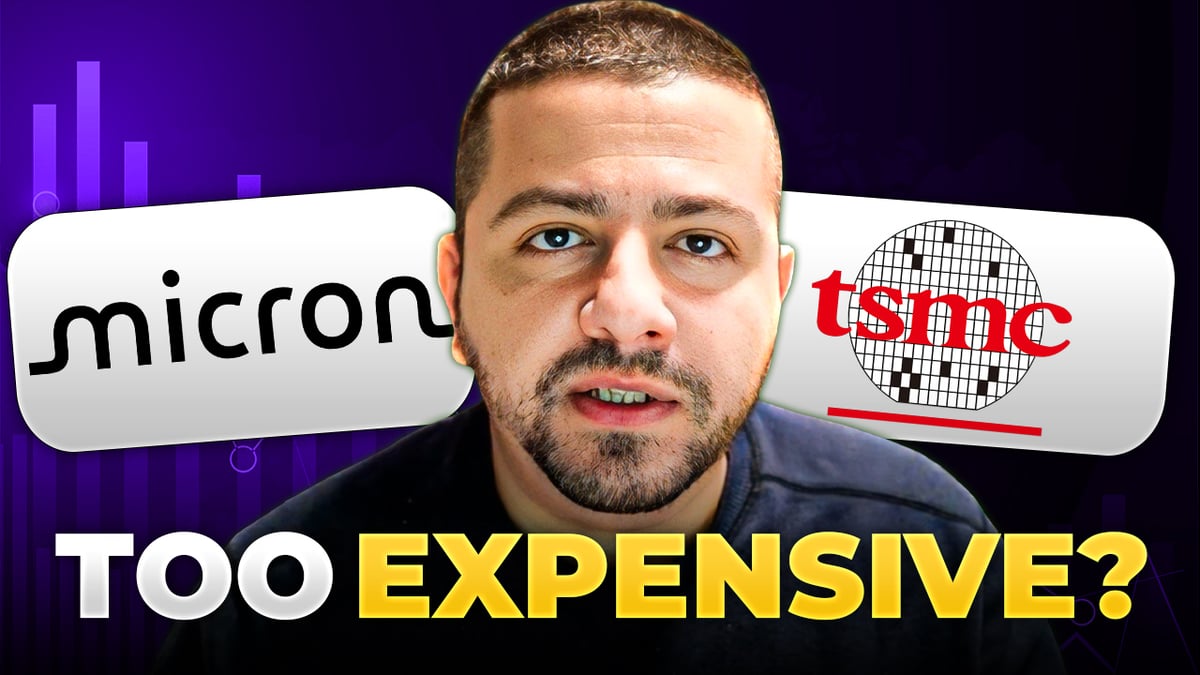
Micron vs. TSMC: Which Semiconductor Giant Deserves Your Portfolio?
As artificial intelligence and data center demand reshape the semiconductor landscape, investors face a critical choice between two manufacturing powerhouses: Micron Technology ($MU) and Taiwan Semiconductor Manufacturing Company ($TSM). Both companies rank among the world's most sophisticated chipmakers, yet they occupy fundamentally different positions in the industry—a distinction that could significantly impact investment returns over the coming years.
The Tale of Two Semiconductor Leaders
Micron Technology and Taiwan Semiconductor Manufacturing Company (TSMC) represent two distinct approaches to the semiconductor manufacturing ecosystem. While both are considered among the world's best manufacturing companies, they serve different market segments and operate under different business models that create meaningful divergence in risk and reward profiles.
Micron primarily manufactures memory chips—DRAM and NAND flash memory—which power everything from smartphones to data centers. The company's revenue is heavily concentrated in memory products, making it sensitive to cyclical demand patterns and pricing pressures in the commodity-like memory market. TSMC, by contrast, operates as a foundry, manufacturing chips designed by other companies including Apple ($AAPL), NVIDIA ($NVDA), Qualcomm ($QCOM), and Advanced Micro Devices ($AMD).
This foundational difference shapes nearly every aspect of these businesses:
- Revenue concentration: Micron depends heavily on memory demand cycles, while TSMC benefits from diversified customer relationships across multiple sectors
- Pricing power: Memory markets are increasingly commoditized, limiting margin expansion; foundry customers often lock in long-term relationships with negotiated pricing
- Growth drivers: Micron relies on capacity utilization and memory demand surges; TSMC benefits from the growing complexity of chip design requiring advanced manufacturing nodes
- Competitive dynamics: Micron faces intense competition from Samsung ($SSNLF) and SK Hynix in memory; TSMC has limited foundry competitors at advanced nodes
Market Context: The Semiconductor Divergence
The semiconductor industry is experiencing a profound structural shift driven by artificial intelligence adoption, edge computing, and the transition to advanced manufacturing nodes. These macro trends create vastly different tailwinds for memory manufacturers versus foundries.
The Memory Market Reality
Memory chip markets, where Micron derives the bulk of its revenue, have historically followed cyclical patterns of oversupply and undersupply. While AI data centers are driving incremental memory demand, the memory market remains fundamentally different from custom foundry work. Memory specifications are largely standardized—a DRAM chip or NAND flash unit performs essentially the same function regardless of manufacturer. This commoditization limits pricing power and forces competitors to compete primarily on cost efficiency and manufacturing scale.
Micron has made significant investments in new memory technologies and manufacturing capacity to capture AI-driven demand. However, the company remains exposed to the memory cycle, where supply-demand imbalances can quickly erode margins. Historical data shows memory gross margins can swing 20-30 percentage points across cycles.
The Foundry Advantage
TSMC operates in an entirely different competitive environment. As the world's most advanced chipmaker, TSMC manufactures custom chips at cutting-edge process nodes (currently 3-nanometer and transitioning to 2-nanometer and below). These advanced nodes are essential for AI accelerators, high-performance processors, and smartphones. Only Samsung and Intel ($INTC) offer competing foundry services at similar technology levels, and each has significant constraints.
Customers choose foundries based on:
- Access to the most advanced manufacturing technology
- Proven reliability and yield rates
- Technical support and design collaboration
- Long-term capacity availability
These factors create significant switching costs and relationship stickiness. Customers cannot simply switch foundries because they require chips manufactured at leading-edge nodes where only TSMC and select competitors operate.
Geopolitical Considerations
Taiwan's geopolitical status introduces risk considerations absent from Micron's profile. While TSMC operates one facility in Arizona and is expanding U.S. presence, the bulk of its cutting-edge manufacturing remains in Taiwan. Potential disruptions could have severe consequences for global supply chains. Conversely, this concentration in Taiwan also creates regulatory incentives for U.S. and allied governments to ensure TSMC's stability and investment—a protective moat of sorts.
Micron, as a U.S. company headquartered in Boise, Idaho, operates without similar geopolitical risk. However, Micron also lacks the geopolitical support and tariff protections that U.S. policy may increasingly offer to domestic semiconductor manufacturers.
Investor Implications: Risk-Adjusted Returns
For equity investors, the comparison between $MU and $TSM requires analyzing expected returns against specific risk profiles.
Micron's Investment Case
Micron offers exposure to the memory supply cycle's upswing, particularly AI-driven data center memory demand. Investors bullish on sustained data center growth may view Micron as leveraged play on infrastructure buildout. The company's U.S. domicile and government support (through subsidies for domestic chip manufacturing) provide tailwinds.
However, Micron's cyclical nature means returns depend partly on timing the memory cycle. Investors who buy near peak margins face significant downside risk. Memory pricing is ultimately determined by supply-demand balances that Micron cannot fully control, limiting management's ability to sustain margin expansion through innovation alone.
TSMC's Structural Advantages
TSMC offers exposure to a structurally different market with higher barriers to entry. Advanced semiconductor manufacturing requires multi-billion-dollar fabrication plants and years of development—barriers that protect TSMC's market position. The company's foundry model creates recurring relationships with customers requiring long-term capacity commitments.
TSMC's gross margins, typically 50%+, reflect this competitive positioning. The company consistently reinvests heavily in R&D to maintain technological leadership, funding new process node development that sustains customer lock-in.
Geopolitical concentration in Taiwan represents the primary risk. However, this risk appears to be declining as TSMC expands U.S. manufacturing capacity and governments worldwide prioritize semiconductor supply chain security.
Valuation and Growth Prospects
Both companies are trading at premium valuations reflecting AI enthusiasm. The critical question concerns which premium is justified:
- Micron: Growth depends on memory cycle timing and data center capex sustaining high utilization
- TSMC: Growth depends on advanced node adoption across multiple customers and sectors
TSMC's diversified customer base and structural competitive advantages suggest more sustainable growth, potentially justifying a premium valuation multiple. Micron's cyclicality suggests lower valuation multiples are appropriate, as investors should discount for inevitable cycle downturns.
Forward-Looking Assessment
While both Micron Technology and TSMC are exceptional manufacturing companies, they represent different investment theses. Micron offers a cyclical play on current strong memory demand, suitable for investors with specific timing conviction. TSMC offers exposure to structural semiconductor industry shifts with higher barriers to competition and more sustainable margins.
The "better" choice depends on individual risk tolerance, time horizon, and convictions about the semiconductor cycle. Risk-averse investors with longer time horizons may prefer TSMC's structural advantages and diversified customer base. Tactical investors confident in sustained data center memory demand may find Micron's leverage to the current cycle attractive—though this approach requires careful cycle management.
As AI proliferation accelerates and semiconductor demand remains robust, both companies should perform well. However, TSMC's foundry model, technological leadership, and customer diversification appear better positioned to sustain competitive advantages through the inevitable semiconductor cycles ahead. For most long-term investors, this structural analysis suggests TSMC warrants preference, though Micron remains a quality semiconductor investment for those accepting its cyclical nature.