
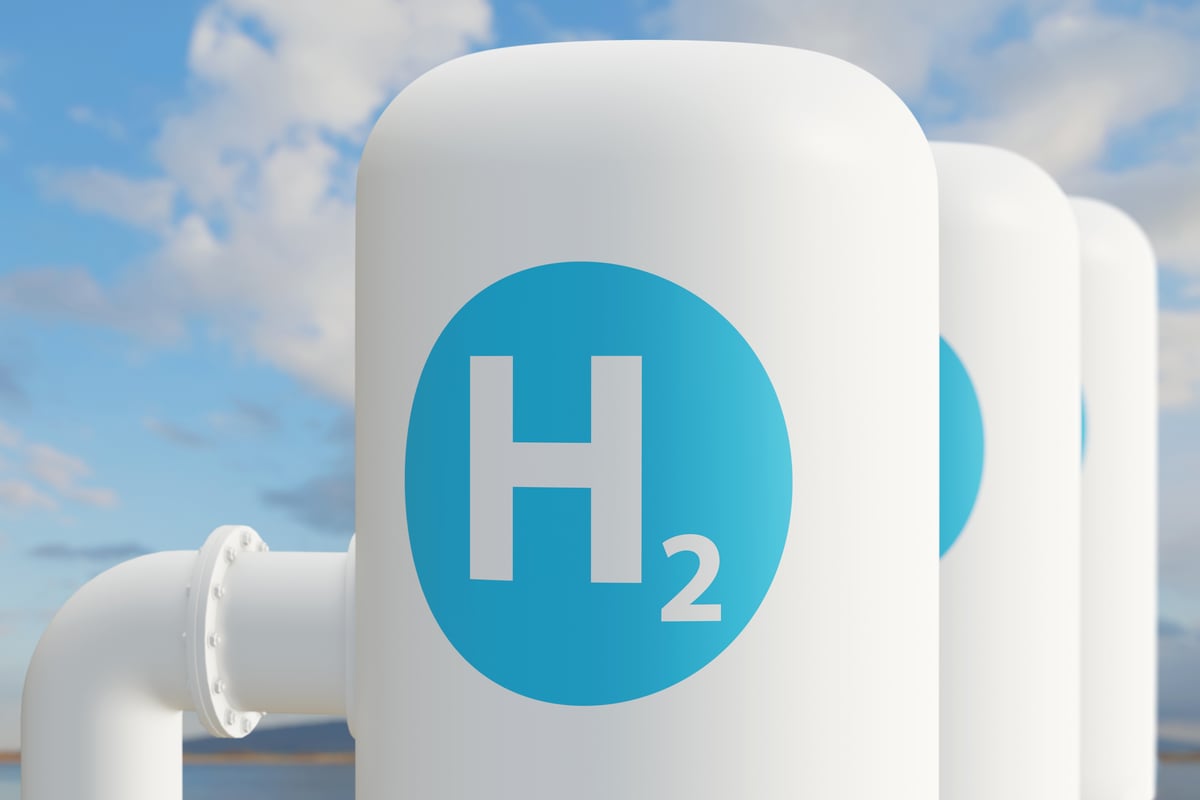
Hydrogen Fuel Cells Face Race Against Time in AI-Powered Data Center Boom
Plug Power ($PLUG) stands at a critical crossroads as surging artificial intelligence infrastructure demand creates a potential $7 trillion investment opportunity in U.S. data centers over the next five years. The hydrogen fuel cell technology company sees a compelling growth narrative in powering the next generation of energy-hungry computing facilities, but faces a brutal timeline challenge: hydrogen costs remain prohibitively expensive for mass-market deployment, and competitors are already securing long-term data center contracts with alternative technologies that are further along the commercialization curve.
The market backdrop presents both unprecedented opportunity and formidable obstacles. According to energy forecasts, data center electricity consumption is projected to surge from 4.3% to 11.7% of total U.S. electricity consumption by 2030—a nearly three-fold increase that will strain existing power infrastructure and create voracious demand for new generation capacity. This exponential growth trajectory has attracted billions in investment capital from tech giants, infrastructure funds, and energy companies racing to capture market share in what promises to be one of the decade's most lucrative sectors.
The Case for Hydrogen: Abundance Meets Demand
Plug Power's strategic positioning in hydrogen fuel cells aligns with genuine infrastructure needs. Data centers require reliable baseload power with minimal geographic constraints—a fundamental problem that hydrogen could theoretically solve better than solar and wind alone. Unlike intermittent renewable sources, hydrogen can serve as a flexible, storable energy carrier that enables 24/7 operations essential for mission-critical AI computing infrastructure.
The company has spent years building out hydrogen production, distribution, and fuel cell technology platforms. For data centers specifically, hydrogen fuel cells offer several theoretical advantages:
- Zero direct emissions at the point of use, supporting corporate ESG commitments and regulatory compliance
- Modular scalability that can match variable data center power demands
- Fuel independence from traditional grid bottlenecks affecting semiconductor-rich regions like the Southwest
- Long duration energy storage capabilities superior to battery technologies at multi-megawatt scales
The potential addressable market is staggering. If even a fraction of the projected $7 trillion in data center investments incorporates hydrogen fuel cells, Plug Power could achieve revenues far exceeding current Wall Street consensus.
Hydrogen Cost Competitiveness: The Insurmountable Problem
Yet the fundamental economics present a nearly insurmountable barrier within the five-year investment window. Hydrogen production costs remain fundamentally uncompetitive with alternative power generation technologies, particularly small modular reactors (SMR) that are already securing binding data center contracts.
Current hydrogen production economics face multiple headwinds:
- Gray hydrogen (steam methane reforming) remains the cheapest production method at approximately $1.50-2.00 per kilogram, but generates significant carbon emissions—defeating the purpose for ESG-conscious data center operators
- Green hydrogen (electrolyzer-based) costs $3.00-7.00+ per kilogram depending on regional electricity prices, transport, and scale economies
- Hydrogen storage and distribution infrastructure remains nascent, with only fragmented networks connecting production facilities to end users
- Fuel cell efficiency losses stack on top of hydrogen production costs, creating total delivered-energy expenses that pale unfavorably against grid electricity, natural gas turbines, or emerging nuclear alternatives
By contrast, small modular reactor (SMR) technology—championed by companies with nuclear expertise and backed by tech giants like Google and Microsoft—is securing multi-gigawatt contracts for data center power. These facilities offer carbon-free baseload power with proven operational reliability, established supply chains, and regulatory pathways already in motion.
Market Context: The Competitive Landscape Narrows
Plug Power's real-world market traction remains limited despite years of development and significant capital deployment. The company's current customer base consists primarily of materials handling and industrial forklift operations—sectors fundamentally different from data center power generation requirements.
Transitioning from materials handling to utility-scale data center power represents not merely a scaling problem but an entirely different business model requiring:
- Different customer acquisition and sales cycles (Fortune 500 tech companies vs. warehouse operators)
- New regulatory approvals and interconnection standards
- Unproven operational data for 99.99%+ uptime requirements
- Capital intensity that dwarfs existing hydrogen production facilities
Meanwhile, competitors have accelerated timelines:
- TerraPower (backed by Bill Gates) and NuScale have secured framework agreements with data center operators for SMR deployment beginning 2030
- EnerTech and other advanced geothermal developers are offering 24/7 renewable baseload power
- Battery storage companies continue improving duration and cost economics
- Hyperscale data center operators are simultaneously investing in on-site solar, wind, and increasingly, direct nuclear partnerships
The market is consolidating around proven technologies with near-term deployment paths. Hydrogen's five-year outlook for cost competitiveness appears optimistic at best, with most independent analyses suggesting cost parity with nuclear and renewables remains 7-15 years away.
Investor Implications: Betting on the Wrong Timeline
For $PLUG shareholders, the fundamental question becomes whether the company can bridge the cost competitiveness gap before the critical data center buildout cycle completes and power generation portfolios lock in for the decade. The evidence suggests this window may have already closed.
Key considerations for investors:
- Capital requirements: Achieving hydrogen cost competitiveness demands billions in electrolyzer manufacturing, green power procurement, and distribution infrastructure—expenses that must compete for capital against companies with higher probability near-term returns
- Technology risk: Hydrogen fuel cells for utility-scale power remain largely unproven in continuous-operation data center environments
- Competitive displacement: Each contract secured by SMR or geothermal competitors reduces the addressable market remaining for hydrogen solutions
- Valuation pressure: If hydrogen doesn't materialize as primary data center fuel within 5-10 years, Plug Power's growth narrative collapses, forcing significant multiple compression
- Hydrogen demand elsewhere: Industrial decarbonization (steel, chemicals, refining) presents longer-term demand, but lacks the near-term revenue urgency of data center buildout
The risk-reward asymmetry favors skepticism. The bull case requires simultaneous breakthroughs in hydrogen cost reduction, regulatory approval acceleration, customer preference shifts away from proven nuclear alternatives, and near-perfect execution—a compounding probability problem that typically resolves unfavorably for early-stage technologies facing established competitors.
The Five-Year Outlook: Quietly Crushing or Quietly Failing?
Plug Power will likely find success in hydrogen applications beyond data centers, particularly in industrial processes where emissions reduction justifies cost premiums and operational requirements prove less stringent. The company may secure meaningful hydrogen partnerships and contracts in these adjacent markets, enabling continued revenue growth and potential profitability.
However, the transformational data center opportunity that captured investor imagination appears increasingly unlikely to materialize within the five-year framework. The combination of superior competing technologies already securing contracts, persistent cost disadvantages, limited real-world operational experience, and the data center buildout cycle's acceleration all point toward hydrogen arriving as a niche solution after major infrastructure commitments have solidified elsewhere.
For contrarian investors believing hydrogen cost curves will decline faster than consensus expects, $PLUG offers high-risk, high-reward exposure to green energy decarbonization. For investors seeking exposure to data center power generation opportunities, proven technologies like SMR nuclear or direct infrastructure investments in grid modernization present superior risk-adjusted returns. Plug Power's five-year outlook likely resolves as "quietly crushing it" in hydrogen niche applications while conspicuously missing the data center windfall that Wall Street expected.