
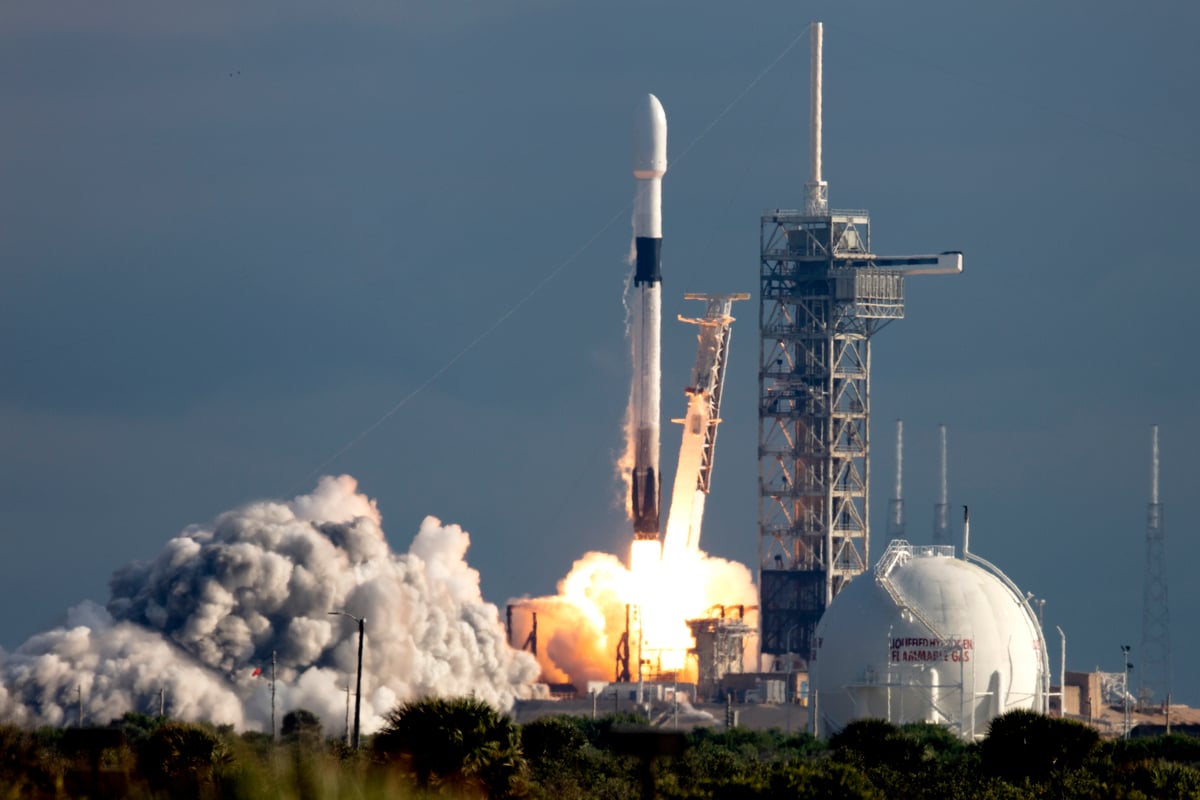
Ackman's SpaceX Dilemma: Why a Billionaire Investor Sits on the Sidelines
Bill Ackman, the billionaire founder of Pershing Square Capital Management, has long been associated with transformative investment opportunities, but SpaceX's path to public markets appears to have bypassed his preferred playbook. While Ackman previously proposed merging the aerospace company with his blank-check vehicle SPARC, SpaceX leadership ultimately chose a traditional IPO route backed by over 20 underwriting banks—a decision that underscores a fundamental mismatch between the company's current financial profile and Ackman's investment philosophy.
The divergence highlights a critical tension in modern venture capitalism: the gap between visionary companies with transformative potential and those with the financial characteristics that appeal to disciplined value investors. For Ackman, known for backing businesses with simple operations, predictable revenues, and strong free cash flow generation, SpaceX currently presents an unattractive risk-reward profile—despite its revolutionary technology and market position.
The Capital Intensity Problem
SpaceX remains in a capital-intensive growth phase that fundamentally conflicts with Ackman's investment criteria. The company is currently deploying approximately $21 billion in annual capital expenditures as it races to complete its Starlink satellite constellation and develop next-generation launch capabilities. This massive spending burden has resulted in negative free cash flow across its core launch services and artificial intelligence segments, creating a financial profile that looks more like a growth-stage startup than a stable, cash-generative business.
The numbers tell a revealing story:
- Total annual capital expenditures: $21 billion
- Starlink free cash flow generation: $3 billion annually
- Launch and AI segments: Negative free cash flow despite significant revenues
- Overall company position: Heavy capital requirements obscuring true profitability
This financial structure stands in stark contrast to the businesses that have historically attracted Ackman's capital. His track record includes investments in companies like Hilton Worldwide ($HLT), Canadian Pacific Railway ($CP), and Berkshire Hathaway ($BRK.B)—all characterized by relatively modest capital needs, predictable cash flows, and clear paths to sustained profitability. SpaceX, by comparison, resembles more a technology infrastructure play requiring continuous heavy investment rather than a mature operating business.
Market Context and the SpaceX IPO Landscape
The decision to pursue a traditional IPO with multiple underwriting banks rather than Ackman's SPARC merger reflects SpaceX's confidence in the public market's appetite for growth-stage, capital-intensive businesses—a markedly different investor base than Pershing Square's typical clients. The contemporary IPO market has demonstrated substantial demand for space economy and technology infrastructure plays, with investors willing to overlook near-term cash burn for long-term strategic positioning.
SpaceX's estimated valuation exceeds $180 billion in recent private market transactions, placing it among the world's most valuable private companies. This valuation suggests that public market investors are pricing in the company's long-term potential in satellite communications, commercial spaceflight, and deep space exploration—a forward-looking perspective that values optionality over current cash generation.
The broader aerospace and defense sector has recently seen significant public market momentum. Companies like Axiom Space, Axiom Space, and various satellite communications providers have attracted institutional capital despite capital-intensive business models. Traditional aerospace contractors including Lockheed Martin ($LMT), Northrop Grumman ($NOC), and Boeing ($BA) command substantial market valuations despite cyclical capital requirements, demonstrating investor willingness to fund infrastructure-heavy industries.
Why Ackman May Reconsider Post-IPO
Notably, Ackman's current reservations about SpaceX may not be permanent. His commentary suggests a potential pathway for future investment once the company's financial profile fundamentally shifts. Specifically, Ackman appears to be waiting for a pivotal inflection point: the substantial completion of Starlink's satellite constellation and the transition from aggressive buildout to operational scaling.
Once Starlink achieves its targeted satellite deployment and begins operating at mature capacity, the company's capital expenditure requirements should decline substantially. At that point, SpaceX would transition from a high-burn growth company to a business generating significant free cash flow from an already-built satellite network capable of delivering broadband to underserved global markets. Such a transformation would align SpaceX far more closely with Ackman's investment thesis: a profitable, cash-generative business with defensible competitive advantages and sustainable margins.
This calculation appears to be Ackman's implicit position: let public market investors fund the capital-intensive buildout phase, then evaluate entry once the risk-return profile becomes more attractive. This approach isn't contrarian in spirit but pragmatic—Ackman has demonstrated patience in past investments, waiting for optimal entry points rather than forcing capital deployment into suboptimal opportunities.
Investor Implications and Forward-Looking Considerations
For SpaceX shareholders and prospective investors, Ackman's cautious stance serves as a useful reality check. While the company's long-term vision is compelling, current investors are essentially funding a capital-intensive infrastructure buildout with uncertain cash return timing. The company remains several years away from achieving the operational maturity and free cash flow profile that attracts disciplined, value-oriented capital.
Public SpaceX shareholders will likely experience significant volatility as the market reconciles near-term losses with long-term optionality. The company must execute flawlessly on satellite deployment, maintain competitive advantages in commercial launch services, and ultimately prove that Starlink can achieve projected subscriber growth and pricing power.
If Ackman's eventual investment does materialize, it would serve as a powerful validation signal—a confirmation that SpaceX has successfully navigated the transition from capital-intensive startup to stable, cash-generative infrastructure provider. Until that inflection materializes, his sidelining of capital suggests that even optimistic investors maintain reasonable skepticism about immediate profitability.
The SpaceX story ultimately illustrates a critical distinction in modern investing: between companies that will eventually generate substantial value and companies suitable for disciplined capital allocation today. Ackman's apparent waiting game suggests SpaceX remains firmly in the former category rather than the latter—a validation of the company's long-term potential, even as it confirms the financial reality of its present growth phase.