
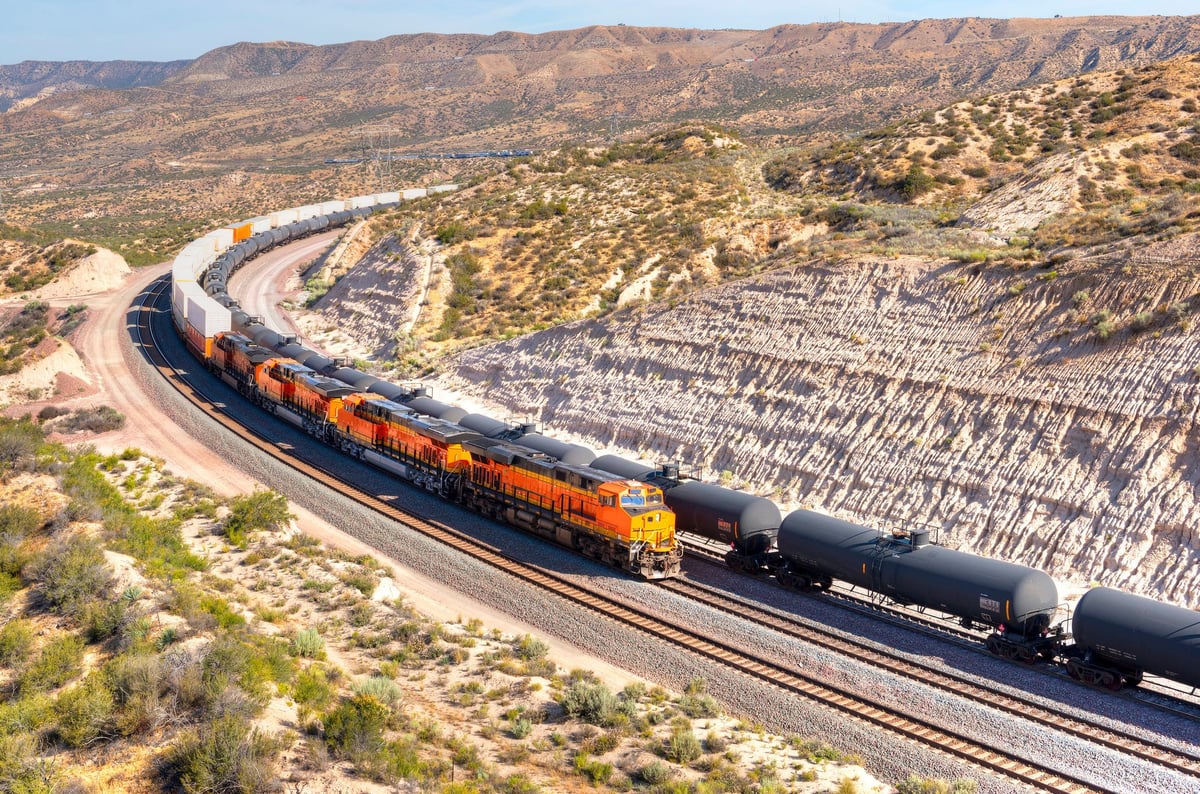
A Freight Rail Giant Offers Stability and Income
Union Pacific Corporation ($UNP) stands out as a compelling income investment for long-term investors seeking reliable dividend growth, backed by the railroad operator's extraordinary 126 years of uninterrupted dividend payments and proven operational excellence. With a 2.18% dividend yield that significantly outpaces its industrial sector average, the company is positioned to deliver sustained income growth over the coming decade, supported by strong pricing power, operational efficiency, and transformative merger dynamics.
The case for Union Pacific as a multi-year hold rests on its rare combination of dividend reliability and growth prospects. The company's 19-year streak of consecutive dividend increases demonstrates management's confidence in long-term earnings power and commitment to returning capital to shareholders. This track record is particularly significant in the capital-intensive railroad industry, where sustained dividend growth requires disciplined operational performance and favorable market conditions.
Operating Strength and Merger Catalysts
Union Pacific commands several structural advantages that justify premium dividend treatment within the transportation sector:
- Pricing power: As a dominant player in North American freight rail, the company benefits from limited competition and essential infrastructure positioning that allows pricing discipline amid cyclical freight demand
- Operating margins: Strong operational efficiency provides cushion for dividend sustainability even during economic downturns
- Merger synergies: The pending merger with Norfolk Southern creates potential for significant cost savings and network optimization that could further enhance cash generation
- Essential infrastructure: Rail transportation remains critical to supply chain functioning, providing recession-resistant revenue streams
The railroad sector operates with relatively inelastic demand, as shippers depend on rail networks for cost-effective bulk transportation of commodities, consumer goods, and materials. This structural advantage translates into stable cash flows that support both dividends and capital reinvestment in aging rail infrastructure.
The potential merger with Norfolk Southern represents a transformative event that could unlock considerable shareholder value through operational synergies. Railroad consolidations historically drive efficiency improvements through route optimization, redundancy elimination, and technology integration. While regulatory approval remains uncertain, successful completion could materially enhance Union Pacific's ability to grow dividends at an accelerating pace.
Market Context and Competitive Positioning
Union Pacific operates within a consolidated North American freight rail market dominated by a handful of Class 1 carriers. The company's 2.18% yield reflects investor confidence in sustainable dividend growth, though it trades at a premium to the broader industrial sector average, suggesting market recognition of its defensive characteristics and growth trajectory.
The railroad industry has undergone significant transformation in recent years, with carriers focusing on operational efficiency, technology adoption, and environmental sustainability. Union Pacific's proven ability to raise dividends consistently through multiple economic cycles positions it favorably against cyclical industrial peers. The company's essential infrastructure role provides natural pricing power that many traditional industrials lack.
Regulatory considerations around rail consolidation remain relevant, as the proposed Norfolk Southern merger navigates antitrust scrutiny. The rail industry faces ongoing pressure to balance freight transportation efficiency with environmental goals, but these structural tailwinds generally support premium valuations for efficient, well-capitalized operators like Union Pacific.
Why This Matters for Income and Growth Investors
For investors seeking current income above Treasury yields without excessive equity risk, Union Pacific addresses a genuine need in today's market environment. The 2.18% yield provides meaningful current income while the 19-year dividend increase streak suggests 3-5% annual growth is achievable, creating total return potential of 5-7% annually for patient investors.
The railroad's 126-year dividend history carries psychological and practical significance. This achievement indicates that management has navigated the Great Depression, world wars, multiple recessions, and major industry disruption while maintaining shareholder distributions. Such resilience suggests future dividend payments will survive most conceivable economic scenarios, making Union Pacific appropriate for retirement portfolios and conservative investors.
The pending merger with Norfolk Southern introduces optionality that could materially enhance long-term shareholder returns if regulatory approval is secured. Even without merger completion, Union Pacific's standalone operations generate sufficient cash flow to support modest dividend growth through normal business cycles. The combination of defensive characteristics, proven dividend reliability, and merger upside creates an asymmetric risk-reward profile favoring long-term holders.
Looking Ahead: A Decade of Income Generation
Union Pacific represents a rare opportunity to combine defensive characteristics with modest growth prospects and above-average yield in a capital-intensive industry. The company's operational excellence, pricing power, and demonstrated commitment to shareholders suggest that decade-long investors can expect both steady income and modest capital appreciation.
While railroad stocks are cyclical and susceptible to recession-driven freight volume declines, Union Pacific's market position and financial strength position it to weather economic downturns while protecting dividends. The pending merger, if approved, could accelerate dividend growth by 1-2 percentage points annually through synergy realization. For investors constructing income-focused portfolios, Union Pacific warrants serious consideration as a foundational holding capable of delivering reliable returns across multiple market environments over the next ten years.