
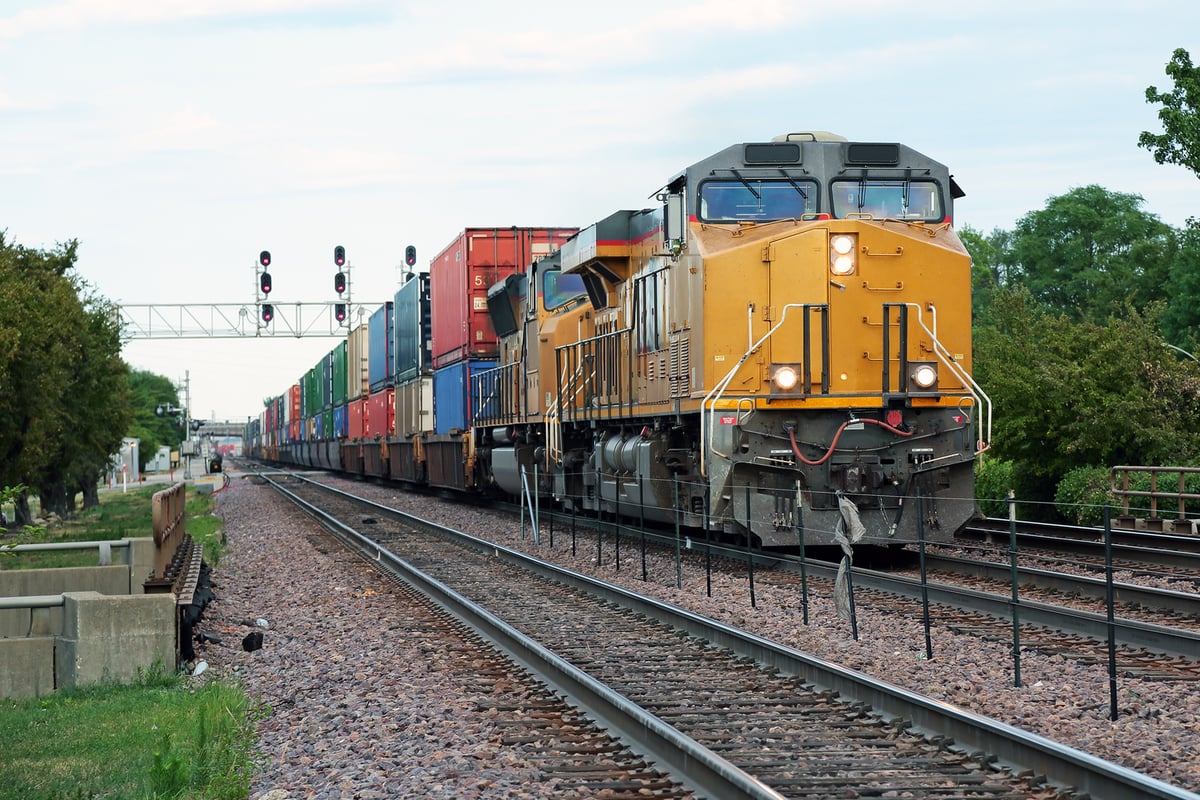
Union Pacific Surges 8% on Strong Q1 Results, Operational Excellence
Union Pacific Corporation ($UNP) shares rallied 8.23% following robust first-quarter 2026 earnings that demonstrated the railroad's ability to drive both revenue growth and operational efficiency simultaneously. The company delivered $6.2 billion in revenue, representing 3% year-over-year growth, while adjusted net income climbed 5% to $1.7 billion, signaling healthy demand for freight transportation services and effective cost management during a transitional period for the industry.
The stock's significant jump reflects investor optimism about the company's ability to execute on multiple fronts: pricing power, operational improvements, and strategic positioning ahead of a transformative merger. For a mature railroad operator, these results underscore strengthening market fundamentals and management's competent stewardship of the nation's largest freight railroad network.
Key Financial and Operational Metrics
Beyond headline revenue and earnings growth, Union Pacific demonstrated impressive operational performance that directly impacts profitability and return on assets:
- Freight car velocity improved 9%, indicating faster movement of cargo through the network
- Terminal dwell times decreased 11%, reducing the time freight sits idle at distribution centers
- Adjusted net income grew 5% to $1.7 billion, outpacing revenue growth and signaling margin expansion
- Pricing power remained intact with effective rate increases offsetting cost pressures
- Fuel surcharges continued generating incremental revenue
- Management reiterated mid-single-digit EPS growth targets for full-year 2026
These operational metrics matter significantly because they demonstrate that Union Pacific is squeezing greater efficiency from its existing asset base—a critical advantage in railroad economics where fixed infrastructure costs dominate the business model. The 9% improvement in freight car velocity and 11% reduction in terminal dwell times suggest the company has optimized routing, reduced congestion, and improved network utilization, translating directly to higher throughput and better asset returns.
The company's commitment to steady dividend increases provides reassurance to income-focused investors that management believes the operational improvements and market positioning are sustainable, not temporary cyclical benefits.
Market Context: Consolidation and Industry Tailwinds
The railroad sector is experiencing significant structural tailwinds that provide critical context for Union Pacific's strong execution. The freight transportation industry faces persistent challenges from driver shortages, congestion, and aging infrastructure—dynamics that have intensified pricing power for established operators like Union Pacific.
Equally important is the pending merger with Norfolk Southern, which would create a transcontinental railroad with unparalleled reach and operational flexibility. This transformative combination would reshape competitive dynamics in freight transportation, potentially creating a more efficient network with reduced duplication and improved service for customers. The regulatory approval process for such a major consolidation remains complex, but the market has begun pricing in the strategic benefits.
Competitors in the sector, including CSX Corporation ($CSX) and BNSF (owned by Berkshire Hathaway), are watching closely as Union Pacific demonstrates pricing discipline and operational excellence. The sector as a whole benefits from:
- E-commerce growth driving increased parcel and LTL (less-than-truckload) shipments
- Infrastructure investment through the Bipartisan Infrastructure Law
- Pricing power as freight demand outpaces supply in many segments
- Operational excellence opportunities through technology and automation
Investor Implications and Forward Outlook
For equity investors, Union Pacific's Q1 results address two critical concerns that railroad stocks have faced: whether management can grow top-line revenue in a mature industry, and whether operational improvements can genuinely expand margins rather than simply maintain them.
The 8.23% stock price jump suggests the market had modestly underestimated the company's ability to deliver simultaneous revenue and earnings growth. The reiteration of mid-single-digit EPS growth targets for 2026 indicates management confidence in sustaining these improvements despite potential macroeconomic headwinds. For a company with the scale and maturity of Union Pacific, mid-single-digit growth rates represent meaningful shareholder value creation, particularly when coupled with steady dividend increases.
The pending merger with Norfolk Southern adds another layer of strategic optionality. A successful combination would create opportunities for significant synergies, though regulatory hurdles remain substantial. Investors should monitor regulatory commentary and potential antitrust concerns, as approval timelines and conditions could materially affect the merged entity's ability to realize value.
Fixed-income investors should note that Union Pacific's strong operating cash flow generation—evident from the ability to fund dividend increases while improving the business—supports its investment-grade credit ratings and provides a margin of safety for bondholders.
Looking Ahead
Union Pacific's Q1 2026 performance demonstrates that even mature, cyclical industries can deliver sustainable value creation through disciplined pricing, relentless operational efficiency, and strategic positioning. The combination of 3% revenue growth, 5% earnings growth, 9% velocity improvements, and 11% faster terminal processing creates a compelling narrative for investors concerned about growth at a mature infrastructure company.
The company's steadfast commitment to dividend increases and mid-single-digit EPS growth suggests management believes these improvements reflect fundamental advantages rather than transient benefits. As the company navigates the merger process and capitalizes on favorable industry dynamics, Union Pacific appears well-positioned to reward patient shareholders—though regulatory developments around the Norfolk Southern combination remain a key variable to watch.
The 8.23% rally reflects justified optimism about execution, but investors should continue monitoring quarterly results to confirm that operational improvements and pricing power persist as the economic cycle potentially turns.