
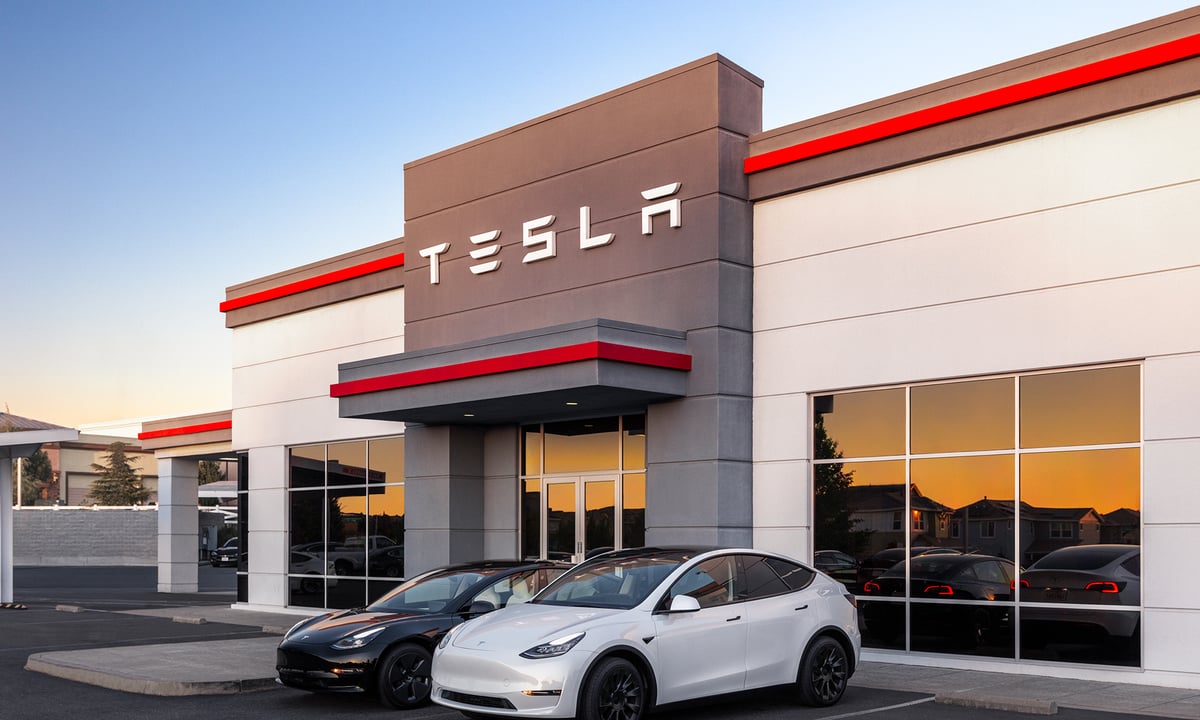
Tesla Delivers Solid Quarter Amid Shifting Market Dynamics
Tesla reported a solid quarterly performance that arrives at a pivotal moment for the electric vehicle sector. While stock price reactions have been mixed, the confluence of rising oil prices and accelerating consumer interest in electric vehicles presents a compelling tailwind for $TSLA investors. The timing underscores a fundamental market shift: as fossil fuel costs climb, the economic case for electrification strengthens considerably, potentially unlocking new demand pools that could significantly benefit the world's most valuable automaker.
The quarter's results demonstrate Tesla's operational resilience even as the broader EV market navigates pricing pressures and intensifying competition. However, the more significant story emerging from the business landscape involves external market forces—specifically elevated crude oil prices—that are reshaping consumer purchasing calculus in ways favorable to electric vehicle manufacturers. Higher gasoline prices directly erode the price premium consumers perceive when considering EVs, effectively narrowing the cost-of-ownership gap and making electrification more accessible to mainstream buyers.
The Oil-EV Demand Nexus
The relationship between crude oil prices and electric vehicle adoption represents a critical economic dynamic for the sector's long-term trajectory. Key factors reinforcing this connection include:
- Consumer Economics: Higher pump prices reduce EV total cost of ownership and accelerate payback periods on vehicle purchases
- Market Psychology: Energy cost volatility drives consumer awareness of fuel alternatives and transportation efficiency
- Infrastructure Acceleration: Elevated oil prices create political and consumer momentum for EV infrastructure investment
- Competitive Advantage: Tesla's established Supercharger network positions the company to capture demand shifts faster than competitors
Historically, periods of elevated energy costs have corresponded with sustained increases in EV market share. The current inflationary environment in energy markets creates a structural advantage for companies with established production capacity, supply chain relationships, and brand recognition in the electrification space. Tesla, as the dominant player in global EV sales, stands to benefit disproportionately from this shift in consumer preferences.
The macroeconomic backdrop matters considerably here. Global oil prices remain elevated due to geopolitical tensions, OPEC production decisions, and persistent demand growth in developing economies. These factors suggest the price environment supporting EV adoption may persist, rather than representing a temporary spike. Sustained higher fuel costs could establish a new equilibrium where EV adoption becomes a rational choice for price-conscious consumers, not merely an environmental or status statement.
Market Context and Competitive Landscape
The automotive industry faces unprecedented transformation, with traditional manufacturers ramping EV production while startups pursue niche market segments. However, Tesla's advantages in manufacturing scale, battery technology, and charging infrastructure remain formidable. Competitors including General Motors ($GM), Ford ($F), and emerging players like Rivian ($RIVN) continue investing heavily in electrification, yet none have achieved comparable manufacturing efficiency or customer loyalty metrics.
The broader EV market is experiencing a critical inflection point. Early-stage demand driven primarily by environmental concerns and government incentives is transitioning toward mainstream demand driven by economic fundamentals. When electric vehicles achieve price parity and superior total cost of ownership without subsidies, the market expands exponentially. Rising oil prices accelerate this transition by improving EV economics on a standalone basis.
Regulatory tailwinds remain substantial. The Biden Administration has committed to aggressive EV adoption targets, while the European Union continues tightening combustion engine emissions standards. China, the world's largest EV market, continues industrial policy support for electrification. These regulatory frameworks, combined with rising oil prices, create a multi-year structural advantage for established EV manufacturers.
Investor Implications and Forward Outlook
For $TSLA shareholders, the quarterly results combined with macro tailwinds suggest multiple expansion possibilities. The company's ability to convert demand increases into earnings growth depends on maintaining manufacturing efficiency and managing supply chain costs amid inflationary pressures. Investors should monitor several key metrics:
- Production volume trends across manufacturing facilities
- Gross margin trajectory in core automotive operations
- Market share in key geographies including North America, Europe, and China
- Capital expenditure plans for additional factory capacity
The mixed stock price reaction to the solid quarter may reflect market concerns about near-term challenges, including macroeconomic uncertainty and competitive pressure. However, patient investors viewing Tesla through a multi-year lens recognize that structural demand drivers are accelerating. The combination of Tesla's operational execution capabilities and favorable market dynamics creates asymmetric risk-reward characteristics.
The stock market often prices in forward expectations, and current valuation levels may not fully reflect the profit pool expansion that could result from accelerated EV adoption driven by sustained higher energy costs. Institutional investors, in particular, continue accumulating Tesla positions on the thesis that the company's competitive advantages will drive market share gains during a period of rapid sector growth.
Conclusion
Tesla's solid quarterly performance arrives amid genuinely favorable structural conditions for electric vehicle adoption. Rising oil prices function as a powerful economic stimulus for EV demand by improving the value proposition for consumers making long-term transportation decisions. While stock market reactions remain subject to near-term sentiment shifts and macroeconomic uncertainty, the fundamental case for Tesla investment strengthens as energy costs remain elevated. For investors with adequate risk tolerance and appropriate time horizons, the convergence of Tesla's operational capabilities and market tailwinds presents compelling opportunity for portfolio consideration.