
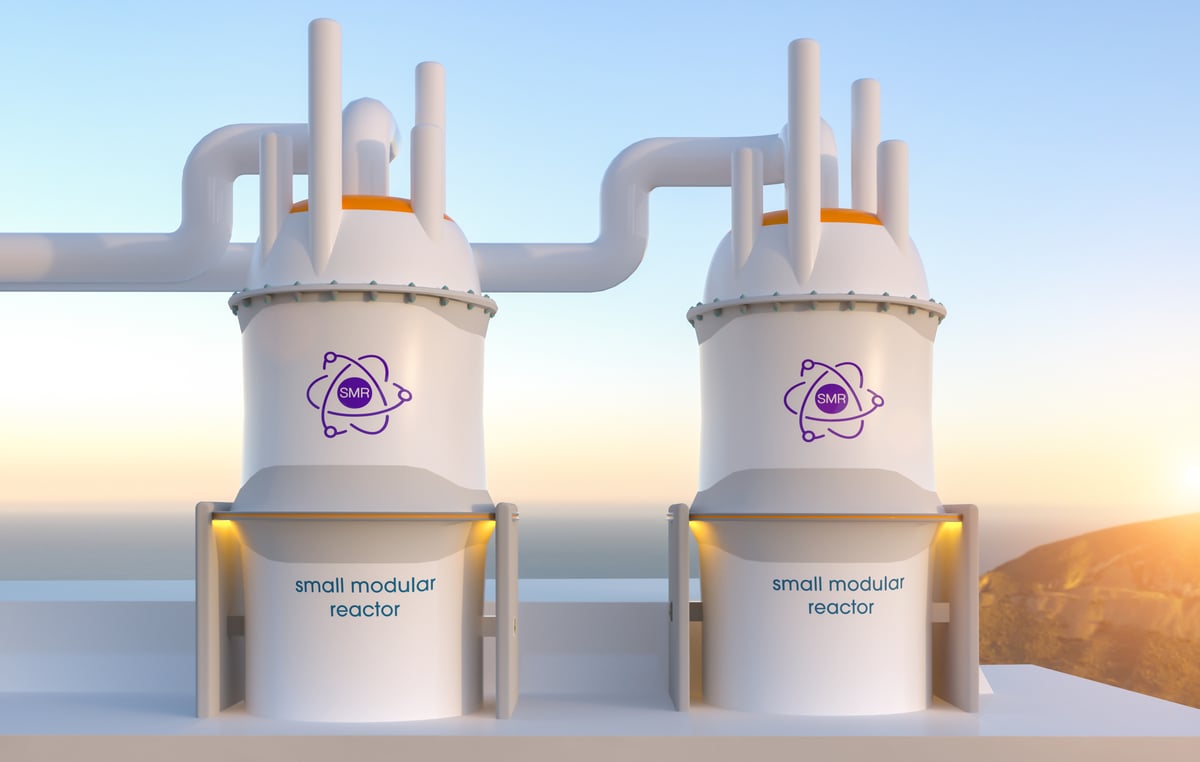
NuScale Power Faces Make-or-Break Moment in Race to Commercialize Nuclear Innovation
NuScale Power ($NULR), the leading small modular reactor (SMR) developer, stands at an inflection point that will determine whether it can capitalize on one of the energy sector's most transformative opportunities or becomes a cautionary tale of technological promise undermined by execution failures. The company commands significant regulatory advantages and operates within a $10 trillion addressable market for small modular reactors, yet it must overcome mounting financial losses, severe shareholder dilution, and persistent project delays that have pushed its first operational plant from an original 2027 target to a projected 2030-2032 window—a delay that fundamentally reshapes the investment thesis for stakeholders.
The divergence between NuScale's strategic positioning and financial reality has created a pronounced "wait-and-see" dynamic among investors, with the company's trajectory over the next five years likely to determine whether the SMR sector becomes a cornerstone of global decarbonization efforts or remains a speculative bet on uncertain commercialization timelines.
The Numbers Behind the Promise and the Peril
NuScale's financial metrics paint a picture of a company burning through capital at an accelerating pace. The company reported $664 million in losses during 2025, reflecting ongoing research and development expenditures, regulatory navigation costs, and infrastructure investments necessary to bring its first demonstration projects toward commercialization. This burn rate underscores the capital-intensive nature of nuclear technology development, where regulatory approval and engineering validation require years of sustained investment before revenue generation begins.
The shareholder dilution tells an equally sobering story. Since its initial public offering, NuScale has experienced a staggering 1,500% increase in share count, effectively reducing each original shareholder's ownership stake to just 6-7% of their initial percentage holding. This dilution reflects multiple equity raises undertaken to fund operations, with each capital infusion further stretching the equity cushion available to existing investors. This level of dilution is particularly concerning given that major catalysts—including the company's first operational facility coming online—remain years away.
Key financial and operational metrics include:
- Operating losses: $664 million in 2025
- Share dilution since IPO: 1,500% increase in outstanding shares
- Projected first commercial operation: 2030-2032 (delayed from original 2027 target)
- Addressable market size: $10 trillion for SMR applications
- Regulatory status: Multiple project approvals secured but construction and operation remain ahead
Market Context: Regulatory Tailwinds Meet Execution Headwinds
NuScale operates within an increasingly favorable regulatory and market environment for nuclear energy. Global decarbonization commitments, concerns about grid reliability amid renewable energy adoption, and the Biden administration's pro-nuclear stance have created substantial tailwinds for advanced reactor technologies. The company has achieved significant regulatory milestones, including Design Certification from the Nuclear Regulatory Commission, positioning it ahead of many competitors in the race to commercialize SMRs.
However, the broader energy landscape has shifted considerably since NuScale's IPO. The dramatic decline in battery storage costs, accelerated renewable deployment, and emerging interest in alternative zero-carbon technologies have created a more competitive landscape than the company originally faced. Competitors including Commonwealth Fusion Systems (backed by substantial venture capital), international players like China's demonstration reactors, and traditional nuclear vendors entering the SMR space have intensified the race to achieve commercial viability.
The regulatory advantage that NuScale holds is substantial but not permanent. As competitors navigate the NRC process and international jurisdictions embrace SMR development, the window for achieving "first-mover" market dominance narrows. The company's repeated delays—pushing commercial operation from 2027 to 2030-2032—have compressed the period during which it can leverage its regulatory lead into market share before competitors achieve comparable approvals.
Industry context points include:
- Global SMR market trajectory: Projected compound annual growth from pilot projects to commercial deployment across 2030s
- Competitive landscape: CFS, X-energy, TerraPower, and international entrants accelerating timelines
- Policy environment: Inflation Reduction Act credits, Department of Energy partnerships, and state-level nuclear support
- Technology validation: First-of-a-kind project delays are industry-wide phenomenon, not unique to NuScale
What This Means for Investors and the Broader Market
For shareholders holding $NULR, the fundamental question is whether NuScale can successfully navigate the transition from demonstration to commercial deployment before capital runs out or additional dilutive financing becomes necessary. The company's five-year outlook hinges on several interconnected catalysts:
Near-term catalysts (2025-2027): Construction progress on the Utah Associated Municipal Power Systems (UAMPS) project, regulatory updates on other projects, potential equity partnerships that could ease financing burdens, and evidence that project timelines are stabilizing rather than continuing to slip.
Medium-term catalysts (2027-2029): Demonstration of operational capability at pilot facilities, achievement of key construction milestones without major cost overruns, and potential commercial agreements that provide revenue visibility even before full plant operation.
Long-term catalysts (2029-2032): Actual power generation from the first commercial plant, operational performance validation, and a clear pathway to deploying capital-efficient replicates of successful designs.
The investment case for NuScale depends critically on execution. If the company achieves first-of-a-kind operational success and demonstrates that subsequent units can be deployed faster and at lower cost (the traditional learning curve pattern in nuclear), the company could see dramatic valuation expansion. However, if project delays continue, costs escalate further, or technical challenges emerge during operation, shareholder returns could face substantial headwinds.
Broader market implications extend beyond NuScale. The success or failure of the first commercial SMR project will shape investor appetite for the entire advanced nuclear sector and influence capital allocation between competing decarbonization technologies. A NuScale success story would likely trigger institutional capital flows into other SMR developers and could accelerate timeline expectations across the sector. Conversely, continued execution challenges would reinforce perceptions that advanced nuclear deployment faces insurmountable obstacles compared to renewable and storage alternatives.
Looking Ahead: Five Years of Execution
NuScale Power's position in five years will be determined by factors largely within management's control—execution on construction, regulatory navigation, cost management, and partnership development—alongside external variables including competitive dynamics, energy policy, and broader macroeconomic conditions affecting capital availability for energy infrastructure.
The company's significant regulatory advantages and massive addressable market opportunity provide genuine upside potential that justifies institutional interest. However, the mounting losses, severe shareholder dilution, and multi-year delays to commercialization are not trivial concerns and warrant caution from risk-averse investors. NuScale is fundamentally a bet on whether advanced nuclear can overcome historical execution challenges and achieve the cost reductions necessary to compete economically in a decarbonized energy landscape.
Investors should view NuScale less as a near-term opportunity and more as a medium-to-long-term speculative position that will require significant additional capital, successful project execution, and favorable market conditions to realize the $10 trillion SMR opportunity. The coming five years will provide clarity on whether NuScale can deliver on its promise or whether it will join the graveyard of well-intentioned energy technology companies that could not bridge the valley between innovation and commercialization.