
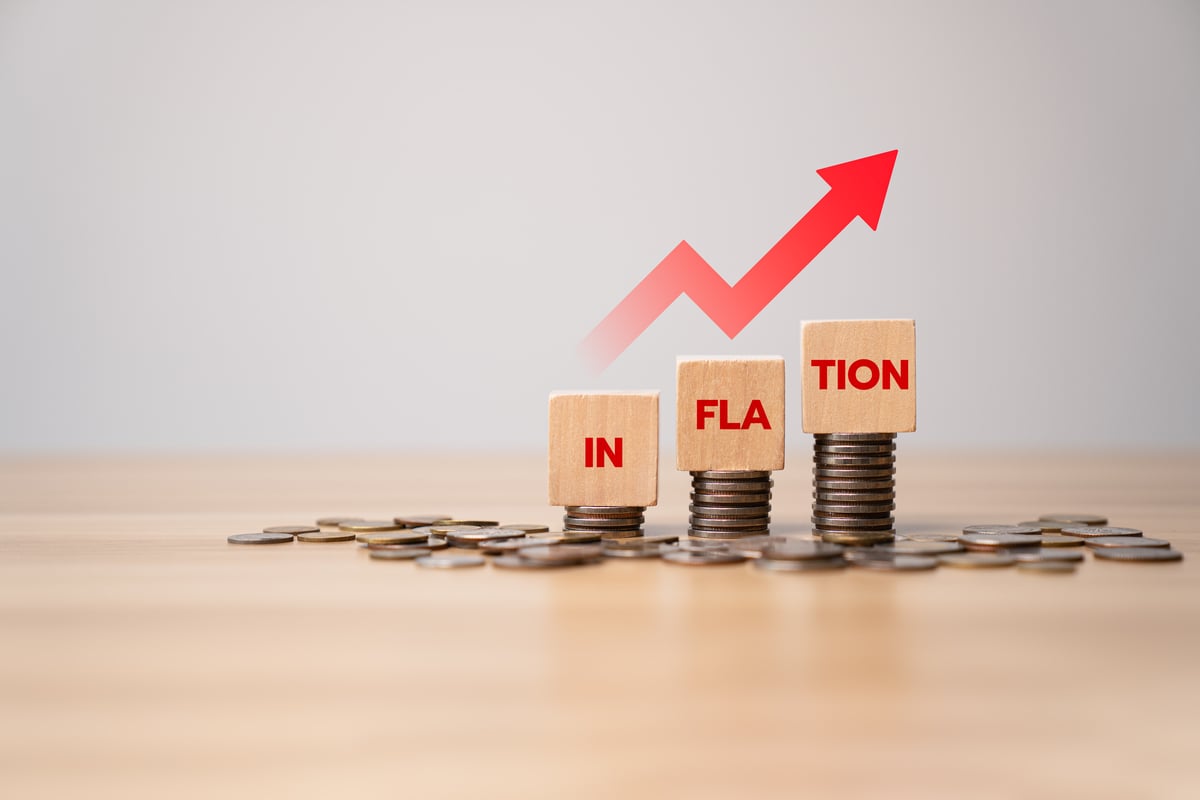
Inflation Signals Persist Despite Consumer Price Moderation
Producer prices surged 6% year-over-year in April, significantly outpacing economist expectations of 4.6%, according to the latest Producer Price Index data. This substantial miss comes just one day after the Consumer Price Index revealed that shelter and gasoline pushed headline CPI to 3.8%, painting a picture of persistent inflationary pressures coursing through the economy's supply chain. Together, these reports have fundamentally reshaped market expectations for Federal Reserve policy, with investors dramatically reducing bets on interest rate cuts and even beginning to price in potential rate hikes as soon as 2026.
The divergence between the 6% producer price reading and the 4.6% forecast represents a critical warning signal for policymakers and market participants alike. Producer Price Index data typically serves as a leading indicator for consumer inflation, suggesting that the 3.8% CPI print from the previous day—while appearing contained relative to prior months—may not represent a durable disinflation trend. Instead, the inflation pipeline remains full, with wholesale price pressures building before they filter downstream to consumers in the coming months.
The Inflation Pipeline and Its Economic Implications
The significance of the producer price beat cannot be overstated. Producer prices represent the costs businesses pay for raw materials, labor, and inputs—the foundational elements of consumer goods and services. When these prices accelerate faster than expected, it typically foreshadows future consumer price pressure, as manufacturers and retailers eventually pass increased costs to end customers.
Key takeaways from the inflation data include:
- PPI year-over-year gain of 6% vs. consensus forecast of 4.6%
- CPI reading of 3.8% driven primarily by shelter and gasoline components
- Shelter costs remained a persistent drag on headline inflation
- Energy prices contributed meaningfully to both readings
- Core inflation metrics continue to signal underlying price pressures beyond volatile energy and food categories
The combination of these readings suggests that inflation remains structurally elevated across multiple dimensions of the economy. Shelter—the largest component of CPI and a primarily service-sector input—has proven particularly sticky, driven by tight housing markets and elevated rents. Gasoline price volatility, while cyclical in nature, adds unpredictability to the inflation picture and complicates the Fed's assessment of underlying trend inflation.
Market Repricing and Fed Policy Expectations
The market reaction to these inflation reports has been swift and decisive. Rate cut expectations for 2026 have been substantially reduced, with some probability now being assigned to rate hike scenarios rather than additional easing. This represents a meaningful shift from market pricing just weeks earlier, when investors anticipated the Federal Reserve would begin reducing rates in the second half of 2024 or early 2025.
This repricing has profound implications across asset classes. The technology sector, which had rebounded on strong earnings reports from neocloud companies and optimism around semiconductor demand, faces headwinds from higher-for-longer interest rate expectations. Rising discount rates compress the present value of future earnings, particularly problematic for high-growth firms and companies with substantial cash burn rates.
Conversely, inflation-sensitive sectors have struggled under the weight of this data. Financial institutions, which benefit from higher rate environments, initially appeared positioned to gain, but retail and discretionary sectors face margin compression from elevated input costs without proportional pricing power. Banks themselves face uncertainty about the sustainability of the higher-rate environment and potential credit quality deterioration if the Fed is forced to maintain restrictive policy longer than expected.
Portfolio Implications and Sector Rotation Dynamics
The divergence between winners and losers in this environment has become more pronounced. Tech stocks have experienced a bifurcated response: while large-cap technology companies with strong earnings demonstrated resilience through the reporting season, sector-wide concerns about duration risk and equity risk premiums remain elevated. The strong earnings from neocloud companies provided temporary support, but fundamental questions persist about sustainability under the inflation-fighting regime.
Investors face a tactical dilemma. Fixed income positioning becomes more complex when rate cuts are pushed further into the future. Longer-duration bonds, which had traded at compressed yields under "peak rate" expectations, now face the prospect of further yield expansion. Meanwhile, equity valuations that had benefited from multiple expansion in anticipation of easier policy must recalibrate.
For portfolio managers, the inflation pipeline signals the need for vigilance around companies with limited pricing power and those dependent on multiple expansion rather than earnings growth. Energy exposure, whether through oil-linked equities or energy stocks themselves, may provide some hedge against continued inflation surprises, though this comes with its own volatility considerations.
Looking Ahead: The Durability Question
The critical question for market participants and policymakers involves the durability of this inflation surge. Is the 6% producer price reading a function of temporary base effects, volatile energy components, and sector-specific supply disruptions? Or does it represent a fundamental unanchoring of inflation expectations that threatens to become embedded in wage-setting behavior and corporate pricing decisions?
The Federal Reserve faces an unenviable position. With inflation data continuing to surprise to the upside at the producer level while headline consumer inflation appears modestly contained, the central bank must balance the risks of premature easing (which could reignite inflation) against the risks of excessive restraint (which could trigger unnecessary economic weakness). The market's repricing toward fewer rate cuts and potential hikes reflects this very uncertainty.
For investors, the takeaway is clear: the inflation story is not closed. Producer price momentum suggests that consumer prices may re-accelerate, potentially extending the period of elevated interest rates well into 2026. Portfolio positioning should reflect not just the current inflation data point, but the trajectory suggested by the inflation pipeline flowing through the economy. Diversification across inflation-resistant assets, selective exposure to pricing-power beneficiaries, and underweight positions in rate-sensitive, low-margin businesses may prove prudent in this environment where the Fed's policy path remains data-dependent and inflation remains stubbornly above target.