
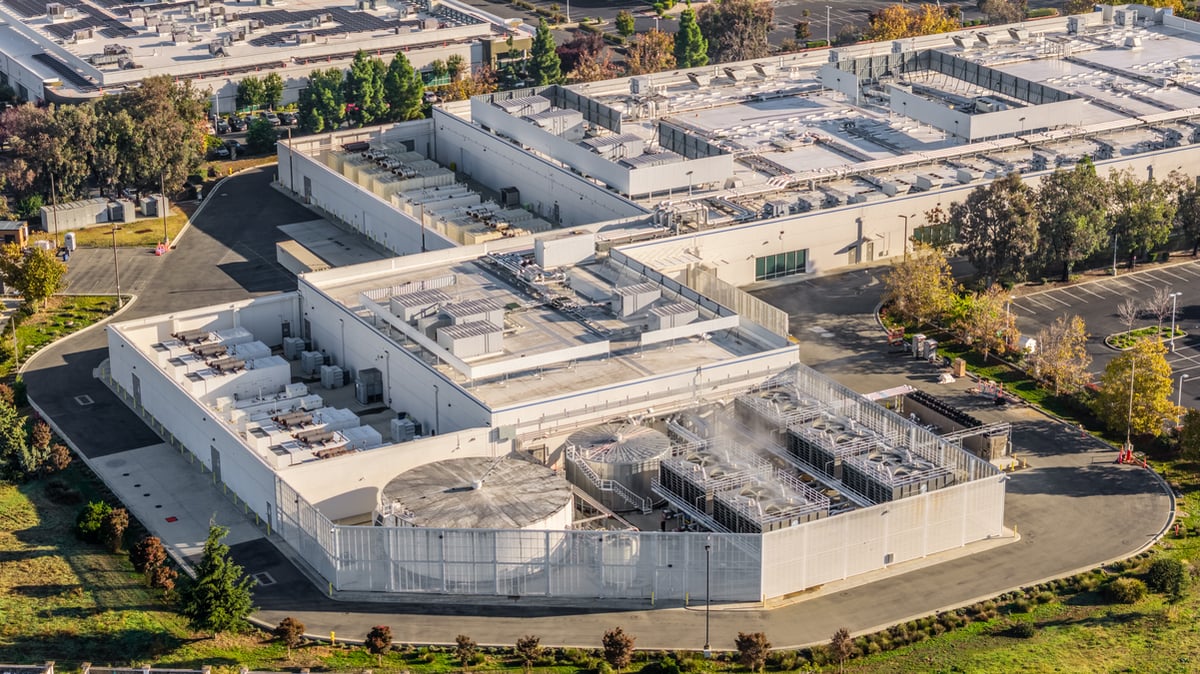
Unsexy HVAC Giant Rides AI Boom to 1,240% Gain—But Storm Clouds Loom
Comfort Systems USA has quietly become one of the market's most explosive performers, with its stock surging 1,240% over the past three years as the company capitalized on an unexpected beneficiary of the artificial intelligence infrastructure boom. While traditional HVAC contractors rarely capture Wall Street's imagination, $CSU has emerged as a crucial cog in the machinery powering data center expansion, riding the coattails of hyperscaler investments in computing infrastructure that require sophisticated climate control systems to function.
The remarkable run has transformed what many investors dismissed as a commoditized, unglamorous business into a sought-after play on the AI revolution. Yet beneath the surface of this stunning outperformance lies a critical dependency: the continued willingness of tech giants to pour unprecedented sums into data center buildouts. As forward-looking research suggests the party may eventually end, investors must grapple with whether Comfort Systems USA's explosive growth trajectory can be sustained or if the company faces a significant headwind as industry dynamics shift.
The AI Data Center Infrastructure Tailwind
The catalyst for Comfort Systems USA's remarkable performance traces directly to the explosion in data center construction driven by AI adoption and hyperscaler capital allocation. Companies like Microsoft, Google, Amazon ($AMZN), and Meta have committed staggering resources to building and expanding data center capacity to support generative AI workloads, which require substantially more computational power than traditional cloud infrastructure.
This construction boom has created enormous opportunities for specialized contractors who understand the unique thermal management challenges posed by modern data centers. Comfort Systems USA, headquartered in Houston, Texas, has positioned itself at the center of this trend:
- The company maintains a massive backlog of work stretching well into future periods, providing visibility into revenue growth
- Continued hyperscaler commitments signal strong demand persistence in the near to medium term
- The company's expertise in HVAC and mechanical systems has become essential infrastructure for any viable data center
- Thermal management represents a critical competitive advantage as data centers pack increasing processing power into finite physical spaces
The thermal challenge is particularly acute: modern AI-focused data centers generate intense heat that must be precisely managed to maintain equipment performance and prevent outages. Comfort Systems USA provides the mechanical and HVAC solutions that keep these sensitive environments operating within optimal temperature ranges, making the company's services practically indispensable to hyperscaler buildout plans.
Valuation Pressures and Long-Term Headwinds
While the current tailwind remains powerful, warning signs about the sustainability of this boom are beginning to emerge. PwC research projects that data center spending growth will decelerate meaningfully in the late 2020s, with digital networking spending expected to accelerate as a share of overall technology investment.
This shift carries profound implications for Comfort Systems USA's business model:
Near-term strength: The company's substantial backlog and confirmed hyperscaler commitments should continue driving revenue growth through the next several years, providing a runway for ongoing business expansion.
Medium-term uncertainty: As data center spending moderates in the latter part of the decade, the company's growth trajectory will necessarily slow unless management successfully pivots the business toward adjacent opportunities or develops new revenue streams.
Valuation concerns: The stock has already priced in years of exceptional growth. Current valuations may not justify performance if spending decelerates as forecasted, potentially creating a significant re-rating risk for shareholders who bought into the most recent gains.
The critical dependency on hyperscaler discretionary capital expenditure also introduces cyclicality risk that traditional HVAC contractors typically avoid. Unlike steady-state building climate control (residential, commercial, institutional), data center work is highly correlated with tech industry capital spending cycles and sentiment.
Market Context: A Volatile Tech Spending Environment
Understanding Comfort Systems USA's performance requires context on the broader technology infrastructure landscape. The company operates in a sector where a handful of mega-cap technology firms control a disproportionate share of capital allocation decisions.
Current dynamics:
- Hyperscalers have moved aggressively to vertically integrate data center operations, sometimes reducing reliance on specialized contractors
- Competition for specialized HVAC and mechanical contractors is intensifying as data center demand attracts larger, more diversified engineering and construction firms
- Supply chain for components remains challenged, creating potential margin pressures even as demand remains strong
- Regional variations in data center construction create uneven demand across Comfort Systems USA's service territories
The company's valuation multiples have expanded dramatically relative to historical norms, reflecting investor enthusiasm for the AI infrastructure narrative. However, this expansion means the margin for disappointment has narrowed significantly. Any moderation in hyperscaler spending announcements or delays in capital expenditure would likely trigger substantial multiple compression.
Investor Implications: Growth at a Price
For equity investors, Comfort Systems USA presents a classic growth-at-premium-valuation dilemma. The company has executed exceptionally well, capitalizing on structural industry trends and establishing itself as a preferred contractor for critical infrastructure buildout. The backlog provides visibility that most contractors lack.
However, several considerations merit careful attention:
Bull case: If hyperscaler spending on data center infrastructure persists at elevated levels through 2028-2029, the company's growth runway extends further than PwC's base case assumptions, potentially justifying current valuations. Management's execution has been exemplary, and the company maintains pricing power in a tight labor market.
Bear case: If tech spending cycles turn sharper or faster than anticipated, the stock faces significant downside risk. The 1,240% three-year gain has created a substantially higher bar for future performance. Current valuations require near-flawless execution and sustained hyperscaler commitments to justify holding periods beyond the near term.
Risk management: Investors already holding $CSU should consider whether concentrated exposure to hyperscaler capital spending aligns with their overall portfolio risk tolerance. New investors should carefully evaluate whether entry points at current valuations offer adequate margin of safety given the forward-looking spending headwinds identified by industry analysts.
For long-term investors, the key question is whether Comfort Systems USA can successfully transition its business model as data center spending moderates, potentially pivoting toward digital infrastructure, networking, or other adjacent technologies requiring similar technical expertise.
Looking Ahead: The Unsexy Play's Next Chapter
Comfort Systems USA's journey from overlooked HVAC contractor to AI infrastructure darling represents a compelling reminder that exceptional returns sometimes hide in plain sight within unglamorous sectors. The company's 1,240% three-year performance stands as testament to the power of identifying secular trends before mainstream investor attention arrives.
Yet this very success creates a new challenge: sustaining growth rates that satisfy investors accustomed to extraordinary returns. The company's substantial backlog and hyperscaler commitments should provide steady performance through the next 12-24 months. Beyond that horizon, however, the strength of future results depends critically on whether tech spending patterns align with bullish assumptions or whether PwC's more cautious forecasts prove prescient.
Investors should monitor quarterly earnings reports for any softening in backlog metrics or renewal rates from major customers. Management commentary regarding hyperscaler capital spending intentions and competitive dynamics will prove increasingly important as the decade progresses. For now, Comfort Systems USA remains a beneficiary of structural tailwinds, but the unsexy HVAC company's run, while potentially far from over, carries more risk than the stock's price action suggests.