
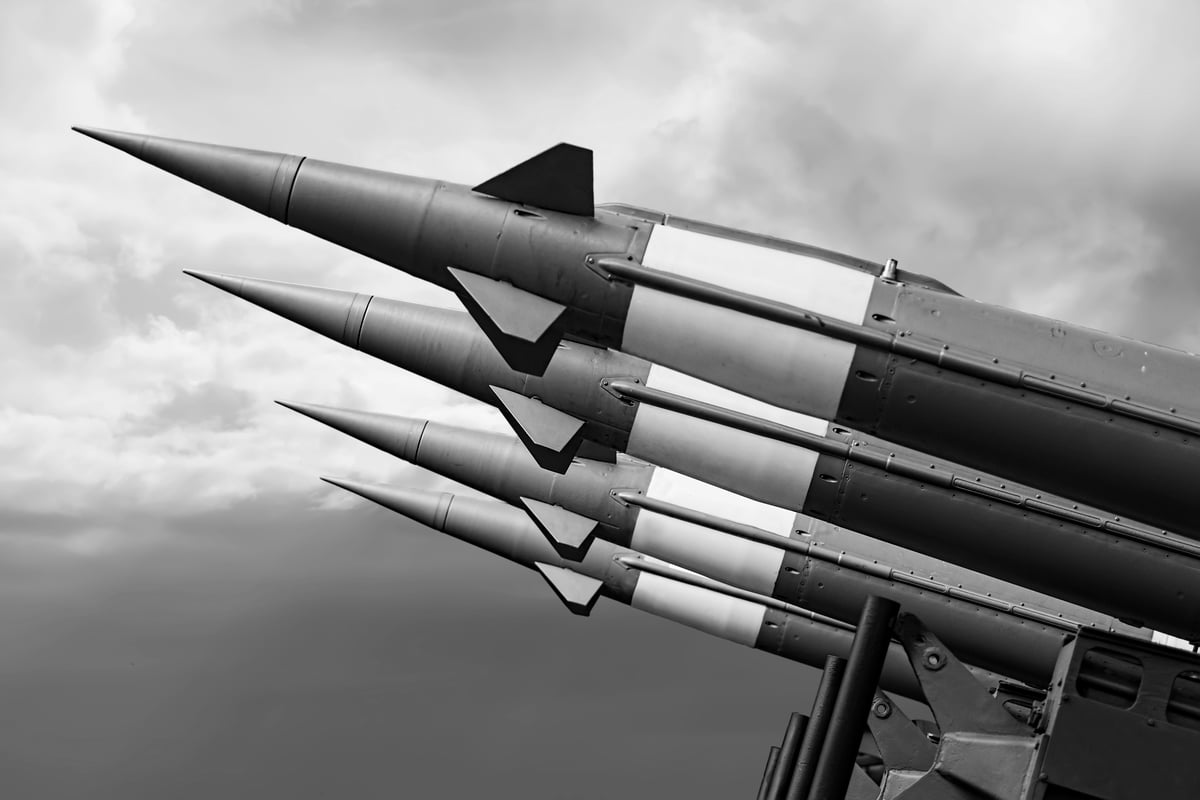
Israel Orders 10,000 Precision Rockets From BAE Systems Amid Iran Tensions
Israel has requested permission to purchase 10,000 APKWS precision-guided rockets from $BAE Systems for $992.4 million, marking a significant military procurement as regional tensions escalate following recent Iran conflict developments. The substantial order, combined with an identical 10,000-unit purchase by Qatar, will consume nearly a full year of BAE Systems' production capacity, fundamentally shifting the company into a seller's market position with anticipated margin expansion.
The Defense Procurement Details
The Israeli request centers on the APKWS (Advanced Precision Kill Weapon System), a laser-guided rocket system manufactured by BAE Systems. The total transaction value of $992.4 million translates to approximately $99,240 per unit, reflecting the sophisticated targeting technology and manufacturing precision required for these weapons systems.
Key specifications and context of the order:
- Quantity: 10,000 APKWS rockets for Israel
- Contract value: $992.4 million
- Competing order: Qatar's simultaneous 10,000-unit purchase of identical systems
- Combined production impact: Nearly 12 months of BAE Systems' APKWS manufacturing capacity
- Primary use case: Defense against drone attacks and precision strike capability
The timing reflects Israel's strategic reassessment following escalating tensions with Iran and Iranian-backed militant groups. The APKWS system represents a mid-range precision weapon that bridges the capability gap between unguided munitions and larger missile systems, offering cost-effective accuracy for tactical operations.
Market Context and Competitive Positioning
This procurement surge arrives during a period of heightened global defense spending, particularly in the Middle East region where geopolitical instability continues to drive military modernization initiatives. BAE Systems, Europe's largest defense contractor and a cornerstone of the global weapons manufacturing ecosystem, finds itself positioned at the intersection of multiple regional conflicts and strategic realignments.
The broader context includes:
- Regional instability: Ongoing Israeli-Palestinian tensions, broader Iran-Israel strategic competition, and proxy conflicts throughout the Levant
- Defense spending trends: Middle Eastern nations have significantly increased military budgets following Iranian drone and missile proliferation
- Production constraints: Military-industrial capacity limitations create supply-demand imbalances favoring established manufacturers
- Technology competition: APKWS systems compete with alternative precision munitions from other manufacturers, but BAE Systems maintains significant market share
The dual orders from Israel and Qatar demonstrate strong international demand for precision-guided systems at a critical moment when BAE Systems can exercise considerable pricing power. This represents a validation of the APKWS platform's market position and BAE Systems' technological capabilities in laser-guided systems.
The company operates in a highly consolidated defense sector dominated by a handful of major players, including Lockheed Martin, Northrop Grumman, and Raytheon Technologies in the United States, alongside European competitors. However, APKWS production remains predominantly concentrated at BAE Systems, creating natural monopolistic advantages for fulfilling international orders.
Investor Implications and Financial Impact
The procurement decision carries significant implications for BAE Systems' financial performance and shareholder returns:
Production Capacity Utilization: The combined Israeli and Qatari orders will consume nearly 12 months of current APKWS production capacity, effectively creating a supply constraint that should translate into premium pricing power and margin expansion. Capacity-constrained suppliers typically operate at elevated gross margins as demand outpaces supply.
Revenue Recognition and Booking: These orders represent $992.4 million in confirmed revenue for Israel alone, with additional revenue from Qatar's parallel purchase. From an accounting perspective, these contracts will provide multi-year revenue visibility as production and delivery schedules typically extend across several years.
Operational Leverage: With production facilities running near capacity, BAE Systems can optimize manufacturing efficiency while maintaining or potentially increasing per-unit profit margins. This scenario presents an ideal operating environment for the defense contractor—strong demand without excess capacity requiring capital investment.
Strategic Implications: The orders validate BAE Systems' positioning within Middle Eastern defense supply chains and suggest sustained demand for precision munitions as regional military dynamics evolve. For investors, this signals long-term revenue stability in a critical product line.
Capital Allocation Considerations: Defense contractors facing capacity constraints often face decisions regarding capital investment in additional production facilities. BAE Systems may need to evaluate whether temporary surge capacity justifies permanent facility expansion, with important implications for future capital expenditure and cash flow to shareholders.
From a broader market perspective, this procurement demonstrates the continued importance of military spending to defense contractor valuations. As geopolitical tensions persist and military modernization accelerates globally, precision munitions manufacturers like BAE Systems benefit from structural tailwinds supporting industry growth.
Forward Outlook
Israel's $992.4 million APKWS order, combined with Qatar's parallel purchase, positions BAE Systems to capitalize on sustained demand for precision-guided defense systems throughout the Middle East. The production capacity constraints created by these orders suggest BAE Systems will operate from a position of manufacturing strength with elevated pricing power for the next 12 months and potentially beyond, depending on additional international orders materializing.
For investors monitoring BAE Systems, these orders provide concrete evidence of defense spending momentum and technological relevance in precision munitions systems. The seller's market dynamics created by capacity constraints offer potential margin expansion opportunities, though execution risks related to production ramp-up and geopolitical developments remain material considerations. As defense spending cycles continue globally and regional tensions persist, BAE Systems' ability to satisfy international precision munitions demand will remain a key driver of shareholder value creation.