
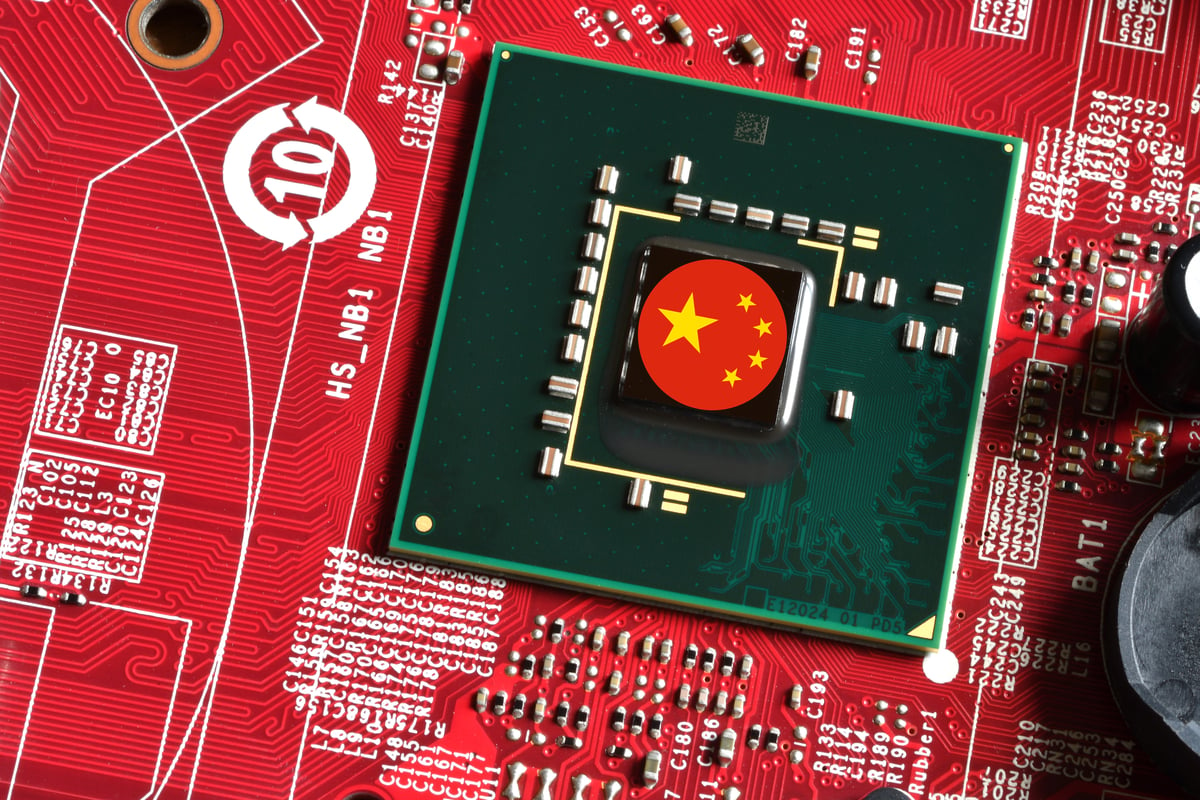
Micron Falls as China's Chip Snub Signals Semiconductor Shift
$MU and $NVDA stocks tumbled following reports that Chinese companies declined to purchase Nvidia's H200 AI chips at the Trump-Xi summit, signaling a pivotal moment in the global semiconductor industry. The development underscores Beijing's strategic pivot toward self-sufficiency in advanced chip manufacturing, potentially reshaping the competitive landscape for American semiconductor leaders and threatening their lucrative access to China's vast technology market.
The unexpected rejection represents more than a single missed sale—it reflects China's deliberate effort to reduce dependence on U.S. semiconductor technology amid ongoing trade tensions and export restrictions. For memory chip manufacturer Micron Technology, which supplies critical components to data center operators worldwide, the implications extend far beyond immediate quarterly results, touching on long-term market dynamics and geopolitical risks that could redefine sector valuations.
The Summit Snub and Its Immediate Impact
The Trump-Xi summit presented an opportunity for American semiconductor firms to demonstrate their products' capabilities to Chinese technology companies. However, instead of placing orders for Nvidia's latest H200 chips—among the most advanced AI accelerators available—Chinese firms opted to abstain, signaling a coordinated strategy to develop domestic alternatives.
This decision carries substantial weight given China's position as a critical market for semiconductor manufacturers:
- China represents a significant portion of global chip demand, particularly in data centers and AI infrastructure
- H200 chips are among the most advanced AI processors available, commanding premium prices
- Chinese tech companies typically purchase aggressively when cutting-edge technology becomes available
- The refusal suggests coordination with Beijing's broader strategic objectives
While Nvidia ($NVDA) and Micron ($MU) each experienced stock declines following the report, analysts and investors are grappling with whether this represents a temporary geopolitical moment or a structural shift in global semiconductor demand patterns.
Market Context: The Semiconductor Competition Intensifies
China's strategic turn toward domestic chip development comes as the country has invested billions in semiconductor manufacturing capabilities. Rather than continuing to rely on advanced imports, Beijing is positioning homegrown semiconductor companies to compete directly with American and international players.
The broader semiconductor industry context reveals several critical dynamics:
U.S. Export Restrictions Have Accelerated Chinese Self-Sufficiency Efforts
- The Biden administration implemented strict controls on advanced chip exports to China, including AI accelerators and high-bandwidth memory
- These restrictions inadvertently incentivized Chinese companies to accelerate domestic chip development programs
- China has responded by investing heavily in domestic semiconductor design and manufacturing
Memory Chip Demand Remains Near-Term Strong Despite the geopolitical headwinds, the near-term outlook for AI memory chips—a critical component that Micron specializes in—remains resilient. Global demand for high-bandwidth memory (HBM) and DRAM continues to surge as enterprises and cloud providers build out AI infrastructure. However, this strength may be offset by longer-term displacement risks if Chinese companies successfully develop competitive domestic alternatives.
Competitive Landscape Shifts The semiconductor sector is witnessing intensified competition from multiple directions:
- South Korean manufacturers SK Hynix and Samsung compete directly with Micron in memory chips
- Chinese competitors are rapidly advancing toward capability parity
- Supply chain fragmentation threatens U.S. manufacturers' market share
Investor Implications: Navigating Geopolitical Risk
For investors holding $MU or considering positions in semiconductor equities, several critical questions emerge:
China Concentration Risk: American semiconductor companies have historically generated substantial revenues from Chinese customers. If Beijing's domestic chip strategy succeeds in reducing U.S. chip purchases, it could meaningfully pressure earnings forecasts across the sector. Micron must factor in potential revenue headwinds from reduced Chinese demand.
Long-Term Competitive Threats: While near-term AI memory chip demand remains strong, the strategic shift signals that long-term competitive dynamics may deteriorate. Chinese semiconductor companies, backed by government support and subsidies, represent emerging competition that could compress margins over the next 5-10 years.
Valuation Recalibration: Semiconductor stocks have commanded premium valuations based partly on assumptions about unfettered access to Chinese markets. If this access becomes structurally constrained, investors may need to recalibrate sector multiples downward, affecting stocks like $MU.
Geopolitical Premium: The chip sector now carries an embedded geopolitical risk premium. Investors should expect continued volatility around U.S.-China relations, trade policy shifts, and strategic semiconductor developments.
Counterbalancing Factors: It's worth noting that Micron and Nvidia benefit from robust demand in other markets, including the United States, Europe, and allied nations. The U.S. government's own AI infrastructure investments and the CHIPS Act could offset some China-related headwinds.
Forward Outlook and Strategic Imperatives
As the global semiconductor industry navigates this inflection point, Micron and its peers face a critical strategic challenge: maintaining profitability and growth while Chinese competition intensifies and geopolitical barriers fragment the market.
The incident at the Trump-Xi summit, while symbolic, underscores a deeper structural shift. China's deliberate rejection of advanced U.S. chips reflects decades of policy aimed at achieving semiconductor independence. For American investors, this development serves as a reminder that semiconductor valuations increasingly must account for geopolitical uncertainty and the realistic potential of market fragmentation along ideological lines.
In the near term, strong AI-driven demand for memory chips should support Micron's business. However, long-term investors must monitor whether Chinese domestic chip development accelerates, which would ultimately constrain the addressable market for American semiconductor manufacturers and potentially justify lower valuation multiples across the sector.