
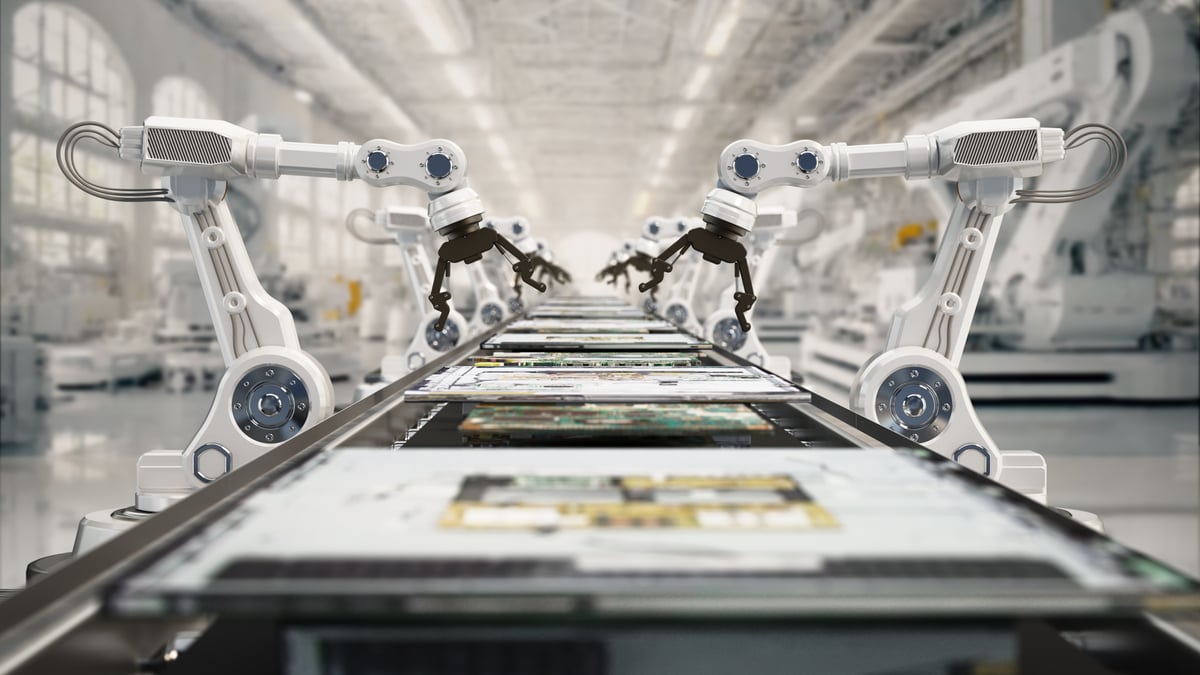
Rivian's robotics subsidiary, Mind Robotics, has reached a $3.4 billion valuation following a $400 million funding round, creating a potentially lucrative asset for the struggling electric vehicle manufacturer and its shareholders.
The valuation milestone represents a significant validation of the industrial robotics sector and positions Rivian ($RIVN) to benefit from both operational improvements and potential future wealth creation through its controlling stake. With the broader industrial robotics market experiencing explosive growth, Mind Robotics' emergence as a independently valued entity underscores how vehicle manufacturers are increasingly monetizing adjacent technology capabilities in pursuit of profitability and cost reduction.
The Mind Robotics Opportunity
Rivian retains approximately 38% ownership of Mind Robotics, which translates to meaningful exposure to the $3.4 billion enterprise. The latest funding round, which brought Mind Robotics to its current valuation, demonstrates robust investor appetite for industrial automation solutions amid labor shortages and manufacturing efficiency demands across industries.
The strategic importance of this spinoff extends beyond mere equity valuation:
- Internal efficiency gains: Rivian plans to deploy Mind's robotic solutions within its own manufacturing operations to improve production efficiency and reduce per-unit costs—a critical priority for a company still working toward profitability
- Commercial licensing: The company intends to commercialize Mind's technology to external industrial customers, creating a recurring revenue stream independent of Rivian's vehicle sales performance
- Market timing: The robotics spinoff arrives as industrial automation valuations have surged, with investors pursuing exposure to warehouse automation, manufacturing optimization, and labor-force augmentation
Rivian's 38% stake potentially represents a multi-billion-dollar asset on the parent company's balance sheet, though it remains a private investment that would only crystallize value through an eventual initial public offering (IPO) or strategic sale.
Market Context: Industrial Robotics Boom
The industrial robotics sector has become one of the most dynamic segments of manufacturing technology, driven by structural trends that show no sign of abating. Labor shortages, rising wages, heightened automation capabilities, and supply chain resilience concerns have created unprecedented demand for robotic solutions across automotive, electronics, logistics, and pharmaceutical manufacturing.
Mind Robotics' $3.4 billion valuation places it in a peer group with well-established industrial automation players, though the company benefits from deep integration with Rivian's vehicle manufacturing expertise. The robotics market itself remains highly fragmented, with opportunities for consolidation and specialization as companies pursue niche applications.
Key market dynamics supporting Mind Robotics' valuation:
- Labor market pressures: Persistent wage inflation and worker availability challenges make automation economically attractive across manufacturing geographies
- Technological maturation: Advances in computer vision, machine learning, and collaborative robotics have expanded applications beyond traditional factory floor tasks
- Capital deployment: Private equity and venture capital firms have deployed record capital into industrial automation subsectors, driving valuations and creating exit pathways for spinoffs
- Strategic value: Established manufacturers increasingly view robotics capabilities as core competitive advantages rather than peripheral technologies
While Rivian itself remains unprofitable and faces near-term cash burn challenges, the Mind Robotics asset demonstrates that value creation can occur across multiple dimensions of a complex industrial enterprise.
Investor Implications: Dual Paths to Returns
For Rivian shareholders, the Mind Robotics opportunity creates two distinct potential value creation paths:
1. Operational cost reduction: If Rivian successfully deploys Mind's robotic solutions to improve manufacturing efficiency and reduce production costs, the parent company's path to profitability becomes more achievable. In the capital-intensive EV manufacturing business, even incremental improvements in production efficiency translate to meaningful margin expansion. This direct benefit accrues immediately to Rivian shareholders through improved operational metrics and potential earnings improvement.
2. Financial appreciation and exit optionality: As Mind Robotics grows and the industrial robotics market continues its expansion, Rivian's 38% stake could appreciate substantially in value. An eventual IPO or strategic acquisition of Mind Robotics would unlock significant liquidity for the parent company, potentially generating billions in proceeds. This wealth creation would occur independent of Rivian's vehicle business performance, creating a valuable backstop for shareholders.
The timing proves particularly relevant, as Rivian confronts immediate challenges including competitive pressures in the EV market, ongoing capital requirements for manufacturing scale-up, and investor scrutiny regarding its path to profitability. A successful commercialization of Mind Robotics, culminating in an IPO or strategic sale, could materially alter the financial trajectory of the parent company and provide capital for reinvestment in core vehicle programs.
However, investors should recognize that realizing value from the Mind Robotics stake depends on successful execution across multiple dimensions: the spinoff must achieve independent growth and establish itself as a credible industrial robotics competitor, Rivian must effectively integrate Mind's solutions into its own manufacturing operations, and favorable market conditions must prevail when eventual exit opportunities arise.
Looking Forward
The $3.4 billion valuation of Mind Robotics signals confidence in both the industrial automation market opportunity and Rivian's ability to incubate valuable technology assets. For Rivian shareholders, the spinoff represents a rare bright spot amid broader concerns about the company's vehicle business profitability. The dual benefits—near-term operational improvements and longer-term financial appreciation—provide multiple pathways for value creation.
Success depends on Rivian's execution on two fronts: demonstrating measurable improvements in manufacturing efficiency through Mind's robotics deployment, and positioning Mind as an attractive independent investment target that can command premium valuations when eventually brought to public markets. As industrial automation becomes increasingly central to manufacturing competitiveness globally, investors in Rivian gain indirect exposure to one of the secular growth themes of the next decade through their ownership of the struggling EV manufacturer.