
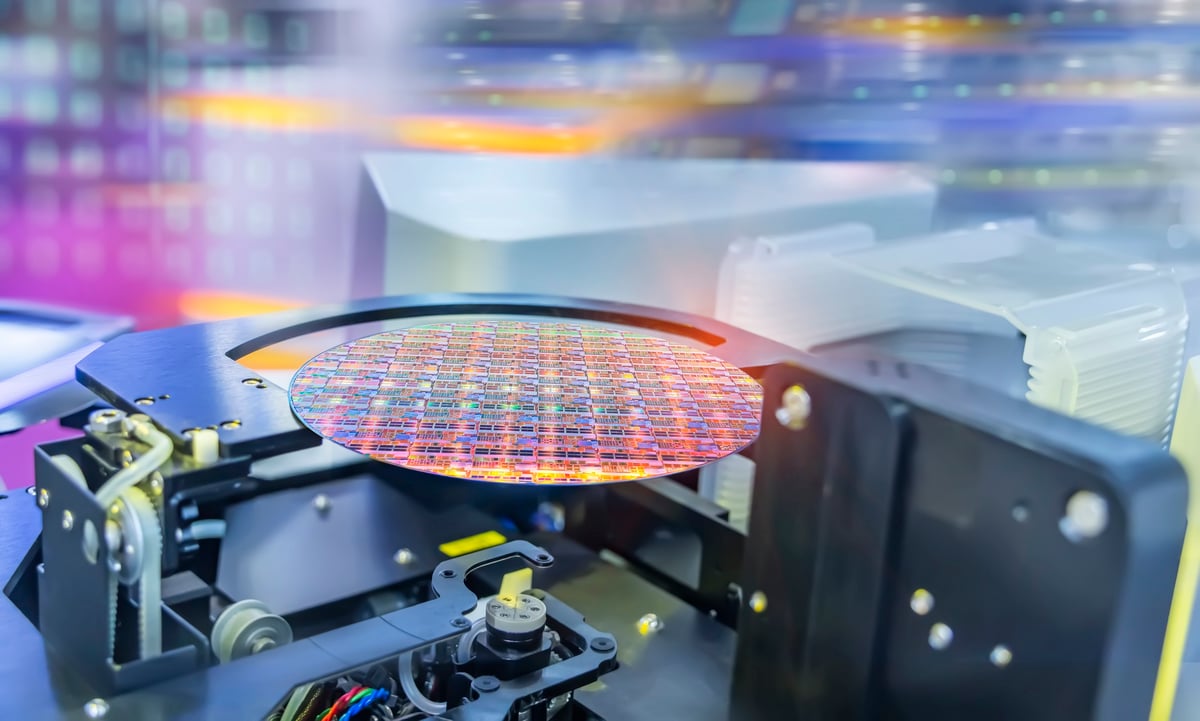
Intel's stock price has advanced considerably amid CEO Lip-Bu Tan's multiyear restructuring initiative, yet fundamental challenges persist within the company's foundry operations. The foundry segment, positioned as essential to Intel's artificial intelligence growth strategy, reported a $2.5 billion operating loss on $4.5 billion in revenue during the latest reporting period, translating to negative 50% operating margins. This performance underscores the significant operational headwinds the chipmaker must overcome as it attempts to compete in the foundry market.
The company is pursuing multiple avenues to capitalize on artificial intelligence demand, including investments in CPU and GPU development alongside efforts to establish domestic foundry capacity. However, the current stock valuation reflects notably optimistic market expectations. Trading at approximately 50 times 2027 earnings estimates, Intel's valuation premium appears stretched relative to the company's operational trajectory and the timeline for profitability improvement that Tan himself has characterized as extending several years into the future.
Analysts and investors will likely monitor quarterly results closely to assess whether the company's turnaround execution aligns with the market's elevated valuation expectations. The divergence between current share performance and the company's acknowledged multi-year recovery pathway presents a key risk consideration for equity holders.